
The Inner Alchemist Gone Mad: Van Helmont, Archeus and the Birth of Local Rebellion in Cancer

In this article
Day 54 (The History of Cancer in 365 Days Series)
From systemic dogma to cellular autonomy: the first discovery of cancer as a «rebellion» beginning in a single organ.
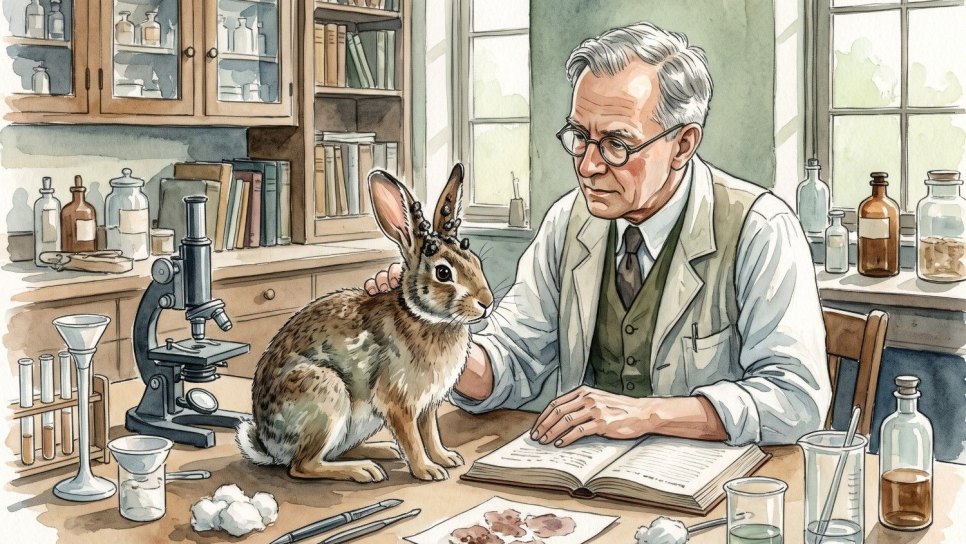
Born into a wealthy family in Brussels in 1579, Jan Baptista van Helmont studied medicine at the University of Louvain, one of the most respected institutions of his time. Yet he rejected the ancient medical books, including the teachings of Galen and Aristotle, calling them «empty doctrines». He devoted his life to laboratory chemistry, distillation and unraveling the mysteries of the body by the fire.
The body's factory supervisors: «Archeus»
For Van Helmont, the human body was not a soulless system of pipes in which fluids sloshed around. Each organ—the stomach, liver or breast—had an inner «spiritual ruler» presiding over its biochemical processes and life cycle. He called these local rulers Archeus (The Inner Alchemist) by name.
Each organ has its own mind and administration. While the Archeus in the stomach governs digestion, the Archeus in the breast is responsible for tissue repair.
Archeus does its work through «Ferments», or leavening agents. According to historians of science, this concept is the earliest historical definition of today's enzymes in their modern sense.
This theory offered the first logical framework in history explaining why cancer begins only in a particular organ, for example in just one breast. If the problem were black bile permeating the entire body, cancer should have erupted in every organ at once; Van Helmont, however, had discovered «locality».
The pathogenesis of cancer: Archeus gone mad
According to Van Helmont, cancer was not the deposition of a fluid arriving from outside, but the terror or «madness» of that organ's own ruler, Archeus.
The Philosophical Roots of Molecular Rebellion
If an organ's ferments (enzymes) are disturbed by a poison or an occult (hidden) agent, the Archeus of that region loses control. This Inner Alchemist, normally tasked with protecting the tissue, goes astray and begins to build, instead of healthy cells, a destructive, foreign mass hostile to the body (a tumor) . For Van Helmont, this was the cell betraying its own system.
Van Helmont advocated the use of acid-neutralizing chemical reagents to stop this «deranged mechanism». This was the most primitive form of directly targeted chemical intervention in cancer treatment, rather than systemic evacuation through bloodletting or purgatives.
Why did it matter? «Local rebellion» and modern oncology
The most fundamental fact we know in oncology today is that cancer is a local rebellion arising from the accumulation of alterations (mutations) in a cell's own DNA. In his hazy 17th-century laboratory, Van Helmont sowed the seeds of this modern insight by observing how organs were destroyed by their own chemical processes.
With Van Helmont, cancer is no longer an otherworldly curse: it is the rebellion of the alchemist within the organ. Healing means inviting that alchemist back to tranquility, in other words, allowing biological restoration to take place.
In our next article (Day 55), we will meet Richard Wiseman, who drew a clear distinction between the sacred neck tumors believed to be cured by the touch of kings («King's Evil») and true, ruthless «Cancer».
Biological tranquility and precise oncology
Van Helmont's metaphor of «Archeus» reflects our vision of «precise guidance», which remains relevant in oncology today. What makes a cell cancerous is not the body as a whole, but the loss of the voice of that cell's own inner «ruler», its genetics.
This is precisely where the philosophy of biological restoration lies: instead of punishing the deranged alchemist (the damaged cell), understand why the mechanism went astray and rebuild the balance. Van Helmont's ferments are our enzymes today, and his Archeus is our genetic orchestra. Healing means listening to this magnificent inner voice of nature with science and compassion.
Academic Sources and Further Reading
- 1. Pagel W. Joan Baptista Van Helmont: Reformer of Science and Medicine. Cambridge University Press, 1982.
- 2. Harré R. Great Scientific Experiments: Twenty Experiments that Changed our View of the World. Phaidon Press, 1981.
- 3. Klaassen H. Advances in Cancer Stem Cell Biology. Springer, 2021.
- 4. Heinecke M. Deposing the Demon: Jan Baptista van Helmont and the Authority of Magic. MPIWG, 1995.
Was this article helpful?
Your feedback helps us improve our content.


Reader comments
Share your comment
Your name and comment are published only after administrator approval. Your email address is never shown to visitors.
Be the first to comment.