The Shadow of a Reactor: Chernobyl and Thyroid Cancer, 1986
In this article
The Shadow of a Reactor: Chernobyl and Thyroid Cancer, 1986
On Day 177 we looked at the laboratory scene of 1986: a piece of DNA, then a gene. The other scene of that year was not in a laboratory but in a reactor building in Ukraine. Today's question is larger than what happens inside a cell, and more ordinary: after an accident, whose thyroid was irradiated, by how much, and how is the price read in numbers years later? The warning about dose and delay was made on Day 105 with Lacassagne's mice; here it returns at human scale.
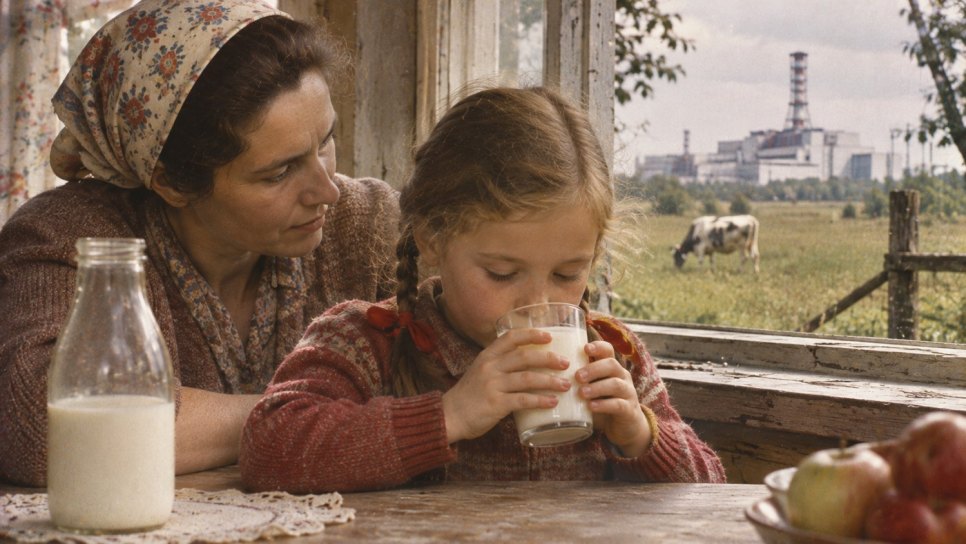
A reactor, a pasture, a glass of milk
On 26 April 1986, in the fourth reactor of the Chernobyl plant in Ukraine, two explosions followed one another between 01:23 and 01:24 local time (sources differ at the level of seconds; see fact-check). The reactor was of the RBMK type. The evacuation of Pripyat began on the afternoon of 27 April; on 28 April high radiation measured in Sweden revealed the accident to the outside world, and Soviet officials acknowledged an accident the same day. At first 134 people were diagnosed with acute radiation syndrome; 28 of them lost their lives within four months. This is the most visible and fastest price of the accident. Today's subject is the quiet, delayed one.
The path of the delayed price runs through one element: iodine. Among the released radioactive materials was iodine-131, with a half-life of eight days. Iodine-131 settled on pasture, passed into the cow's milk and reached the thyroid of the child who drank fresh milk. The thyroid gathers the body's iodine; a child's is small, so the same amount of iodine means a higher dose. The NCI history page summarizes the mechanism this way, and the UNSCEAR white paper says most of the exposure came from fresh milk drunk in the first weeks. I could not find a reliable date for when and where milk was restricted; I do not write one.
When the number became visible
Kazakov, Demidchik and Astakhova, "Thyroid cancer after Chernobyl", Nature 359:21
The 3 September 1992 issue of Nature carried a one-page piece of scientific correspondence. The authors were Vasili Kazakov of the Belarus Ministry of Health, Evgeni Demidchik of the Thyroid Tumour Centre in Minsk and Larisa Astakhova of the Radiation Medicine Institute. The page was behind a paywall; I could see only the bibliographic details, and I do not write the numbers inside. An indirect record: Keith Baverstock's 1998 BMJ editorial says early effects were reported in 1992 and that the increase was real in Belarus and Ukraine and, to a lesser extent, Russia; it adds that childhood thyroid cancer in most countries was below one per million per year.
Iodine-131, dose and relative risk
Iodine-131 enters the body with milk, settles in the thyroid and irradiates the surrounding tissue from within. Dose is measured in gray (Gy); 1 Gy is 1,000 mGy. Risk is stated in two ways: relative (how many times risk rises as dose rises) and absolute (how many extra cases). ERR/Gy is the "excess relative risk per dose"; a value of 2 per Gy means that at 1 Gy the risk rises by about twice the natural frequency (by definition; the explanation is mine). A high relative risk on a small natural frequency can still give a small absolute number; I give both.
Counts, doses and the strength of the relationship
Drawing on the 2008 report, the UNSCEAR white paper reports 6,848 thyroid cancers in 1991-2005 among those under 18 at the time of the accident, and 5,127 among those under 14. In that under-14 group, 15 cases in the same period ended in loss of life. The same document counts 19,233 registered thyroid cancers for 1991-2015 (Belarus 5,906; four oblasts of Russia 1,838; Ukraine 11,489). The natural frequency under age 10 was about 2-4 per million per year; the sharp rise began in 1991-1995, about five years later, and had not declined by 2015. The average thyroid dose was about 170 mGy in non-evacuated children and adolescents and about 900 mGy in evacuated ones.
The distribution of dose by age is striking (figure): median thyroid dose was 0.38 Gy under 2 years, 0.37 Gy at 2-4, 0.13 Gy at 5-9, 0.041 Gy at 10-14 and 0.015 Gy at 15-18.
One of the most carefully built demonstrations of dose-response is the 2005 study by Elisabeth Cardis and colleagues. In Belarus and Russia, 276 people under 15 at the time of the accident who were diagnosed with thyroid cancer up to 1998 were compared with 1,300 matched controls; doses were estimated from each person's whereabouts and diet. At 1 Gy the odds ratio was between 5.5 (95 percent confidence interval 3.1-9.5) and 8.4 (4.1-17.3) depending on the model; the relationship was linear up to about 1.5-2 Gy. In iodine-deficient areas the radiation-related risk was about three times higher (RR 3.2; 1.9-5.5); among those taking potassium iodide as a dietary supplement it fell to about a third (RR 0.34; 0.1-0.9).
In cohort studies ERR/Gy is summarized as about 2 per Gy; in the Ukrainian-American cohort 1.91 (95% CI 0.43-6.34). For survivors of Hiroshima and Nagasaki (Day 119), about 2-5 per Gy at age 27 is given, so the two events point to a similar order of magnitude. The attributable fraction is about 0.25 in non-evacuated children and adolescents (credibility interval at least 0.07-0.5) and about 0.6 in evacuated ones.
What does radiation leave in DNA?
The study by Lindsay Morton, Stephen Chanock and about fifty co-authors, published in Science in April 2021, took the question to the molecular level. 440 papillary thyroid carcinomas from Ukraine were examined: 359 were from people exposed to iodine-131 in childhood or in utero (mean age at exposure 7.3), and 81 from unexposed people born after March 1987. Among the exposed the mean thyroid dose was 250 mGy (range 11-8,800). As dose rose, small deletions and simple or balanced structural variants increased; single-nucleotide changes did not. The strongest association was with deletions bearing non-homologous end-joining (NHEJ) features; the authors regard NHEJ as the key route in repairing double-strand breaks.
A candidate driver was found in 433 of the 440 tumours (98.4 percent); the most frequent was a BRAF mutation (194 cases). Gene fusions were present in 176 cases (41.0 percent) and RET was the most frequent partner (73 cases); fusion drivers were more frequent at higher doses. Yet the authors found no reliable biomarker that separates a radiation-induced tumour from a sporadic one, and suggest standard treatments remain appropriate. A different door from Day 177: there, two copies of a suppressor gene were lost; here radiation leaves a DNA break and a repair scar.
Price and limits
First, the screening effect: in the Ukrainian-American cohort the crude incidence was about 100 per 100,000 person-years, against about 3 per 100,000 in the same birth cohort across Ukraine; intensive screening raises crude incidence and overdiagnosis is debated, yet the white paper finds no evidence that screening materially changed the relative risk per dose. Second, dose uncertainty is wide (in one analysis a geometric standard deviation of about 1.7-4.0) and linearity at low doses is uncertain. Third, no single case can be called "radiation-caused": there is no validated biomarker; the attributable fraction is about 25 percent in non-evacuated children and adolescents. Fourth, 15 lives lost among those under 14 does not mean harmlessness, but it must be read at scale. Fifth, Cardis's potassium iodide finding is observational and concerned dietary supplementation, not emergency prophylaxis; a sample of 1,457 people from the Sejny area of Poland reports that prophylaxis was used by more than 90 percent and no serious side effects were reported (Zarzycki 1994); that is compliance and safety, not efficacy.
Median thyroid dose by age at the time of the accident (values as relayed from the UNSCEAR white paper). Bar lengths are scaled to the highest value, 0.38 Gy (the scaling is mine). Which cohort the medians belong to was not clear in the summary; the figure is a picture of the age gradient.
A screening in Rize
The study by Acar, Çakabay, Bayrak and Evrenkaya (ISRN Surgery, 2011) reports that in 2008, 22 years after the accident, about 100,000 people were screened in Rize on the Black Sea coast. The abstract counts six thyroid cancers (five papillary, one follicular; about 6 per 100,000). The authors cite the national frequency as about 8 per 100,000 and conclude that the Rize rate did not differ significantly from it and that Chernobyl did not affect thyroid cancer frequency in the Black Sea region. My reservation: there is no pre-accident baseline and no unexposed comparison group; a single national figure was used; thyroid doses in Rize are not verified in this article. The numbers also look inconsistent (Methods five cancers and three suspicious cases, abstract six cancers, Table 1 eight patients; this observation comes from the summarizing tool's reading). I think this study gives enough basis to say neither "no effect" nor "an effect"; that is my inference.
From 1986 to 2021
What was verified, what remains uncertain
- Time and events: History.com gives the first explosion at 01:23:58 on 26 April 1986; the Encyclopedia of Ukraine says two successive explosions at 01:24; I wrote "01:23-01:24". That the Pripyat evacuation began at 14:00 is from History.com; the Encyclopedia of Ukraine says only "afternoon". Measurement in Sweden and the Soviet acknowledgment are both 28 April in both sources. 134 cases and 28 lives lost are from the Encyclopedia of Ukraine; pages were read through a summarizing tool.
- Kazakov 1992: only bibliographic details were read (Nature 359(6390):21, 3 September 1992, scientific correspondence; DOI 10.1038/359021a0); the page was behind a paywall and the numbers inside are not in the article. "Early effects reported in 1992" comes from Baverstock's BMJ editorial (through a summarizing tool) and is a secondary relay.
- Baseline incidence: Baverstock (1998) puts childhood thyroid cancer in most countries below one per million per year; the UNSCEAR white paper says 2-4 per million under age 10. Definitions and age ranges may differ; I did not reconcile them.
- UNSCEAR numbers: the white paper (file name Chernobyl_WP_2017.pdf; the text cites the 2018 version) was read from a web-archive copy through a summarizing tool. 6,848 (under 18) and 5,127 (under 14) are for 1991-2005; 15 lives lost under 14 are from the 2008 report; 19,233 for 1991-2015. The NCI page says "four thousand cases as of 2005, with 15 lives lost": possibly a difference of age limit and update, not reconciled; I used the white paper's numbers.
- Cardis 2005: details and abstract from a record page, through a summarizing tool (JNCI, PMID 15900042; volume and pages were not on the page, so not written). Potassium iodide was taken as a "dietary supplement", not emergency prophylaxis. The odds ratio (5.5-8.4 at 1 Gy) and the cohort ERR/Gy (about 2) are different measures; I did not compare them directly.
- Morton 2021: full text read (no supplement); Science 372:eabg2538, online 22 April 2021, issue 14 May 2021. All numbers from the text; "no biomarker" and "standard treatment appropriate" are the authors' words.
- Median dose by age: values from the summarizing tool's output of the UNSCEAR white paper; the summary did not say which cohort, so the figure carries no cohort name. Bar lengths (100; 97.4; 34.2; 10.8; 3.9) are the values' ratio to 0.38; the scaling is mine.
- Turkey: details (ISRN Surg 2011;2011:257943) and numbers of Acar et al. are from a page read through a summarizing tool. The national frequency of 8 per 100,000 is attributed to the "Turkish Cancer Research Association" and relayed by the authors; I did not verify it. The count inconsistency (five, six, eight) is the summarizing tool's observation; I did not look at the full text. A study that came up in the same search, "Eastern Turkey 27 years later", I did not read.
- Poland and calculations: from the abstract of Zarzycki et al. 1994: 1,457 people, ages 6-55, more than 90 percent use, no serious side effects. I found no figure for how many children received it across Poland. The ERR/Gy explanation and the gray conversion are mine.
A Tumour, Step by Step: Vogelstein and Colorectal Carcinogenesis, 1988
Today we asked what a single outside cause leaves behind in the thyroid; tomorrow we ask the reverse: through which genetic steps does a colon tumour pass, from one cell to a disease? I will verify Bert Vogelstein and colleagues' 1988 study, the sequence running from polyp to carcinoma, and how sturdy or how simplified that sequence is.
Author's note: In this article I avoided two things: squeezing the price of the accident into one number, and tying the thyroid example to the conclusion "everything is from radiation" or "radiation had no effect". The strongest evidence for dose-response is the thyroid in childhood; other cancers present a different picture. I could not reach the content of the Kazakov letter; that is a gap.
Sources and Further Reading
- Kazakov VS, Demidchik EP, Astakhova LN. Thyroid cancer after Chernobyl. Nature 1992;359(6390):21; DOI 10.1038/359021a0 (bibliographic details only; content not readable).
- Baverstock K. Chernobyl and public health: the nuclear industry should fund an international foundation to learn from Chernobyl. BMJ 1998;316(7136):952-953 (secondary; read through a summarizing tool).
- Cardis E, Kesminiene A, Ivanov V, et al. Risk of thyroid cancer after exposure to 131I in childhood. J Natl Cancer Inst 2005 (PMID 15900042) (from the abstract).
- UNSCEAR. White paper on thyroid cancer in regions affected by the Chernobyl accident (file Chernobyl_WP_2017.pdf, web archive copy; cites the UNSCEAR 2008 report) (secondary; read through a summarizing tool).
- Morton LM, Chanock SJ, et al. Radiation-related genomic profile of papillary thyroid carcinoma after the Chernobyl accident. Science 2021;372:eabg2538 (full text; read through a summarizing tool).
- Acar H, Cakabay B, Bayrak F, Evrenkaya T. Effects of the Chernobyl disaster on thyroid cancer incidence in Turkey after 22 years. ISRN Surg 2011;2011:257943; DOI 10.5402/2011/257943 (secondary; read through a summarizing tool).
- Zarzycki W, Zonenberg A, Telejko B, Kinalska I. Iodine prophylaxis in the aftermath of the Chernobyl accident in the area of Sejny in north-eastern Poland. Horm Metab Res 1994;26(6):293 (from the abstract).
- NCI DCEG (About the Chornobyl accident, dceg.cancer.gov); Encyclopedia of Ukraine (Chornobyl nuclear disaster); History.com (Chernobyl disaster timeline) (secondary; read through a summarizing tool).
- Mukherjee S. The Emperor of All Maladies: A Biography of Cancer. New York: Scribner; 2010 (general context; relevant pages not re-read for this article).
This article is Day 178 of the "365 Days of Cancer History" series. It is historical-popular content; it is not a recommendation for diagnosis, screening, iodine use, genetic testing or treatment. Consult your physician on thyroid and iodine matters. Sources have been verified; details resting on a single secondary source, on a record read through a summarizing tool or on an unreadable text are marked in the fact-check notes.
Plan your visit
Share your preferred date. Our team will contact you to arrange the appointment.
Was this article helpful?
Your feedback helps us improve our content.