
Durvalumab Receives FDA Approval Before and After Surgery for Muscle-Invasive Bladder Cancer

In this article
On March 28, 2025, the United States Food and Drug Administration (FDA) approved treatment for adults with muscle-invasive bladder cancer using durvalumab (Imfinzi, AstraZeneca) in combination with gemcitabine and cisplatin as neoadjuvant therapy, followed by single-agent durvalumab as adjuvant therapy after surgical removal of the bladder.
Why Does It Matter?
Muscle-invasive bladder cancer (MIBC) is an aggressive disease subgroup affecting approximately 25% of patients with bladder cancer at diagnosis. At this stage, the cancer has reached the bladder's muscle layer but has not yet spread to lymph nodes or distant organs.
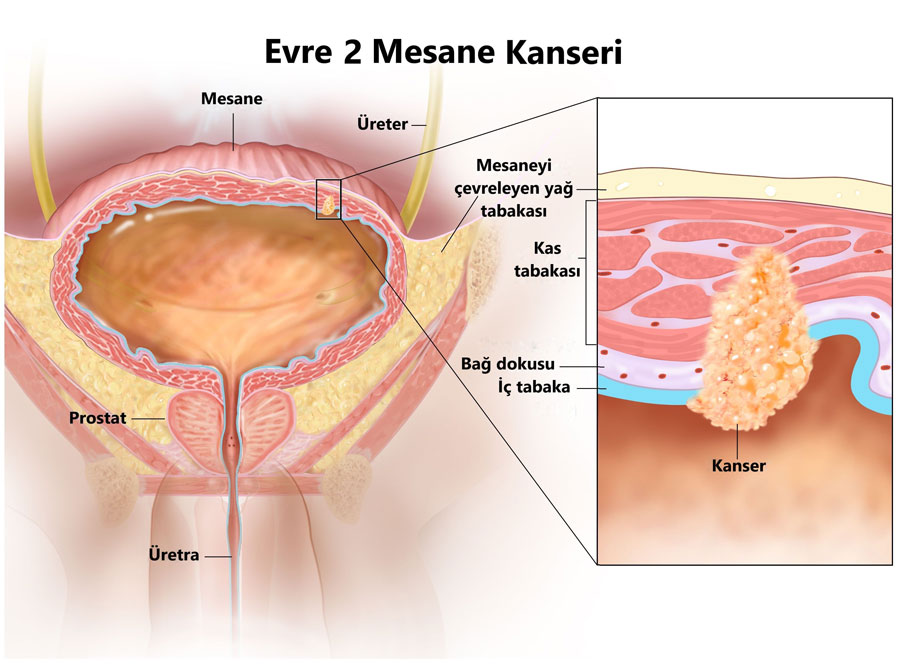
The treatment approach for muscle-invasive bladder cancer generally includes radical cystectomy (complete removal of the bladder) followed by systemic therapies. However, this radical surgery can substantially reduce quality of life for many patients. Providing effective treatment while preserving the bladder has therefore become an important goal in oncology.
The new combination treatment protocol with durvalumaboffers substantial hope by prolonging survival and improving outcomes without compromising the effectiveness of surgery.
The First Immunotherapy Approval Before and After Surgery for Muscle-Invasive Bladder Cancer
This FDA approval for durvalumab covers both preoperative (neoadjuvant) and postoperative (adjuvant) use in muscle-invasive bladder cancer, making it the first immunotherapy with this approval.
What Was Available Previously?
The only immunotherapy previously approved by the FDA for adjuvant (postoperative) use was:
-
Nivolumab (Opdivo)
-
The CheckMate 274 study provided the basis for its
-
However, that approval covered only postoperative use.
-
- No immunotherapy had received FDA approval for neoadjuvant (preoperative) use before 2025.
- Durvalumab became the first and only immunotherapy approved for both neoadjuvant and adjuvant treatment in this setting.
FDA Approval Granted on March 28, 2025
On March 28, 2025, the United States Food and Drug Administration (FDA) granted durvalumab, in combination with neoadjuvant chemotherapy containing cisplatin and gemcitabine followed by adjuvant durvalumab monotherapy after radical cystectomy, official approval. The approval was based on a multicenter, open-label, randomized trial involving 1063 patients: the phase III NIAGARA study.

Clinical Efficacy: A Significant Improvement in Survival
Patients in the study were assigned to two arms:
- Experimental arm: Neoadjuvant durvalumab + cisplatin/gemcitabine → radical cystectomy → adjuvant durvalumab
- Control arm: Neoadjuvant chemotherapy → radical cystectomy
Event-Free Survival (EFS)
- In the durvalumab arm, median EFS was not reached (95% CI: NR, NR)
- In the control arm, median EFS: 46.1 months (95% CI: 32.2, NR)
- Hazard ratio (HR): 0.68 (95% CI: 0.56–0.82; p<0.0001) → The risk of disease progression or death was reduced by 32% in the durvalumab group.
Overall Survival (OS)
- Median overall survival was not reached in either arm.
- HR: 0.75 (95% CI: 0.59–0.93; p=0.0106) → The risk of death was 25% lower in the durvalumab arm.
These results are not only statistically significant but also strong enough to change clinical practice.
Safety Profile and Dosing
Adverse effects were consistent with those reported in previous studies of durvalumab and platinum-based chemotherapy. The approved dosing regimen is:
- ≥30 kg patients:
- Neoadjuvant: 1500 mg every 3 weeks
- Adjuvant: 1500 mg every 4 weeks
- <30 kg patients:
- 20 mg/kg at the same intervals
Treatment continues until disease progression, unacceptable toxicity, or a total of 8 postoperative cycles.
Its Place in Practice and Implications for the Future
Using durvalumab as neoadjuvant and adjuvant therapy in this way not only improves survival but also raises the possibility of increasing surgical success by reducing the preoperative tumor burden and perhaps preserving the bladder in some patients.
Through NIAGARA, this treatment adds a strong neoadjuvant foundation to the results previously obtained from adjuvant studies such as CheckMate 274 and AMBASSADOR .
Conclusion
Durvalumab is opening the door to a new era in treating muscle-invasive bladder cancer. FDA approval of its neoadjuvant and adjuvant use is a major step because it prolongs survival without disrupting the surgical process. The role of immunotherapy in MIBC treatment is moving beyond the experimental stage to become a reality that guides practice.
Sources
Was this article helpful?
Your feedback helps us improve our content.




Reader comments
Share your comment
Your name and comment are published only after administrator approval. Your email address is never shown to visitors.
Be the first to comment.