
Gas or Charcoal? Which Grill Is Less Harmful? A Guide to Healthier Choices

In this article
Barbecue Enjoyment or a Health Risk? A Science-Based Guide to Safer Grilling
Key risks include harmful cooking-generated compounds such as polycyclic aromatic hydrocarbons (PAHs) and heterocyclic aromatic amines (HAAs) . They form particularly when muscle meats are cooked at high temperatures or over open flames. Another concern is cooking salty or acidic foods in aluminum foil or containers , which can transfer aluminum into food, potentially posing long-term health risks. Undercooking or cross-contamination may cause foodborne infections . Finally, burns and other accidents are important safety risks.
The complexity of PAH and HAA formation can make it difficult for everyday users to understand how these chemicals form and how to prevent them. This highlights a potential gap between scientific knowledge and everyday practice . This guide explains the scientific basis of the risks and offers practical, achievable recommendations to bridge that gap. The aim is to help spread informed, safe grilling habits in everyday life.
Formation of Harmful Compounds and Their Health Effects
The two main harmful compound groups formed when grilling meat are polycyclic aromatic hydrocarbons (PAHs) and heterocyclic aromatic amines (HAAs). Their formation and effects on human health deserve careful attention.
What Are Polycyclic Aromatic Hydrocarbons (PAHs)?
- PAHs form through incomplete combustion of organic material at high temperatures and are particularly found on charcoal-grilled meat. They are carcinogenic compounds.
- Most common cause: Smoke produced when fat meets flames deposits on the meat's surface.
- By damaging DNA, they are linked to cancers including lung, colon, pancreatic, bladder, and breast cancer .
- PAH formation depends on factors such as fuel type, meat fat content, grill distance, and cooking time .
What Are Heterocyclic Aromatic Amines (HAAs)?
- HAAs are harmful chemicals formed particularly when muscle meat is cooked at high temperatures for prolonged periods (for example, heavily browned or burned meat).
- They arise when meat's creatine, amino acids, and sugars react at high temperatures .
- The highest HAA concentrations are found on well-done and burned surfaces .
- Colorectal, pancreatic, and prostate cancers have been associated with them.
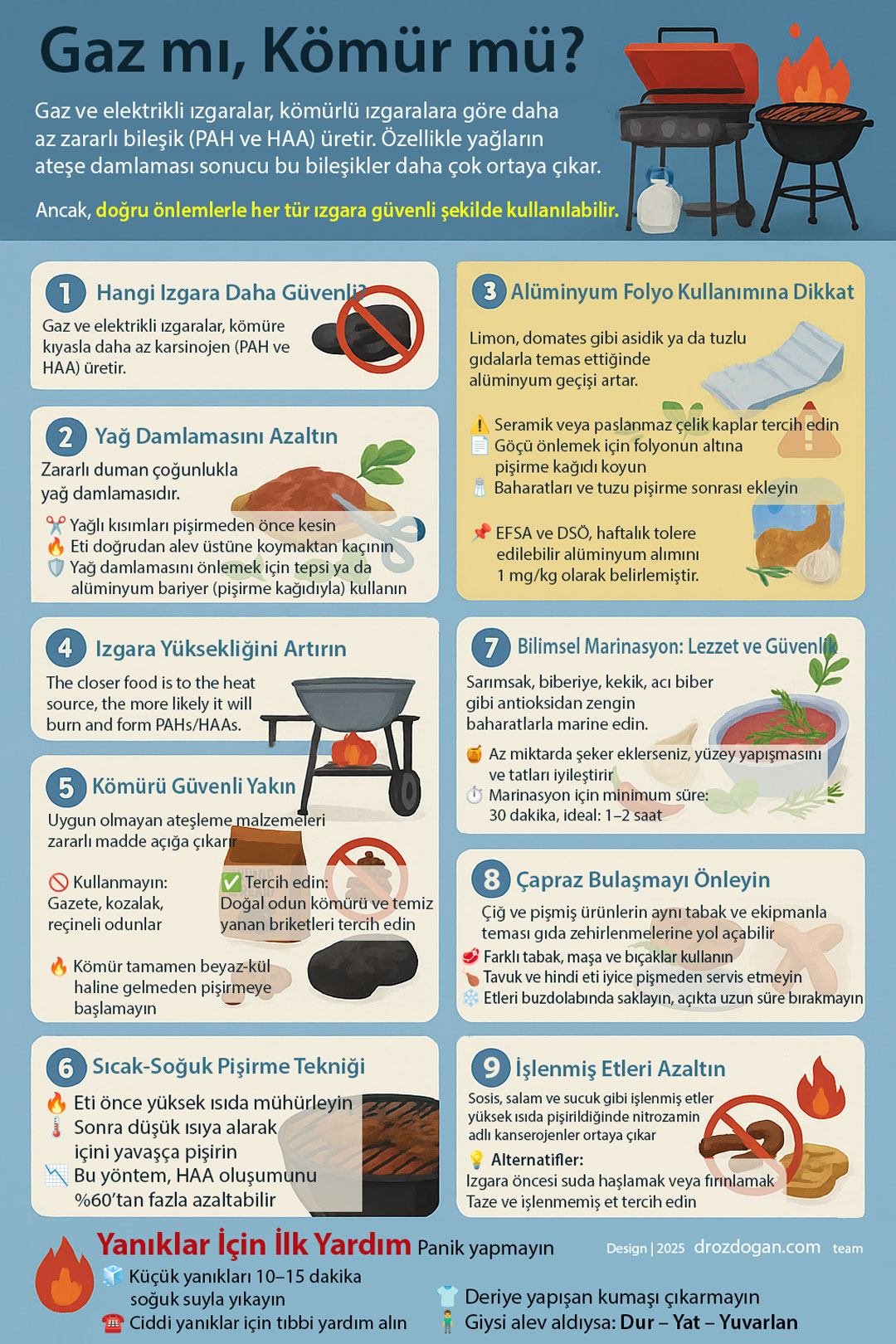
A 10-Step Guide to Safe Grilling
Barbecues are a favorite for many of us, but without care, these delicious occasions can carry numerous health risks. From cancer-causing compounds to cross-contamination, many issues matter for grilling safety. This article offers science-based recommendations for healthier, safer barbecuing.
1. Gas or Charcoal?
Gas and electric grillsproduce far fewer harmful compounds than charcoal grills. In particular, carcinogenic PAHs and HAAs arising when fat drips into fire may form at higher levels with charcoal.
However, any grill can be used safely with appropriate precautions.
2. Reduce Fat Dripping
Dripping fat is a major cause of PAH formation. Reduce the risk with these measures:
- Trim excess fat before cooking.
- Do not put meat directly over flames; keep it away from the embers.
- Use a tray or grill liner to collect fat.
3. Be Careful With Aluminum Foil
Aluminum foil in contact with acidic or salty foods may pose health risks at high temperatures. Therefore:
- Use stainless steel or ceramic trays.
- Place baking parchment beneath the foil to prevent direct contact.
- Add salt and spices after cooking if possible.
- Acidic foods such as lemon, tomato, and vinegar, as well as salt, may increase aluminum transfer.
- Even cooking for only 1 hour at 180°C has produced aluminum transfer levels of 40–42 mg/kg, particularly in fish and chicken.
- High exposure has been associated with nervous system disorders (neurotoxicity), impaired bone structure (osteomalacia), memory problems, and conditions such as Alzheimer disease.
- The European Food Safety Authority (EFSA) and World Health Organization (WHO) set tolerable weekly aluminum intake at 1 mg per unit of body weight.
- Children face greater risk because they consume more food relative to their body weight.
Germany's Federal Institute for Risk Assessment (BfR)states that direct contact between acidic or salty foods and uncoated aluminum containers or foil poses health risks and recommends avoiding it.
4. Raise the Grill
Positioning the grate as far above the fire as possible limits toxic compound formation by reducing direct burning and exposure to high heat.
5. Light Charcoal Safely
- Do not use newspaper, pine cones, or resinous wood.
- Choose natural charcoal or clean briquettes.
- Do not begin cooking until the charcoal has completely turned to ash.
6. Use Hot and Cool Zones
Searing the outside at high heat and cooking the interior at a lower temperature improves flavor and may reduce HAA formation by more than 60%.
7. Science-Based Marinating
Marinating meat in antioxidant-rich spices before cooking substantially inhibits HAA formation.
- Garlic, rosemary, thyme, and chili pepper are among the most effective.
- A small amount of sugar improves both flavor and adhesion to the surface.
- Ideal marinating time: at least 30 minutes, preferably 1–2 hours.
8. Cross-Contamination and Food Safety
Raw and cooked foods contacting the same surfaces or equipment can transfer pathogens, a major cause of food poisoning.
- Use separate knives, boards, and serving utensils for each food group.
- Do not serve chicken or pork until thoroughly cooked.
- Refrigerate meat; do not leave it outside for long periods.
Common pathogens: Salmonella, E. coli, Campylobacter, Clostridium perfringens
Symptoms: Diarrhea, nausea, fever, vomiting, kidney damage, and even neurological complications.
9. Limit Processed Meats
Cooking processed meats such as sausages, salami, and sucuk at high temperatures releases nitrosamines , carcinogenic compounds. If possible, boil or bake these products instead.
10. Disposable Grills and Burn Risk
- Use only on flat, heat-resistant surfaces.
- Avoid grass, balconies, and other unsuitable surfaces.
- Make sure it is completely extinguished after use.
🔥 First Aid for Burns
- Stay calm.
- Cool small burns with lukewarm water for 10–15 minutes.
- For extensive or serious burns, call 112.
- Do not remove burned clothing stuck to the skin.
- If your clothing catches fire: Stop – Drop – Roll .
Was this article helpful?
Your feedback helps us improve our content.




Reader comments
Share your comment
Your name and comment are published only after administrator approval. Your email address is never shown to visitors.
Be the first to comment.