
History's First Cancer Autopsy: Antonio Benivieni and the HIDDEN CAUSES Within the Body

In this article
Day 43 (Cancer History in 365 Days Series)
The question "Why did the patient die?" was medicine's boldest step from theory toward reality. A surgeon's scalpel transformed cancer from an ominous shadow roaming the body into a tangible substance.
In the heart of the Renaissance, in 15th-century Florence, the medical world was deeply perplexed. While geniuses such as Machiavelli and Leonardo da Vinci were redefining the world, physicians still explained disease through the positions of the stars or imbalances in invisible bodily fluids (humors).
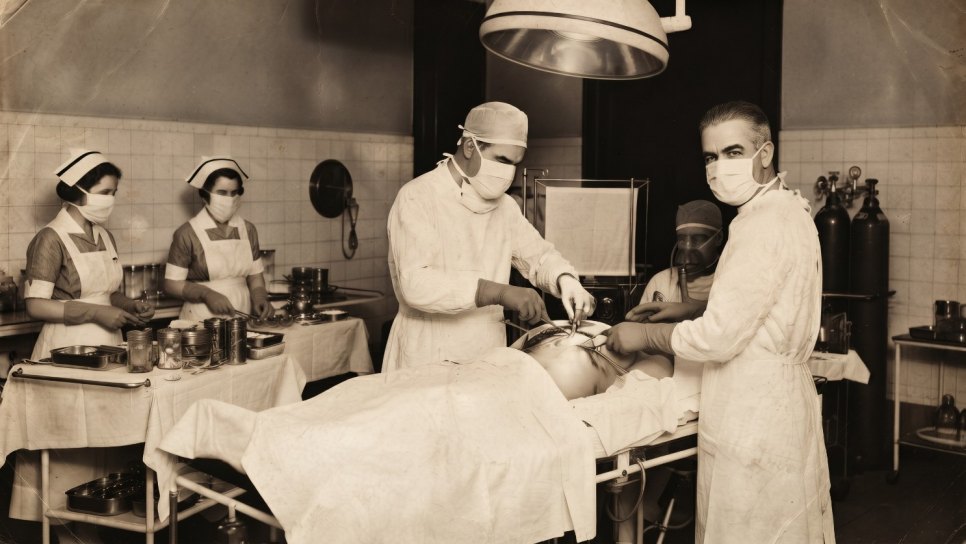
But a physician named Antonio Benivieni (1443-1502) refused to accept these abstract answers. He was not content simply to treat the living; he wanted to see for himself why those who had lost their lives had died, and what had gone wrong inside the body.
The passion that changed medicine's course: why did the patient die?
Since antiquity, a patient's death had been dismissed as "fate." With a courtesy and determination rarely matched in medical history, Benivieni instead began asking the families of his deceased patients for permission to perform autopsies. His aim was not merely to identify organs, but to discover medicine's silent cry: pathology (the cause of disease). This approach would make him the "Father of Pathological Anatomy."
One of Benivieni's patients was vomiting constantly, suffering severe abdominal pain, and growing thinner every day, "wasting away." Physicians of the time described the condition as "irritation from bad bile in the stomach" and recommended medicinal herbs. Despite every effort, however, the patient wasted away from starvation and died.
From abstract delusions to concrete realities: the stone-hard stomach
When Benivieni examined the body to uncover the truth behind this relentless loss, what he saw changed the history of oncology. On reaching the stomach, he found not a fluid called "Black Bile," but a foreign mass, hard as stone to the touch, completely blocking the stomach's outlet (the pylorus).
In modern medicine, this condition is known as Linitis Plastica or advanced gastric cancer. Benivieni demonstrated it for the first time in history by matching the living patient's symptoms (vomiting and cachexia) to the physical finding after death. Cancer was no longer a shadow; it was a physical obstruction taking over the stomach and preventing food from passing through.
On hidden causes: fifty-four pages that changed the world
Benivieni was unable to publish these revolutionary observations during his lifetime. After his death in 1502, his brother compiled his notes and published them in 1507 under the title De abditis nonnullis ac mirandis morborum et sanationum causis (On Some Hidden and Surprising Causes of Diseases).
In this small book of just 54 pages, many diseases, from stomach cancer to gallstones, intestinal perforations, and the nature of masses, were described for the first time with "physical evidence." It marked medicine's transformation from a theoretical tale into a tangible science.
From darkness to light: toward the discovery of the cell
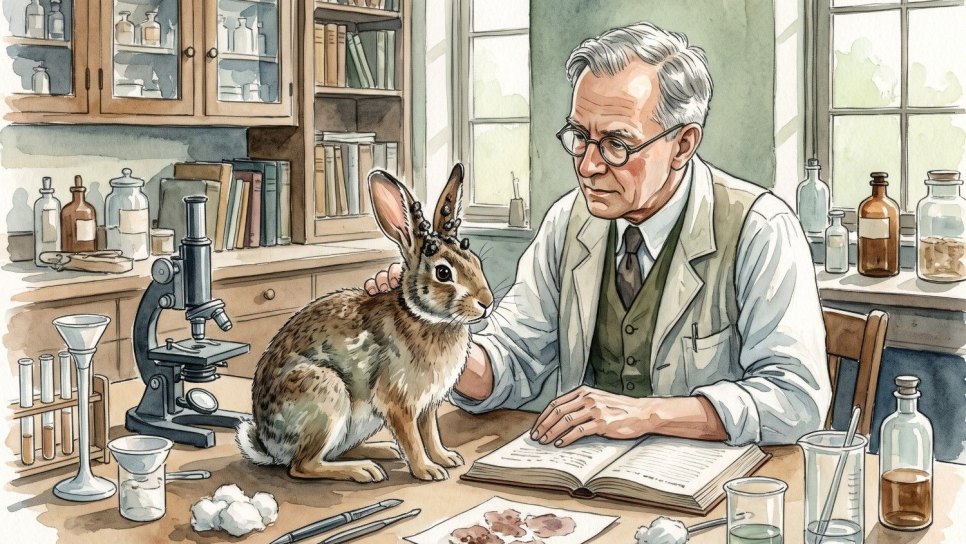
Benivieni's scalpel brought about an enormous paradigm shift in the history of cancer. Diseases would now be sought not in the heavens or metaphysical fluids, but deep within tissues, cells, and organs. This light would lead us to the invention of the microscope and modern pathology.
Healing begins with recognition and understanding the cause
Benivieni taught us the most fundamental law of our oncology practice today: "Correct treatment requires a correct diagnosis." The question he asked in the 15th century, "Why did the patient die?", is the ancestor of our questions today: "What is this tumor's genetic makeup?" or "Which molecular pathway has been disrupted?" Understanding why a cell went astray is the first step toward restoring its balance.
In our next article, we will visit an even more striking stop on this journey of discovery. We will travel to 15th-century Naples, to the court of King Ferdinand I, to explore the colon cancer hidden in a mummy's silence and its genetic code, deciphered 500 years later.
Scientific sources and in-depth reading
- 1. Benivieni, A. (1507). De Abditis nonnullis ac Mirandis Morborum et Sanationum Causis. Florence.
- 2. Hajdu, S. I. (2010). A Note from History: The First Printed Case Reports of Cancer. Cancer Journal.
- 3. Faguet, G. B. (2015). A Brief History of Cancer: Milestones of Knowledge. International Journal of Cancer.
- 4. Thorwald, P. (1931). La vita e l'opera di maestro Antonio Benivieni.
Was this article helpful?
Your feedback helps us improve our content.


Reader comments
Share your comment
Your name and comment are published only after administrator approval. Your email address is never shown to visitors.
Be the first to comment.