
How Does Healthy Microbiota (Beneficial Microorganisms) Affect Cancer Treatment?

In this article
An increase in factors causing cancer and advances in diagnosis have encouraged more research into areas that may be related to cancer. Microbiota is one of these areas.
What is microbiota?
Microbiota includes the bacteria and other organisms (fungi, protozoa, viruses, etc.) living on our epithelial barrier surfaces, or all the particular species with which we coexist.
Microbiota influences many physiological functions, particularly haematopoiesis (blood formation), inflammation and immunity. Demonstrated links between microbiota, human health and many diseases, including cancer, have suggested that it should now be regarded as a new organ.
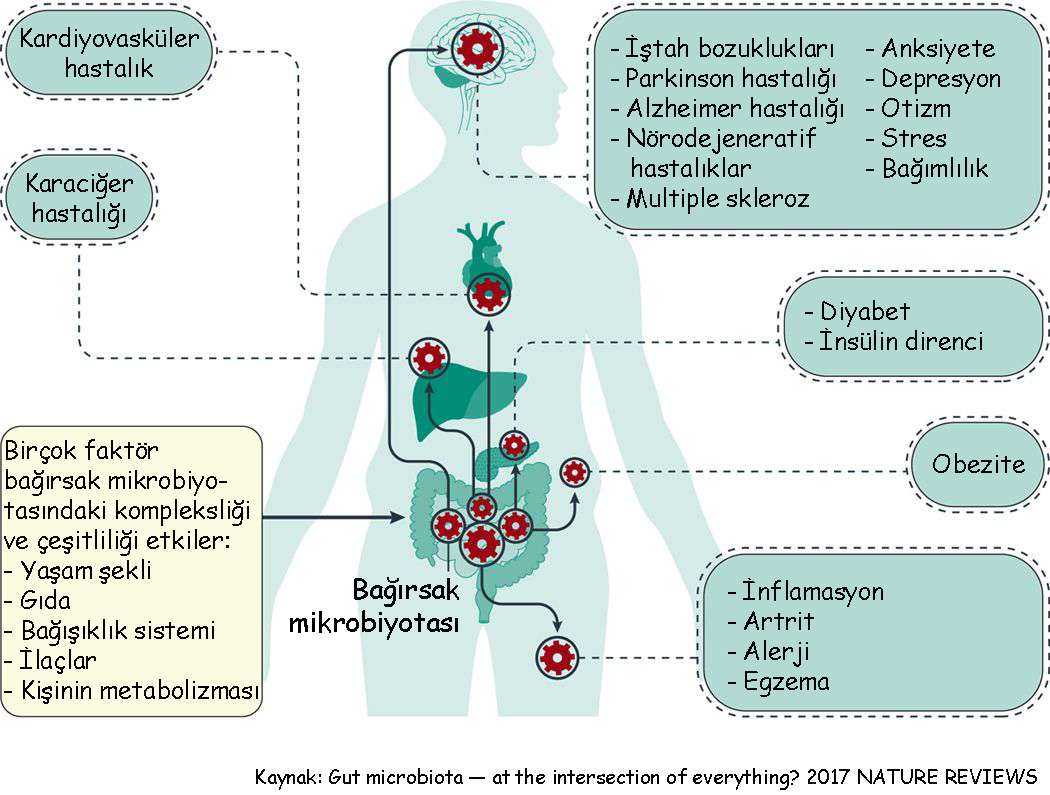
Nature devoted an important place in its special issue “Milestones in Cancer” (Nature Milestones Cancer) to the effects of microbiota on cancer treatments. Detailed information on this topic follows:
When it was least expected…
Recent studies have shown that microbiota, particularly gut microbiota (flora), is closely related to cancer progression in tissues, its extent in the body and the immune system. This suggests that microbiota may play a key role at every stage of carcinogenesis (the process of cancer formation).
Based on recent study data, we summarize the role of microbiota in carcinogenesis and its effects on responses to cancer treatments.
Immunotherapy, chemotherapy and microbiota
Commensal bacteria colonizing the gastrointestinal mucosa profoundly affect host physiological functions, including metabolism, cellular proliferation (rapid multiplication), inflammation and immunity. These effects enable bacteria to produce small molecules and metabolites and also coordinate their relationship with host immune cells at the intestinal barrier.
Immunotherapies and most current cancer treatments rely on stimulating antitumour immune responses. However, whether gut microbiota can influence individual responses through the immune system remains largely unknown.
Pioneering research
In 2013, two groundbreaking studies led by Laurence Zitvogel and Giorgio Trinchieri shed light on this idea. The research involved tumour-cell-implanted mice lacking microbiota because of antibiotic treatment or being microbiota-free, compared with mice with healthy microbiota. These mice received three different cancer treatments. The findings showed that healthy microbiota plays an important role in the effectiveness of cancer treatment.
Convincing results in animal studies
In in vivo animal studies, administering E. Coli bacteria into tumours reduced the antitumour effect of gemistabine chemotherapy. Overgrowth of Parabacteroides distasonis after antibiotic use also reduced the antitumour effect of doxorubicin.
More detailed in vivo clinical studies were reported only with platinum analogues and cyclophosphamide. Reduced activity of platinum compounds against subcutaneous transpalpable tumours was observed in mice lacking commensal microorganisms.
In a study by Lida and colleagues, oxaliplatin chemotherapy had a weak effect in tumour-bearing mice without gut microbiota. After probiotic Lactobacillus species were given to these mice, improvements were similarly observed in platinum-induced inflammatory gene expression and antitumour effects.
Another study by Viaud and colleagues examined mice treated with the chemotherapy drug cyclophosphamide. Its effect on tumours was lower in microbiota-free mice, again demonstrating the profound influence of microbiota on treatment outcomes.
A 2015 study went a step further, investigating different bacterial species responsible for antitumour immune responses. Sivan and colleagues compared genetically similar mice known to have different gut microbiota. Differences were observed in malignant melanoma growth dependent on tumour-specific T-cell responses. For example, Bifido bacteria delayed tumour growth in mice and provided a good response to anti-PD-L1 immunotherapy.
Similarly, a study by Vetizou and colleagues found improved tumour control with anti-CTLA-4 immunotherapy in microbiota-free or antibiotic-treated mice, particularly after oral administration of Fragilis bacteria.
Up to this point, most initial insights into how gut microbiota affects treatment had come from preclinical mouse models. Growing interest led researchers to assess whether observations could be made in patient groups.
And human studies began
In 2018, three parallel studies led by Zitvogel, Gajewski and Jennifer Wargo were published. Stool samples were examined using metagenomic shotgun sequencing to show that gut commensal bacteria shape the effectiveness of anti-PD-1 immunotherapy in people with melanoma and epithelial tumours. Differences in gut microbiota composition were associated with clinical responses to immunotherapies.
Radiotherapy and microbiota
Many cancer patients receive ionizing radiation treatment (radiotherapy). Radiotherapy may change microbiota composition. Ionizing radiation can produce an immune-related antitumour response outside the treated area that requires activation of antigen-presenting dendritic cells and T lymphocytes. Gut microbiota was thought to improve treatment response by increasing the immune-triggering effect of radiation therapy.
Local and systemic side effects of radiotherapy may reduce treatment effectiveness. Some studies of probiotic treatment observed reduced radiation-induced intestinal damage. In mice, TLR-2-activated microorganisms such as Lactobacillus rhamnosus were shown to protect the intestinal mucosa from radiotherapy effects. Combined preparations containing Lactobacillus, Bifidobacterium and Streptococcus reduced the frequency of diarrhoea after pelvic radiation. These changes in radiation sensitivity may be associated with microbiota.
Caution with probiotics as "supplements"
A study presented by Christine N. Spencer and colleagues in 2019 found that taking probiotics as “supplements” did not have the expected effect. Probiotic supplements reduced immunotherapy response by 70 per cent and decreased gut bacterial diversity. By contrast, high-fibre diets increased immunotherapy response 5 times. These vegetable-rich diets increase the number of healthy gut bacteria (see the related study).
Conclusion
Microbiota may play a key role in the development and treatment of many diseases, including cancer. Studies have confirmed that gut microbiota is an influential force in responses to various treatments. Better understanding of its role in carcinogenesis will increase its importance in cancer diagnosis, screening and treatment. However, more studies are needed to identify and validate reliable biomarkers before we can reap the benefits of these studies that may guide cancer treatment responses.
*
- Related topic: The Important Role of Gut Microbiota in Nutrition and Health
Sources
Was this article helpful?
Your feedback helps us improve our content.




Reader comments
Share your comment
Your name and comment are published only after administrator approval. Your email address is never shown to visitors.
Be the first to comment.