
How Is Coronavirus Testing Done? What Are PCR and Rapid Diagnostic Tests?

In this article
The video explains tests used to diagnose COVID-19, caused by the novel coronavirus (SARS-CoV-2), including the different test types, when and how they are used, and how results should be interpreted.
How Is Coronavirus (COVID-19) Testing Done?
On 11 March, just 70 days after China reported cases of "pneumonia of unknown cause" to the World Health Organization (WHO) on 31 December 2019, the WHO declared the novel coronavirus disease, now called COVID-19, a pandemic. COVID-19 has now begun affecting millions worldwide as a new viral respiratory disease that can affect every age group.
We have 3 options for controlling this disease and reducing its harmful effects:
- Perform as many diagnostic tests as possible and isolate patients;
- Increase social distancing and stay home as much as possible; and
- Observe hygiene rules, including meticulous handwashing.
Of these 3 measures, coronavirus diagnostic testing is the least well understood.
Figure 1: the tests used to diagnose SARS-CoV-2 and a summary of the mechanism of immune damage it causes are shown below.

There are two main types of tests for diagnosing the novel coronavirus SARS-CoV-2:
- Polymerase chain reaction (Polymerase Chain Reaction = PCR), and
- Rapid diagnostic tests
PCR testing detects the viral genome in a nasopharyngeal sample, a swab from the nose and upper throat. For this coronavirus, the genome is RNA. The procedure takes 45-90 minutes and is also called a molecular diagnostic test. Rapid diagnostic tests detect viral antigens or the human immune system’s virus-targeting antibodies. Rapid tests can use either nose and upper-throat swabs or blood. Swab tests look for viral antigens; blood tests look for antibodies developed against the virus.
Figure 2: the types of coronavirus tests and the samples used for each are shown below.

To detect SARS-CoV-2, the virus causing COVID-19, the "gold standard" is PCR, which provides the most accurate results. Rapid diagnostic tests are less reliable than the molecular diagnostic tests currently used—PCR—and therefore mainly serve as screening tests. Until now, testing in Turkey has used only PCR, but this cannot provide very large numbers of tests in a day. Introducing rapid screening tests is therefore being considered. Under this approach, a rapid diagnostic test is performed first, followed by a molecular test for a definitive result in those testing positive. Introducing rapid tests will allow as many people as possible to be tested.
Figure 3: the figure below shows how, during the usual course of COVID-19, biomarkers change over time: viral RNA, antigens, and the antibodies produced by the human immune system against the virus (IgM and IgG).

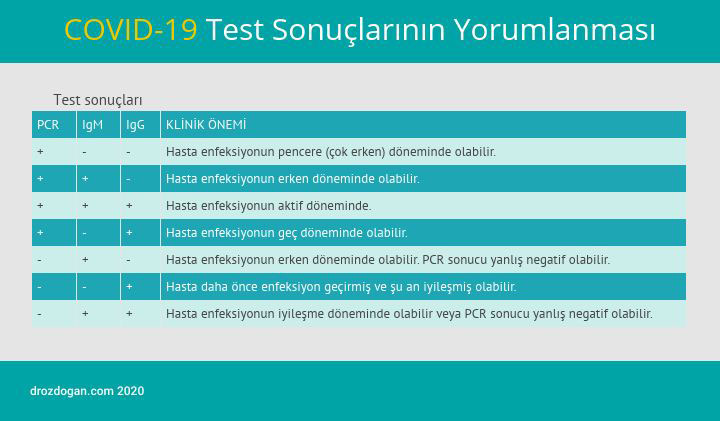
Table 1: the clinical interpretation of coronavirus biomarkers in different scenarios is shown below.
Who Should Be Tested for Coronavirus?
If you have fever, cough and shortness of breath without a runny nose, you may have the virus, regardless of overseas travel or contact with someone arriving from abroad. Everyone in this category should be tested. However, most people infected with the novel coronavirus have no symptoms but remain infectious during that time. Therefore, it is also true that testing should not wait for symptoms. At present, health systems cannot test this many people. This once again highlights the importance of increasing social distancing and staying home! We cannot control the virus while infected people continue circulating in society and on the streets. Everyone who has had contact with a person testing positive for coronavirus should be tested, whether or not they have symptoms. The faster we test and diagnose early, the more we prevent transmission from positive people whose symptoms have not yet appeared and control the rate of spread.
Where Is Novel Coronavirus (SARS-CoV-2) Testing Performed in Türkiye?
All public and private hospitals can collect samples. However, these are sent for testing to laboratories designated by the Ministry.
The US Food and Drug Administration (FDA) Approved a Faster PCR Test
Figure 3: below, you can see how the FDA-approved (on 21 March) Xpert Xpress PCR system works. This diagnostic system is based on a fast, easy-to-use nucleic acid amplification test.

The Xpert Xpress system first separates the virus from the samples. It then isolates the viral genetic material using sonication sound waves. Finally, polymerase chain reaction rapidly amplifies this genetic material. The viral regions most relevant clinically are identified during this process. Results can be obtained in as little as 45 minutes. Doctors can even perform the test in their own offices.
The FDA Approved Abbott’s Rapid Screening Test Giving Results in 5 Minutes
The FDA announced emergency use authorization on 28 March for a test detecting the novel coronavirus (SARS-CoV-2) through its nucleic acid, providing positive results within minutes and negative results within 13 minutes. The portable test will run on Abbott’s ID NOW platform. ID NOW is a rapid, instrument-based, isothermal system for qualitative detection of infectious diseases. Its isothermal nucleic acid amplification technology provides molecular results within minutes, allowing clinicians to make evidence-based decisions during the patient’s visit.
Was this article helpful?
Your feedback helps us improve our content.


Reader comments
Share your comment
Your name and comment are published only after administrator approval. Your email address is never shown to visitors.
Be the first to comment.