
Tattooing: Art’s Touch on the Body and Its Restorative Effect for Patients with Cancer

In this article
Lasting Beauty After Breast Cancer Surgery: The Art of Tattooing
Learning you have cancer, accepting it, undergoing treatment and facing its aftermath—alongside psychological and physical struggles—can leave you with profound trauma. Tattoo art offers an artistic touch to this process, helping women reconcile with their bodies after breast cancer surgery and feel emotionally better.
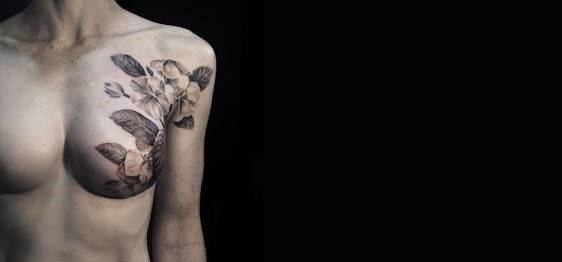
American tattoo artist David Allen, a pioneer in this work, creates aesthetically patterned tattoos over surgical scars and physical deformities in women who have undergone breast cancer surgery. He thereby helps heal wounds to both body and spirit. Having communicated for years with many women who have had breast operations and left permanent artworks on their bodies, David mainly designs nature-inspired imagery such as flowers and leaves. He pays attention to natural, organic arrangements, color and composition that look like part of the body rather than an artificial addition.
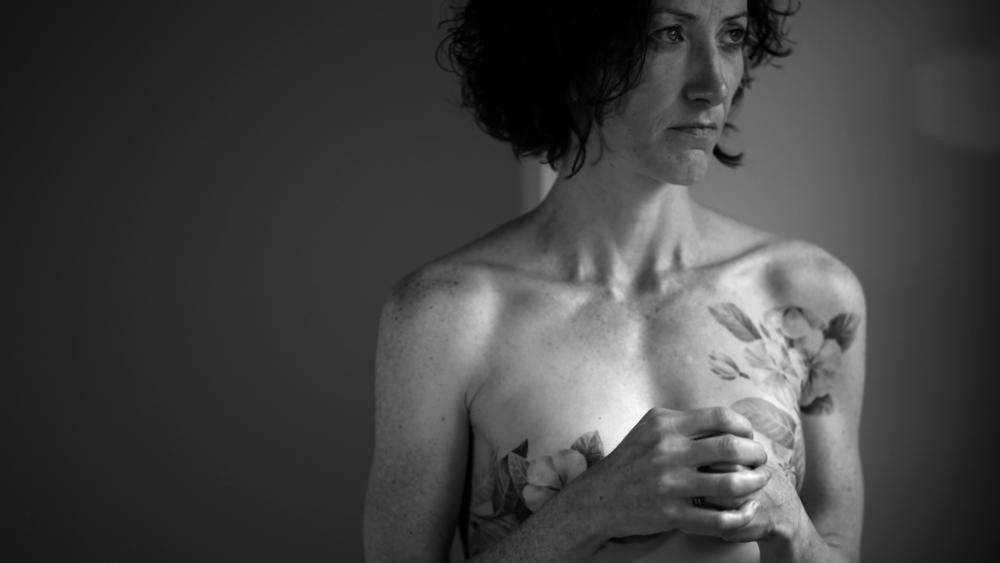
Oncologist Michaela Tsai (2nd image), who found David Allen after her own breast cancer surgery (mastectomy), describes her feelings after the tattoo: “He transformed the traces of surgery—or rather, disease—into a work of art. It is incredibly empowering and uplifting. I recommend it to my own patients too.”
David says, “The aim should not be seen simply as covering something ugly; instead, I try to reveal beauty and make people feel good. What we call beautiful is not actually what is thought perfect. It feels very beautiful and emotional. It is not just tattooing a woman; helping someone in particular is a beautiful part of life. This is life.”
Raised by his mother, Allen also lived for a time with his grandparents. He describes growing up with their religious lifestyle, a belief that everything followed destiny’s plan, constant fear of heaven and hell, and the word “sin.” As he grew older, David felt the world did not work that way. He believes religion’s true purpose is distinguishing right from wrong, that everyone should learn this through life experience, and says he believes in God. In our culture, permanent tattooing may seem contrary to belief, but considering how much it can improve a woman’s feelings about her body, self-confidence, inner peace and the burden of trauma she is trying to overcome, we cannot deny its many benefits.

David says of his clients: “Their stories are incredible. Some want to cover scars completely. Some want to look more attractive and feminine, or regain control lost during the last 4-5 years of treatment. Some men are wonderfully supportive. But most are not.” Working from clients’ trust, he believes an artwork should be created rather than mere camouflage.
Some women who received tattoos after breast cancer surgery share these feelings:
“My husband was a little surprised when I said I was considering a tattoo because I am a conservative woman. But after thinking and researching, I decided I really wanted it. When I showed him sample photographs, he said, ‘Yes, if this is what you want, you should definitely do it.’”
“This is nothing to fear or feel ashamed of; on the contrary, it is wonderful. I truly feel I have healed further, emotionally and physically. It changed my life.”
“I really loved it, and now I feel wonderful when I look in the mirror.”
“Men...” says David, “do not tolerate pain as well as women.” Yes, tattoos use a rapidly moving needle, but the pain is not unbearable. A few hours of mild soreness can transform scarred areas into artworks. Tattooing reveals another healing aspect of art.
Sources
2- Chicago Tribune, "Artist's Mastectomy Tattoos Reveal the Beauty of Survival", Cindy Dampier, Photos by Stacey Wescott, September 30, 2016
3- MD Anderson; Manual of Psychosocial Oncology , Chapter 1: The Clinical Psycho-oncology Assessment. James D. Duffy, Alan D. Valentine.
Was this article helpful?
Your feedback helps us improve our content.




Reader comments
Share your comment
Your name and comment are published only after administrator approval. Your email address is never shown to visitors.
Be the first to comment.