
The Important Role of Gut Microbiota in Nutrition and Health

In this article
What Are Microbiota and Microbiome? Definitions
Microbiome means all genetic information, genomes, of microorganisms in a particular environment. Microbiota is the community of microorganisms. Approximately 100 trillion microorganisms inhabit the human gastrointestinal tract, mostly bacteria, viruses, fungi, and protozoa.
The human genome contains 23.000 genes. In contrast, to produce thousands of metabolites that carry out some major bodily functions and influence health, the microbiome encodes more than 3 million genes .
What Do We See When Examining Gut Microbiota?
Although twin studies show a hereditary component, diet, medications, and anthropometric measurements are broader determinants of gut microbiota. Gut microbes are key to human health, including metabolic and neurobehavioral traits.
Various evidence from animal and human studies supports the role of gut microbiota in human health.

The graph aboveprovides an overview of relative abundance in human microbiota composition at different life stages. Bacteria were measured using 16S RNA or metagenomic approaches .
What Are the Functions of Gut Microbiota?
Gut microbiota provides the capacity for nondigestible substances such as dietary fiber and intestinal mucus to undergo fermentation . This supports specialized bacteria producing short-chain fatty acids (KZYA) and gases. The principal KZYA produced are acetate, propionate, and butyrate. Let us examine each.
Butyrateis the main energy source for human large bowel cells. It stimulates colon cancer cell apoptosis , programmed cell death. It may activate intestinal gluconeogenesis, glucose production from noncarbohydrate sources such as fat, with beneficial effects on glucose and energy homeostasis, balance.
Butyrate is necessary for epithelial cells to consume large amounts of oxygen through β oxidation, establishing intestinal oxygen balance and preventing microbiota dysbiosis, disruption.
Propionateis transferred to the liver to regulate gluconeogenesis and, through intestinal fatty acid receptors , provide satiety signaling .
Acetateis the most abundant KZYA and a metabolite necessary for other bacteria to grow.
Randomized controlled clinical trials, have associated higher KZYA production with lower obesity and reduced insulin resistance.
A mouse study found that butyrate and propionate, but not acetate, regulate gut hormones and reduce appetite and food intake.
Gut microbial enzymes contribute to bile acid metabolism. Other microbiota products directly affect health, for example trimethylamine and indolepropionic acid.
Production of dietary phosphatidylcholine and carnitine from meat and dairy depends on the gut; blood levels therefore vary. In the liver, trimethylamine atherosclerosis and cardiovascular diseases is oxidized to trimethylamine N-oxide, a major cause of these conditions.
Below are illustrations of GUT MICROBIOTA-RELATED DISEASES:
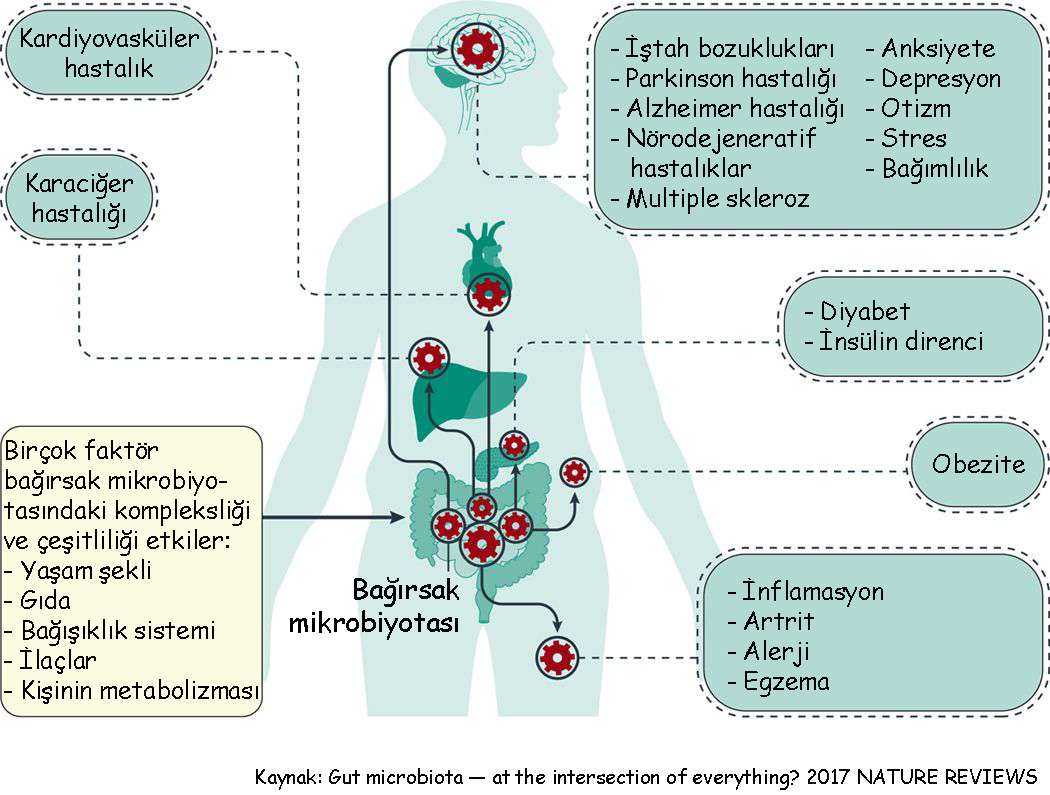
What Is the Relationship Between Gut Microbiota and Obesity?
Gut microbiota appears to play a role in obesity progression. Many studies of overweight and obese individuals show dysbiosis, disruption favoring disease, and low diversity.
In one study, disease-free mice received fecal bacteria from obese and healthy individuals. Mice receiving bacteria from obese individuals gained weight faster.
A UK study found that Cristensenella was less abundant in obese people and that administering Cristensenella to disease-free mice prevented weight gain.
The More Diverse the Microbiota, the Healthier It Is
These and similar bacteria, such as Akkermansia, are associated with low visceral fat stores. Most studies use mouse models; however, long-term human weight gain has been associated with low microbiota diversity and low fiber intake.
Disrupted gut microbiota promotes diet-induced obesity by altering immune metabolism, energy regulation, gut hormone balance, and proinflammatory mechanisms.
Why Is Microbiota Diversity Important for Health?
Low gut bacterial diversity is commonly observed in inflammatory bowel disease, psoriatic arthritis, type 1 diabetes, atopic eczema, celiac disease, obesity, type 2 diabetes, and atherosclerosis. Lower diversity has been observed in alcohol consumers with Crohn disease.
Some recent studies suggest fiber-rich diets temporarily reduce diversity. Fiber-digesting bacteria become particularly enriched through cross-interactions and may reduce diversity. This may result from excessive fiber intake.
How Do Foods and Drugs Affect Gut Microbiota Health?
Particular foods and dietary patterns can influence different intestinal bacterial abundances, affecting health.
Although regulators consider them “generally safe,” some animal studies show sugar substitutes, including sucralose, aspartame and saccharin, may adversely affect gut microbiota.
Processed foods contain emulsifiers also shown to affect gut flora. Two common emulsifiers, carboxymethylcellulose and polysorbate-80, caused lower microbiota diversity in mice.
Animal and in vitro studies show gluten-free bread reduces dysbiosis in people with gluten sensitivity or celiac disease. However, a large observational study of people avoiding gluten without enteropathy showed increased heart disease risk. In other words, a gluten-free diet does not benefit people without gluten sensitivity / allergy and may instead be harmful. This may be because gluten avoidance potentially reduces whole-grain consumption .
A study of 21 healthy people found different gut microbiota after a 4-week gluten-free diet, with fewer of several important beneficial bacterial species in most participants.
Besides diet, medications are important modulators of gut microbiota composition. A Dutch and Belgian population study found laxatives, progesterone, TNF-a inhibitors, and rupatadine had significant effects. People taking these drugs had higher gastrointestinal infection rates. Proton pump inhibitors may have the same effect.
Antibiotics clearly affect gut bacteria. Much antibiotic use in many countries promotes poultry growth and weight gain through routine low doses. Many observational human studies suggest even small antibiotic doses in foods promote obesity, although intervention studies have not shown consistent metabolic outcomes. Studies on pesticides and other chemicals sprayed on foods, even at high levels, and their effects on gut health are currently lacking.
Immunotherapy, chemotherapy, and bone marrow recipients with cancer increasingly show that small microbiota changes can cause major differences in treatment response.
- Related topic: Gut flora may block the immune response against tumors
In animal experiments, protective phytoestrogens' effects on breast cancer also depend on gut microbes converting isoflavones into bioactive compounds, such as Clostridium saccharogumia, Eggerthella lenta, Blautia producta, and Lactonifactor longoviformis.


What Is the Relationship Between Prebiotic Foods, Dietary Fiber, and Microbiota?
Prebioticsare food sources feeding digestive tract bacteria and promoting growth. Medically, prebiotics are growth substrates for microbes with the necessary enzymatic capacity. Onion, leek, and asparagus are examples. Human digestion-resistant starches have been shown to enrich certain bacterial groups, Bifidobacterium adolescentis, Ruminococcus bromii, and Eubacterium rectale, in some people.
Low fiber intake reduces short-chain fatty acid production, potentially producing harmful metabolites. However, a plant-based diet alone has no effect on microbiota diversity. Substantial observational evidence shows fiber benefits human health. Dietary fiber significantly reduced insulin resistance in type 2 diabetes, clearly linked with changes in microbiota and beneficial metabolites such as butyrate.
What Is the Relationship Between Probiotics and Microbiota?
Probioticsare microorganisms naturally present in the digestive tract, assisting digestion and reducing inflammation. They are live microorganisms providing a health benefit to the host when administered in adequate amounts. Probiotics, mostly Bifidobacterium and Lactobacillus species, can be incorporated in foods, supplements, medications, and other products.
- Related topic: Probiotic supplements may reduce immunotherapy effectiveness
Concerns exist that most probiotic supplements cannot colonize the gut or affect established communities. Probiotics may influence health independently of gut microbiota. Their therapeutic effects have been investigated across many diseases.
The adverse microbiome effects of medications and processed foods cannot be ignored. Current knowledge gaps require further clinical trials.
Sources
Role of the gut microbiota in nutrition and health.
BMJ 2018;361:k2179.
Was this article helpful?
Your feedback helps us improve our content.




Reader comments
Share your comment
Your name and comment are published only after administrator approval. Your email address is never shown to visitors.
Be the first to comment.