
The Rebellion of Acid: The Death of Black Bile in the Body’s Laboratory and the Lymph Theory

In this article
Day 53 (The History of Cancer in 365 Days Series)
The moment mystical fluids gave way to chemical reactions: François Sylvius and the iatrochemical revolution in oncology.
While fear of contagion and plague hysteria dominated the streets of 17th-century Europe (Days 51 and 52), one of the greatest revolutions in medical history was brewing in the quiet laboratories of universities. The “theory of humours”, shaken by the anatomical genius Vesalius’s cadaver studies, was about to receive its final blow with Gaspare Aselli’s discovery of milk-white lymphatic vessels.
The body is not theology, but a chemistry laboratory
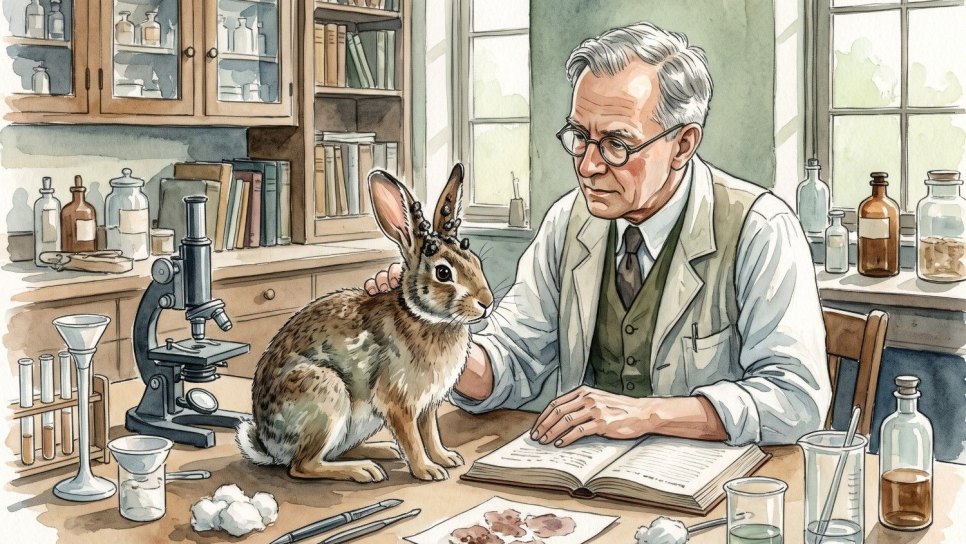
Professor François de le Boë Sylvius (1614-1672) was a brilliant scientist who transformed medical education from top to bottom at the renowned Leiden University in the Netherlands. By establishing Europe’s first university chemistry laboratory, he proved that medicine was not merely dusty shelves and philosophy.
For Sylvius, the body was a chemistry laboratory that never stopped working. Every physiological process depended on a delicate balance between acids and alkalis (bases).
For Sylvius, the “white highway” discovered by Aselli was the key to cancer. Lymph node abnormalities in cancerous tissues formed the basis of the theory.
The movement led by Sylvius, Iatrochemistry (Medical Chemistry) , described diseases not as “spirits taking offence”, but as “an imbalance of chemical compounds”. This was a very early herald of modern biochemistry and systemic oncology.
The “Acidic Lymph” theory: a chemical rebellion inside the tumour
The lymphatic vessels discovered by Aselli formed a new map of cancer’s origins in Sylvius’s mind. Sylvius argued that lymph was normally a healing, white fluid that nourished the body. When things went wrong, however, this “milk” became a poisonous weapon.
Chemical Pathogenesis: Fermentation and Coagulation
According to Sylvius’s theory, when the body’s chemical balance was disrupted, the innocent lymph fluid inside the vessels began to “ferment” (fermentation) . This deterioration turned the fluid into a corrosive, poisonous acid. Cancer was the coagulation of this acidic lymph at a particular point and its transformation into rock-hard masses (scirrhus). Tumour ulceration was easy to explain: the acid burned and corroded healthy tissue from within.
Cancer was no longer described as the work of an imaginary “black bile”, but as a tangible problem involving coagulation and acidification in the lymph channels. This conceptual leap would guide oncology for approximately 200 years, until the emergence of cell theory (19th century).
A new perspective in oncology: neutralising acid
The Lymph Theory also rationalised physicians’ approach to cancer treatment. If the problem was acidic coagulation, the treatment strategy had to be chemical too: use “alkalis (bases) that would neutralise the acid” and clear the obstructed lymphatic highways.
Today, modern oncology tells us that, although the mechanism Sylvius described was incorrect, it is a scientific fact that the tumour microenvironment truly has an acidic pH and that this acidity promotes tumour growth. This “chemical intuition” of the 17th century would resurface centuries later as an immunological finding.
In our next article (Day 54), we will meet Jan Baptist van Helmont, who was the first in history to describe this cellular rebellion as a “local uprising” and argued that enzymes in the stomach and a “maddened inner spirit” triggered cancer.
The chemical roots of biological restoration
Sylvius’s “Acidic Lymph” theory was the sledgehammer that demolished mysticism’s last stronghold in the history of oncology. Seeing the cancer patient not as a “melancholic spirit”, but as a “body with a disrupted chemical balance” was the most primitive yet boldest step towards what we now call “precise medicine”.
This is precisely where the philosophy of biological restoration lies: understanding the cell’s voice and the body’s balance (homeostasis), and rebuilding that disrupted balance. The hands mixing acids and alkalis in the laboratories of the 17th century were sowing the seeds of today’s targeted treatments and metabolic oncology. Healing means being able to read nature’s complex chemistry with compassion and science.
Historical and Academic Sources
- 1. Osler W. The Evolution of Modern Medicine. (1905). Franciscus Sylvius and the birth of clinical chemistry.
- 2. National Cancer Institute (NIH). "History of Cancer - The Humoral Theory vs. The Lymph Theory." SEER Training Modules.
- 3. Di Domenico A, et al. "Gastric Cancer in History: A Perspective Interdisciplinary Study." Gastric Cancer. (2021).
- 4. Mukherjee S. The Emperor of All Maladies: A Biography of Cancer. (2010).
Was this article helpful?
Your feedback helps us improve our content.


Reader comments
Share your comment
Your name and comment are published only after administrator approval. Your email address is never shown to visitors.
Be the first to comment.