
A Next-Generation 1021-Gene Genomic Panel: A Major Step Toward Personalized Cancer Treatment

In this article
Genetic Testing Has Transformed Oncology
We now know that every cancer is genetically unique. One of personalized medicine's most powerful tools is therefore mapping a tumor's genetics. Comprehensive genetic analysesof tissue or liquid biopsy samples help identify the most suitable treatment.
In this study, conducted with international researchers and with me among its authors, we assessed the technical accuracy and clinical utility of a comprehensive next-generation sequencing (NGS) panel covering 1021 genes. Published on June 20, 2025, in the International Journal of Molecular Sciences , it again highlighted the possibilities genetic testing offers oncology.
Study Summary: Tested in More Than 1300 Tumor Samples
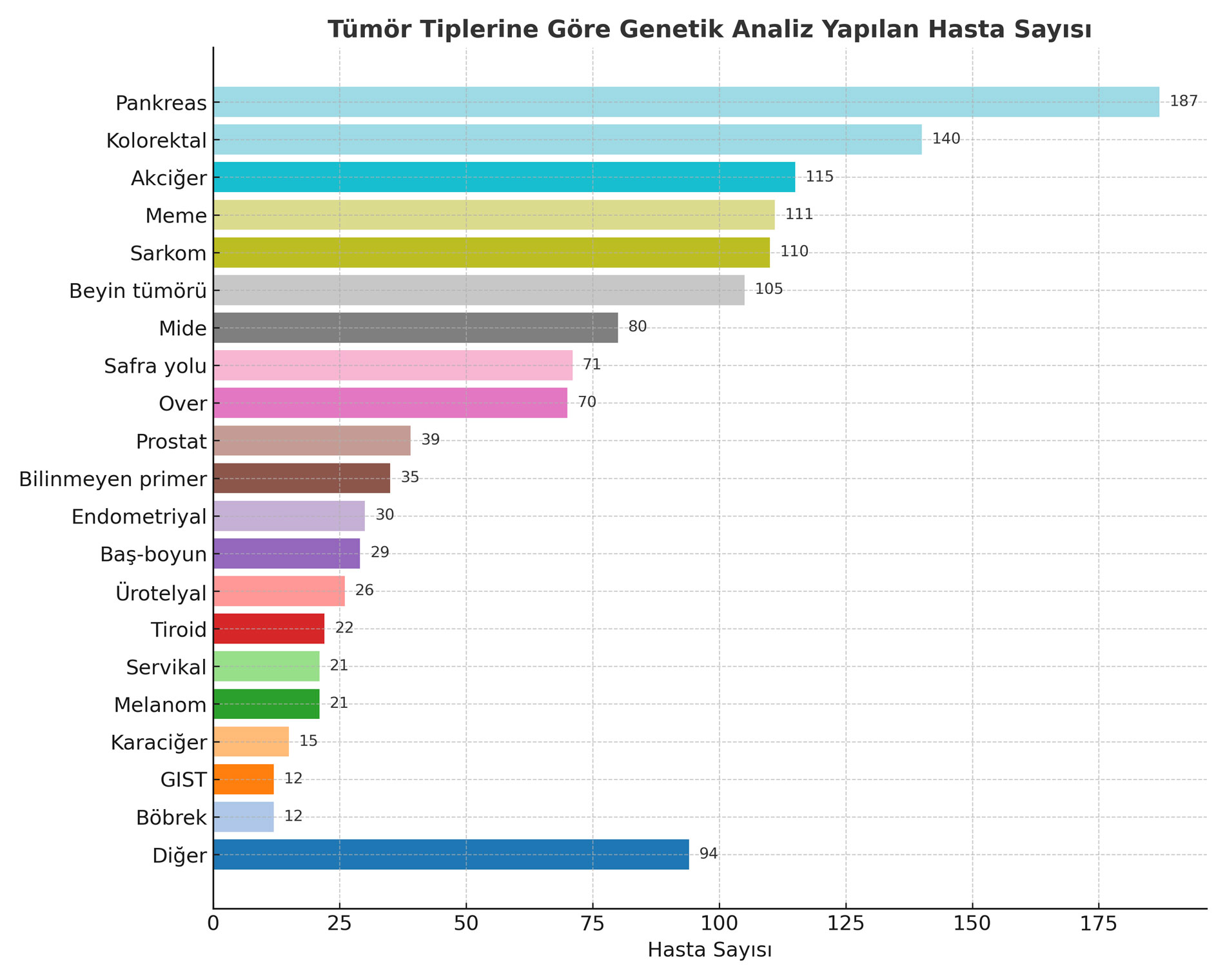
The graph aboveshows, among more than 1300 cancer patients analyzed with the 1021-gene NGS panel, the distribution of cancer types .
In the study,
-
1368 patient samples in total were examined; NGS analysis succeeded in 1345 (98.3%).
-
A total of 10,805 genetic alterations were detected; 66% were classified as "oncogenic" or "likely oncogenic."
-
In more than 50% of patients, actionable genetic alterations were found for on-label or off-label treatment.
-
TMB (Tumor Mutational Burden) and MSI (Microsatellite Instability) and other immunotherapy-related biomarker measurements showed strong concordance with gold-standard methods.
Main Findings: Strong Clinical Actionability Performance

The figure aboveshows, in tumor samples analyzed with the 1021-gene NGS panel, clinical actionability results.
-
12.6% of patients had an approved, on-label targeted treatment option.
-
43.9% of patients had mutations suitable for off-label treatment outside oncological guidelines.
-
26.2% of patients carried genetic alterations suitable for clinical trials.
-
Other categories included treatment-resistance mutations (5.9%), variants of uncertain significance (VUS, 2.5%), normal gene status (wild-type, 3.3%), and mutations with unknown actionability (5.6%).
1. Targetable Mutations:
-
12.6% of patients had genetic alterations suitable for approved, on-label targeted therapies.
-
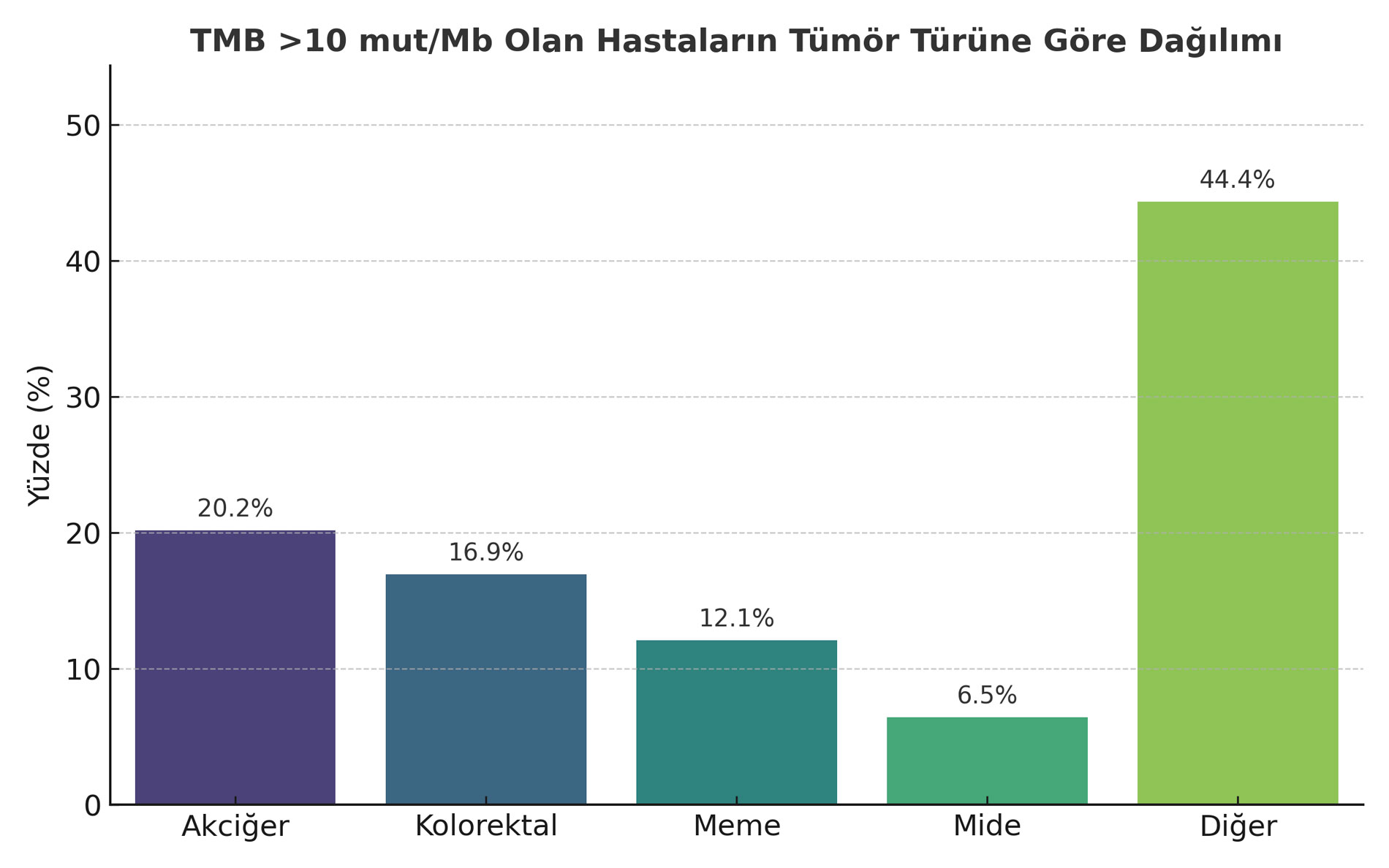
Including immunotherapy biomarkers such as TMB>10 mut/Mb and MSI-H increased this to 20.15%.
-
Most frequently targeted genes: TP53 (47.6%), KRAS (26.2%), PIK3CA (12.8%), BRCA1/2 (8.3%), ERBB2 (14.8%)

2. Concordance Between Tissue and Liquid Biopsy:
-
FFPE (tissue) and plasma (liquid biopsy) analyses were compared in 10 patients.
-
Concordance was 70%. In 3 discordant cases, the failure to detect plasma ctDNA was attributed to ongoing treatment.
3. Prediction for HRR and PARP Inhibitors:
-
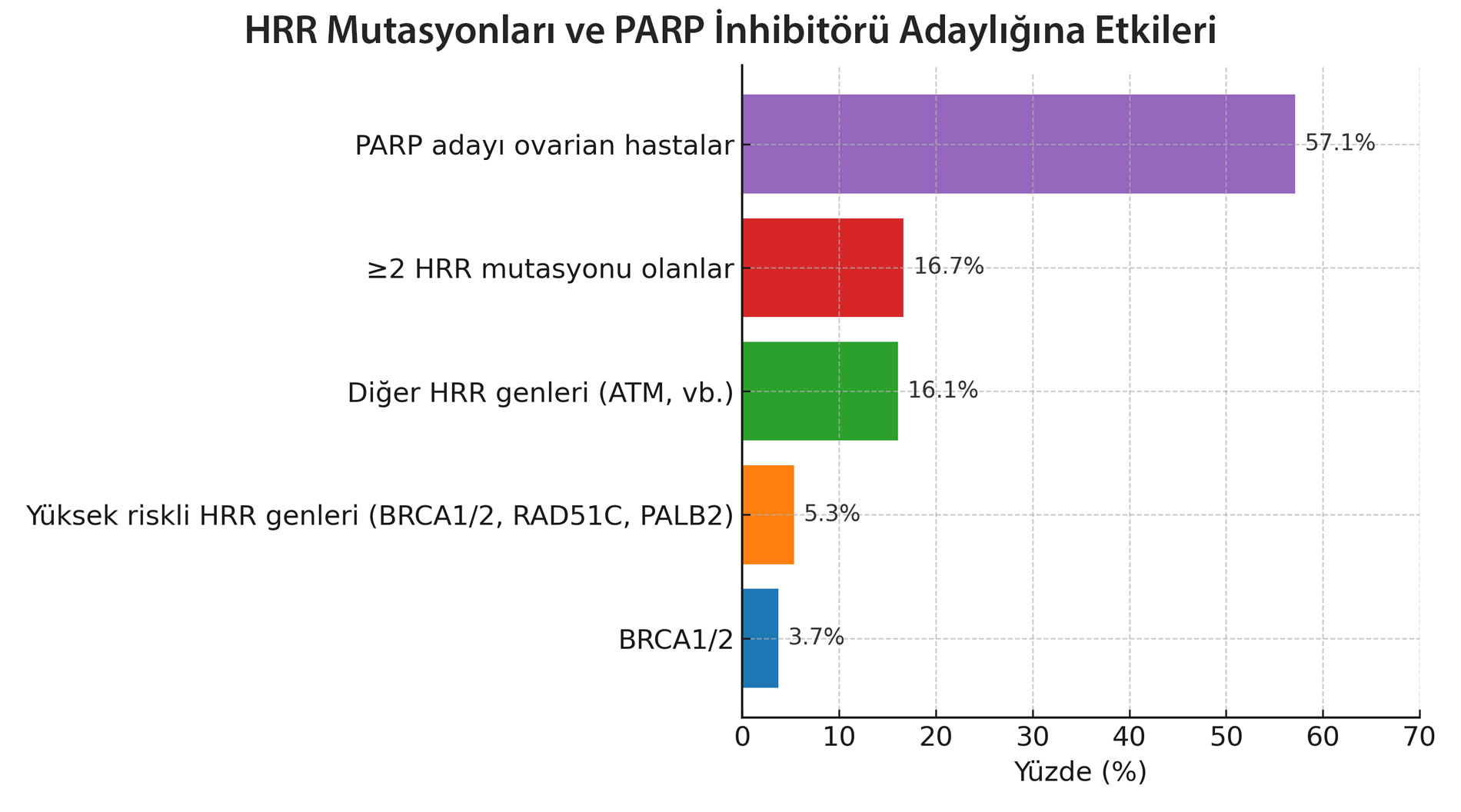
In 19.8% of 1345 patients, mutations related to HRR pathways were found.
-
Variants in genes such as BRCA1/2 (3.7%) and ATM make some patients candidates for specific treatments such as PARP inhibitors .
4. Immunotherapy Biomarkers:
-
MSI-H: Detected in only 1.2% of patients, mostly with colorectal cancer.
-
TMB >10 mut/Mb: Found in 9.2% of patients, particularly lung, breast, and colorectal tumors.
Technical Reliability: Ready for Clinical Use
-
Detected SNVs, indels, CNVs, and fusions with nearly 100% accuracy.
-
Showed high sensitivity even at variant allele frequencies (VAF) as low as 0.5%.
-
Compared with other methods, it achieved over 90% concordance , particularly for HER2, ALK, TMB, and MSI.
The Hybrid Approach Advantage: Real-Time Monitoring With Liquid Biopsy
-
The panel covers broader genomic regions than amplicon-based tests.
-
Hybrid capture technologyenables sensitive detection even at low ctDNA levels.
-
This allows plasma-based monitoring of disease course, treatment response, and resistance mutations.
What Does It Mean in Clinical Practice?
By revealing fine details of tumor biology, this panel provides reliable, comprehensive genetic information from both tissue and liquid samples. It therefore enables:
-
Detection of mutations directly affecting treatment selection.
-
Treatment planning based on tumor biology.
-
Greater potential for early detection of treatment resistance or recurrence.
Conclusion: A Powerful Tool for Personalized Medicine
This study shows that the 1021-gene NGS panel is powerful in both technical accuracy and clinical relevance. Its broad coverage, ability to detect rare mutations, and liquid biopsy capability when tissue is unavailable could take personalized cancer treatment to a higher level.
Sources
Was this article helpful?
Your feedback helps us improve our content.


Reader comments
Share your comment
Your name and comment are published only after administrator approval. Your email address is never shown to visitors.
Be the first to comment.