
A PARP Inhibitor Receives FDA Approval in Prostate Cancer for the First Time: Rucaparib

In this article
On 15 May, the US Food and Drug Administration (FDA) granted accelerated approval for patients who had previously received androgen receptor-targeted therapy and taxane-based chemotherapy, who have a germline and/or somatic BRCA mutation and metastatic and castration-resistant prostate cancer, to the PARP inhibitor rucaparib (Rubraca).
The TRITON2 Study
The efficacy of rucaparib in 115 patients with BRCA mutations (germline and/or somatic) and metastatic castration-resistant prostate cancer previously treated with androgen receptor-targeted therapy and taxane-based chemotherapy was investigated in a multicenter, single-arm clinical trial called TRITON2. Patients received 600 mg of oral rucaparib twice daily. All patients either received a gonadotropin-releasing hormone analogue at the same time or had previously undergone bilateral orchiectomy (surgery to prevent the testes from functioning).
Study Results
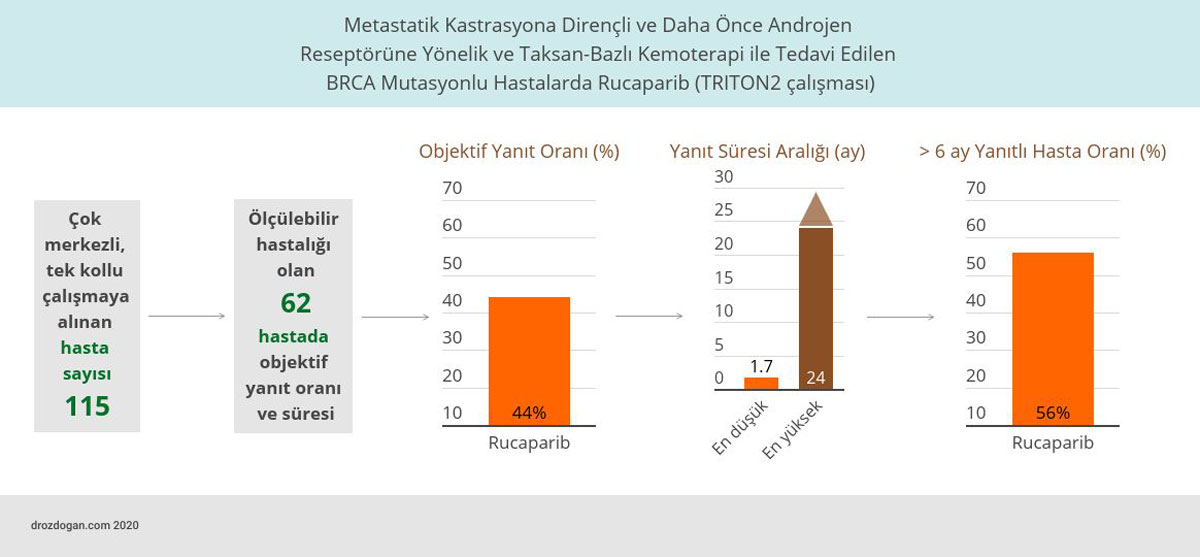
- The objective response rate and duration of response were assessed in 62 patients with measurable disease.
- The confirmed objective response rate was 44% (95% confidence interval [CI] =31-57%).
- The median duration of response could not be assessed. Response duration ranged from 1.7 to 24+ months.
- Among the 27 patients with a confirmed objective response, 15 (56%) had a response lasting more than 6 months.


In 115 patients with BRCA mutation-positive metastatic castration-resistant prostate cancer, the most common (≥ 20) adverse events were fatigue, nausea, anemia (a low blood count), increased ALT / AST, decreased appetite, rash, constipation, thrombocytopenia (an increased risk of bleeding due to an increase in clotting cells), vomiting and diarrhea.
The recommended rucaparib dose is 600 mg twice daily, with or without food. Patients receiving rucaparib for metastatic castration-resistant prostate cancer should also receive a gonadotropin-releasing hormone analogue or should have undergone bilateral orchiectomy.
*
- Related topic: Advanced Prostate Cancer Treatment – Its History and Current State
*
How Does Rucaparib Work?
Because cancer cells divide much more frequently and rapidly than normal cells, more DNA damage, or mutations, occurs. When DNA is damaged, various intracellular mechanisms are activated either to repair it or, if it is too damaged to be repaired, to cause the cell to undergo apoptosis. Both PARP and BRCA are molecules involved in DNA repair. When rucaparib, a PARP inhibitor, is used in prostate cancer, the cancer cell partly loses its ability to repair its DNA. If these cells also have a BRCA mutation, the cancer cells' ability to repair their DNA and remain immortal is reduced much further.

Sources
fda.gov - 15 May 2020
Was this article helpful?
Your feedback helps us improve our content.




Reader comments
Share your comment
Your name and comment are published only after administrator approval. Your email address is never shown to visitors.
Be the first to comment.