
Alexandria's Last Surgeon: Paul of Aegina and the Rule of Fire

In this article
Day 26 (Cancer History in 365 Days Series)
History's pages turn… The year is AD 640. Alexandria, the ancient world's scientific capital, is about to be conquered by Islamic armies. Amid chaos, a surgeon continues writing at his desk: Paul of Aegina (AD 625-690).
He marked the end of one era and the beginning of another: Greek medicine's last great representative and Islamic medicine's first great teacher. His Epitome Medicae (Medical Compendium) would guide surgeons for centuries, establishing early systematic rules that shaped cancer surgery.
1. The Crab's Anatomy: Unlocking Karkinos
Physicians had called cancer a crab for centuries, but Paul best explained why, transforming the metaphor into an anatomy lesson.
2. The Surgeon's Dilemma: To Cut or Not to Cut?
Paul was skilled but recognized his limits. He did not operate on every tumor. His decision process anticipated modern operability criteria.
If the tumor has broken through skin and ulcerated, DO NOT TOUCH. Surgery hastens death.
If fixed to the chest wall, the tumor has deep roots. DO NOT TAKE THE RISK.
If localized, mobile, and not yet spread, THERE IS A CHANCE. Perform mastectomy.
3. Sealing With Fire: The Art of Cauterization
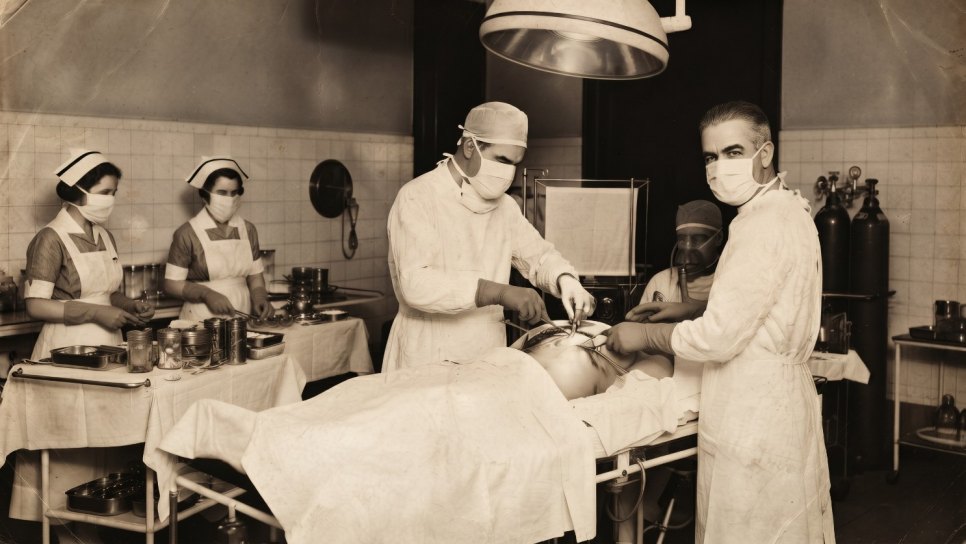
Paul's greatest surgical innovation combined the blade—cold steel—with fire—hot iron. Stopping bleeding was nearly impossible then; he solved this radically.
1. Hemostasis (Bleeding Control):
Each severed vessel is sealed by cauterization with red-hot iron, preventing hemorrhagic shock.
2. Drying the Roots (Oncological Clearance):
Paul believed invisible malignant remnants—melancholic roots—remained after tumor removal. He therefore cauterized the entire tumor bed, resembling a primitive form of modern radiotherapy: Clean With Fire Where the Blade Cannot Reach.
Sources Consulted
- Karamanou M, et al. "Oncology in the Byzantine Era." JBUON.
- Gurunluoglu R, et al. "Paul of Aegina: Landmarks in Surgical Progress." World Journal of Surgery.
- Hajdu SI. "A Note from History: Landmarks in History of Cancer." Cancer.
- "Paul of Aegina." Wikipedia.
Was this article helpful?
Your feedback helps us improve our content.
Reader comments
Share your comment
Your name and comment are published only after administrator approval. Your email address is never shown to visitors.
Be the first to comment.


The Torch of Knowledge Passes From Hand to Hand…
Paul of Aegina was one of medical history's great transmitters, bridging Alexandria's accumulated knowledge to the Islamic Golden Age. His techniques were later developed by the Islamic world's greatest surgeon, Abu al-Qasim al-Zahrawi (Albucasis) , then returned to Europe to form a basis for modern surgery.
Paul teaches that science belongs to humanity, not individual nations or religions. As one civilization fades, another takes up the torch, and its flame never dies.