
An Island, an Emperor, a Tumor on St. Helena: Napoleon and Stomach Cancer

In this article
The Autopsy Report of 5 May 1821 and a Genetic Code in the Bonaparte Family Still Being Deciphered Two Centuries Later
On Saturday, 5 May 1821, at 17.49 in the late afternoon, on an island in the middle of the South Atlantic Ocean, 1.900 kilometers from the African coast, a fifty-one-year-old man took his last breath. Around his bed stood a few generals who had sworn loyalty, three servants and a young physician brought from Corsica. Two years before his death, the man had written: “I am still alive, but every day I draw a step closer to death. I will die of a stomach illness, like my father — of that I am certain.” He died as he had predicted. The next morning, on 6 May 1821, his Corsican personal physician, Dr. Francesco Antommarchi, performed an autopsy in the presence of sixteen people — seven of them British surgeons and physicians. When they opened the body, they found a perforation near the pylorus, a large ulcerated mass and strong adhesions between the liver and stomach. The stomach was virtually destroyed. The dead man was Napoleon Bonaparte, Emperor of France, the soldier-statesman who had shaped Europe for about fifteen years, the founder of the modern legal system and father of the Code Civil, the embodiment of a seventeen-year-old Corsican who had entered world history. What entered medical history with him went beyond an emperor's death: it was a family's biological destiny. His father had died of stomach cancer in 1785 at age 38. His sister Pauline died with the same diagnosis in 1825 at age 44. Other siblings and nephews and nieces had similar illnesses — a familial cluster that today, in modern paleopathology, has given rise to the hypothesis of hereditary diffuse gastric cancer (HDGC) syndrome, that is, a CDH1 gene mutation. Today's article tells the story of both an autopsy report and the biology of a dynasty.
From Waterloo to Longwood: June 1815 to May 1821
Napoleon was born on 15 August 1769 in Ajaccio, Corsica. His father, Carlo Maria Buonaparte , was a Corsican lawyer; his mother was Letizia Ramolino. He grew up as the second son in a family of eight children. In 1779, at ten years of age, he was sent to the Brienne military school in France, then to the École Militaire in Paris. As an artillery officer, he entered the service of the French Revolution (1789), and in 1804 he placed the imperial crown on his own head at Notre-Dame. Over the next eleven years, he redrew the map of Europe, established the modern legal system (1804 Code Napoléon), campaigned in Egypt, occupied Moscow and, finally, at the Battle of Waterloo on 18 June 1815 , was defeated by the combined British-Prussian forces.
On 17 October 1815, at age 46, he was exiled to St. Helena Island by British decision. This was a small volcanic island in the middle of the Atlantic Ocean, about 1.900 kilometers from the nearest mainland (Africa) and 1.300 kilometers from the nearest neighboring island. An old farmhouse called Longwood House was assigned to the emperor as his home — damp, cold and unsuitable for living. The small entourage he brought with him (Generals Bertrand and Montholon, valet Marchand, physician Dr. Barry O'Meara) dispersed over time; some were sent back to Europe. In 1819, the Bonaparte family sent the young Corsican physician Antommarchi to the emperor.
During his six years on St. Helena, Napoleon's health gradually deteriorated. Modern medical historians divide this period into five stages:
📅 STAGES OF NAPOLEON'S ILLNESS ON ST. HELENA (Lugli and colleagues, 2007)
Stage 1 (1815-1817): Relatively good condition; adapting to exile, dictating his memoirs; occasional edema and mild abdominal pain.
Stage 2 (1817-1819): Fatigue and periodic epigastric pain (above the stomach) become prominent. Physician O'Meara's reports suspected “chronic hepatitis or gastritis”.
Stage 3 (1819-1820): Antommarchi arrives. Frequent emesis (vomiting), loss of appetite and weight loss. Still not regarded as a fatal illness.
Stage 4 (October 1820 - February 1821): Rapid deterioration. Constant abdominal pain, night sweats, confinement to bed.
Stage 5 (March 1821 - 5 May 1821): The final two months. In Antommarchi's memoirs, abdominal pain on all 48 of 48 days, fever on 36 and vomiting on 32. On 5 April 1821, hematemesis (vomiting blood) and melena (black, bloody stool) — a clear sign of tumor bleeding from vascular structures. On 1 May, his pulse was 112 per minute. Death four days later.
In his final weeks, Napoleon saw his condition extremely clearly. He told his loyal valet Marchand: “My father died of stomach cancer. I will die of the same disease. This is my end.” Before dying, he dictated his will, instructing Antommarchi to perform an autopsy: “I want you to perform my autopsy after my death. No British physician other than Dr. Arnott is to touch my body."
This sentence matters: an autopsy on his own body after death was something that Napoleon, unlike Maria Theresa, wanted. The reasons were probably twofold: first, to establish how real the history of stomach cancer in his family was; second, to document claims that would circulate in Europe for years that the conditions of exile had killed him. Ultimately, he largely achieved both aims.
Two Reports, Sixteen Witnesses, One Historical Document
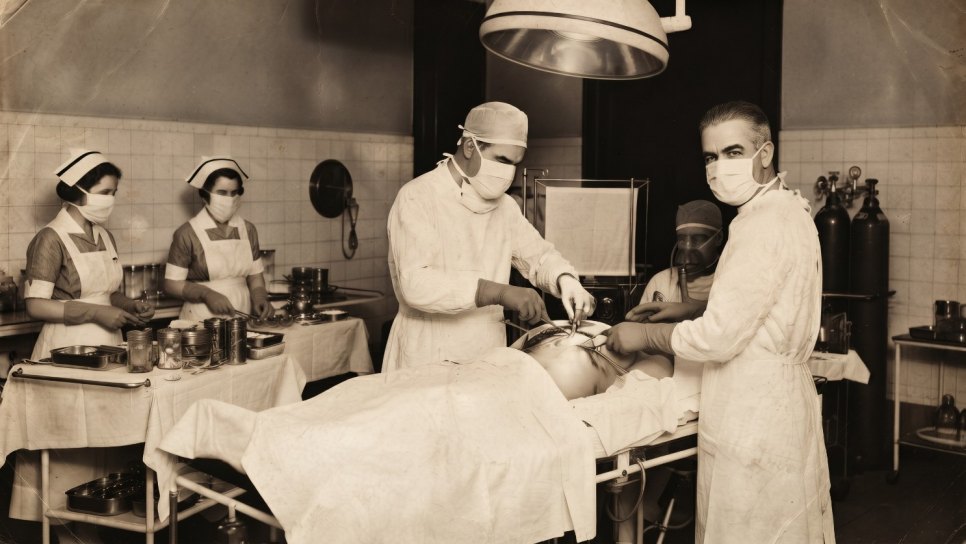
The autopsy took place the day after his death in a temporary autopsy room created from the billiard room at Longwood House. Sixteen people were present: the emperor's companions in exile, his servants, and Thomas Shortt (head), Archibald Arnott, Charles Mitchell, Francis Burton and Matthew Livingstone from the British medical delegation. The young Corsican physician Dr. Antommarchi led the procedure — he had been selected because he had studied under the famous anatomy professor Giuseppe Mascagni (1755-1815) at the University of Siena.
Two separate autopsy reports were subsequently written: one by Antommarchi (an expanded version published in his memoirs in 1825), the other by the British physicians. The two reports largely agree on gastric pathology; the main differences concern findings in other organs (especially the lungs and liver) and details Antommarchi added later. Modern historian Lugli and colleagues (2007, 2021) have shown that Antommarchi's 1825 publication differed substantially from his initial report and that some passages appear to have been taken from a French medical journal dated 1823 — raising suspicion that Antommarchi later embellished his report for his reputation.
The shared — and reliable — findings are as follows:
AUTOPSY REPORT — 6 MAY 1821 (findings shared by Antommarchi + British physicians)
General examination: Marked weight loss (prominent bones), but a thick layer of fat remained underneath (the paradox of atrophied muscles + an obese appearance — an atypical form of cancer cachexia). Atrophied testes and penis. Pale, hairless skin.
Thorax: Approximately 90 ml of yellowish fluid in the left pleural cavity and 240 ml in the right. Several tuberculosis-like cavities in the upper lobe of the left lung (according to Antommarchi; British physician Arnott said the lungs were normal — a disagreement).
Abdominal cavity: Viscous fluid over the peritoneum. An enlarged liver with tight adhesions to the stomach — these adhesions indicate the tumor's advanced stage and chronic inflammation.
Stomach — the main finding:
- On the lesser curvature, approximately 2,5 cm (about a finger's length) from the pylorus, there was a complete perforation — large enough for a little finger to pass through (approximately 6-7 mm).
- A stomach–liver adhesion over the perforation (a natural “plug” sealing it) had delayed death from peritonitis.
- The ulcerated mass extended from the pylorus toward the cardia (the entrance to the stomach) for more than 10 cm — thus involving a substantial portion of the greater curvature.
- The gastric wall was thickened and fibrous, with a “scirrhous” character (18-19th-century pathology terminology).
- Within the stomach was coffee-ground-colored fluid — the classic finding of oxidized hemoglobin following bleeding.
Modern TNM staging (Lugli and colleagues' 2007 reassessment): At least T3, probable lymph node involvement (N1+); distant metastasis was not documented but could not be ruled out (Mx). According to Lugli, the picture is consistent with advanced gastric adenocarcinoma; the probable histological type is diffuse type (Lauren), with an infiltrative growth pattern resembling “linitis plastica.”
The direct cause of death appears to have been chronic gastrointestinal bleeding and the resulting severe anemia rather than the perforation — melena and hematemesis in the final week support this. Tumor erosion into vascular structures and persistent bleeding explain Napoleon's pallor, tachycardia and weakness in his final weeks.
Forshufvud 1961, Hindmarsh 2008, Lugli 2007 — A Modern Forensic Inquiry
Although the autopsy reports clearly indicate stomach cancer, Napoleon's cause of death remained disputed throughout the 19th century. A theory attracted international attention particularly after the 1960s: arsenic poisoning.
In 1961, Swedish dentist Sten Forshufvud compared symptoms in the memoirs of Napoleon's loyal St. Helena valet Marchand (sweating, muscle twitching, thirst, jaundice) with the classic symptoms of arsenic poisoning. Analyzing a lock of Napoleon's hair cut in 1816, Forshufvud found an arsenic concentration far above normal (10.38 µg/g, normal approximately 0.5-1 µg/g). The result: Nature published a paper in 1961 in which Forshufvud claimed that Napoleon had died from deliberate arsenic poisoning. Comte Charles de Montholon (his companion in exile) was named as a possible suspect.
This theory filled popular history books and documentaries for the next 50 years. By the 21st century, however, modern forensic toxicology had largely refuted the hypothesis:
- Hindmarsh, Corso and colleagues, 2008: Researchers at the University of Pavia (Italy) analyzed samples of Napoleon's hair from different years (1804 presidency, 1814 exile on Elba, 1821 death). The result: arsenic levels were high in every period, and were even higher in the years before St. Helena. Napoleon had therefore lived with high arsenic levels for years — this was not poisoning but a consequence of the period's chronic arsenic exposure . In the early 19th century, arsenic reached high levels in most of the population through house paints, curtains, medicines, food preservatives and disinfectants.
- Lugli and colleagues, 2007, Nat Clin Pract Gastroenterol Hepatol: Reassessment of autopsy findings through the eyes of a modern pathologist. Tumor size, stage, perforation, signs of chronic bleeding and clinical course — all are consistent with advanced stomach cancer rather than chronic arsenic poisoning. Arsenic is the noise in this story, rather than its cause.
- Lugli, Carneiro and colleagues, 2021, Virchows Archiv: An assessment by an international consortium of pathologists for the 200th anniversary of his death (Bern, Porto, Paris, Toronto). Conclusion: Advanced gastric adenocarcinoma, with gastric perforation and death from chronic bleeding. The arsenic theory is closed.
This is an important teaching point in medical history: the autopsy report of the 1820s — clinical observations made without modern instruments or a microscope — had provided the correct diagnosis. The “conspiracy theory” alternative diagnosis that became fashionable 140 years later was much more sensational but wrong. In the history of science, the simple, correct answer often loses to the sensational, wrong answer — but always returns in the long run.
Seven Family Members Who Died of Stomach Cancer Across Three Generations
Napoleon's death was not the only case of stomach cancer in his family. On the contrary, the Bonaparte family carries one of the most extraordinary clusters of stomach cancer documented in medical history. The table below shows familial cases of stomach cancer derived from existing historical records:
STOMACH CANCER DEATHS IN THE BONAPARTE FAMILY — THREE GENERATIONS
Seven cases across three generations, some before age 50 — this moves beyond coincidence. In terms of modern family-history screening criteria (International Gastric Cancer Linkage Consortium guidelines updated in 1999, 2010 and 2020), the Bonaparte family largely meets the clinical diagnostic criteria for hereditary diffuse gastric cancer (HDGC).
An E-Cadherin Mutation That Settled in Corsica in the 1500s
In 1998, through a molecular study of a cluster of diffuse gastric cancer at young ages and lobular breast cancer in a Māori family from New Zealand, a germline (inherited) mutation in the CDH1 gene (E-cadherin) was identified. CDH1 is a tumor suppressor gene located on chromosome 16q22.1; its product, E-cadherin, enables epithelial cells to adhere to each other. In an individual carrying a mutation on one side (heterozygous), when the cell loses the other allele through a subsequently acquired (somatic) mutation — that is, when two hits have occurred, in accordance with Knudson's 1971 hypothesis (to be covered on Day 155) — cancer development begins.
HDGC syndrome is inherited in an autosomal dominant pattern: each child of a parent carrying a CDH1 mutation has a %50 risk of inheriting it. In mutation carriers, the lifetime risk of diffuse-type stomach cancer reaches %70 in men and %56 in women; women additionally have a lobular breast cancer risk of approximately %42.
🧬 HDGC DIAGNOSTIC CRITERIA (Updated, 2020)
A family meeting at least one of the following criteria is considered a candidate for CDH1 germline mutation testing:
(1) Diffuse stomach cancer in two or more first- and second-degree relatives, with one case under age 50; (2) Cases of diffuse stomach cancer + lobular breast cancer within the family; (3) Diffuse stomach cancer under age 40 in a single individual; (4) Two primary cancers (diffuse stomach + lobular breast), individually or within the family.
Interpretation of the Bonaparte family: Carlo (age 38, father), Napoleon (age 51, son), Pauline (age 44, daughter), Lucien (age 65, son), Caroline (age 57, daughter) — with at least three to four stomach cancer cases at young or advanced ages in first-degree relatives, the family exceeds the HDGC diagnostic criteria. If DNA from Napoleon's family were accessible (some paleopathologists have made attempts, but surviving family samples are either degraded or lack official permission), CDH1 germline mutation testing could be performed.
The HDGC hypothesis in the Bonaparte family was first proposed by Lugli and colleagues in 2007. In subsequent years, Carneiro and other medical historians supported it. If the hypothesis is correct — and it seems quite plausible in light of today's clinical criteria — Carlo Bonaparte, as a CDH1 mutation carrier in the family, may have passed the mutation to at least four of his seven children (Napoleon, Pauline, Caroline, Lucien). This is part of the seven-generation biological legacy of the Buonaparte family, who migrated from Liguria to Corsica in the 16th century.
A Modern Oncological Approach for a Bonaparte Diagnosed with HDGC
What would happen if modern medicine could see Napoleon in 2026? This exercise is educational rather than historical — it makes today's management of hereditary stomach cancer tangible for patients with a family history:
First step — Family history and genetic testing. A seven-year-old Corsican child whose father had died at age 38 of a “stomach illness” would have been referred to a modern genetic counseling center as a son of that family. CDH1 germline mutation testing (Sanger sequencing or an NGS panel) would have been performed early. If carrier status were confirmed:
Second step — Active surveillance and prophylactic gastrectomy. Under current international guidelines (IGCLC 2020 consensus, NCCN 2024), for CDH1 mutation carriers between ages 18-25, prophylactic total gastrectomyis recommended for discussion. This is because HDGC is difficult to detect early by endoscopy — diffuse-type tumors grow beneath the mucosa in an infiltrative pattern resembling “linitis plastica,” without classic endoscopic findings. Where prophylactic gastrectomy is declined, endoscopic follow-up every 6 months + a biopsy regimen are used.
Third step — Breast screening for female relatives. Female CDH1 carriers such as Pauline and Caroline Bonaparte would have been managed with annual mammography + MRI + discussion of prophylactic mastectomy.
Fourth step — Treatment: If cancer has developed by the time of diagnosis. Napoleon presenting in 2026 — with advanced diffuse gastric adenocarcinoma, perforation and chronic bleeding at age 51 — would still be a difficult scenario today. The modern approach, however: emergency support (transfusion, antibiotics, closure of the perforation), neoadjuvant treatment (the MATTERHORN protocol — perioperative FLOT + durvalumab, if resectable), genomic profiling (HER2, PD-L1, CLDN18.2, FGFR2, MSI status) and total gastrectomy in selected cases. Five-year survival for resectable advanced HDGC remains around %25-35 today — much better than in 1821, but still a disease with an unpromising outlook, even if not utterly hopeless.
🔍 A BRIEF FACT-CHECK NOTE
- Napoleon's birth and death: 15 August 1769, Ajaccio, Corsica — 5 May 1821, Longwood House, St. Helena Island; age 51
- Beginning of exile on St. Helena: 17 October 1815, four months after Waterloo
- Duration of exile: 5 years, 6 months, 19 days
- Autopsy date: 6 May 1821, Longwood House; performed by Corsican physician Dr. Francesco Antommarchi in the presence of 16 people (7 British physicians)
- British medical delegation: Thomas Shortt (head), Archibald Arnott, Charles Mitchell, Francis Burton, Matthew Livingstone
- Autopsy finding: A 6-7 mm perforation in the pyloric region; an ulcerated mass measuring 10+ cm; stomach–liver adhesions; coffee-ground-colored gastric contents
- His father, Carlo Bonaparte: 27 March 1746, Ajaccio — 24 February 1785, Montpellier; age 38; died of stomach cancer
- His sister Pauline: 20 October 1780 - 9 June 1825, Florence; age 44
- His sister Caroline: 25 March 1782 - 18 May 1839, Florence; age 57
- His brother Lucien: 21 May 1775 - 29 June 1840, Viterbo; age 65
- Forshufvud's arsenic theory: Nature 1961, subsequently refuted by Hindmarsh 2008 and Lugli 2007/2021
- Paleopathology studies by Lugli and colleagues: Nat Clin Pract Gastroenterol Hepatol 2007;4(1):52-57 and Virchows Archiv 2021;479(6):1055-1067
- Identification of the CDH1 gene: 1998, Guilford and colleagues, Nature; the molecular basis of HDGC syndrome
- Modern HDGC criteria: International Gastric Cancer Linkage Consortium, latest update 2020
Xavier Bichat and the Birth of Tissue Pathology — 1801, Paris
20 years before Napoleon's death, in the same Paris, a 28-year-old French physician had begun a revolution in history: disease resides not in the organ but in the tissue . In 1761, Morgagni had said that “every disease has a location”; in 1801, Bichat showed how that location could be read at a finer resolution. There were not 21 organs with 21 diseases, but 21 tissues each with its own patterns of illness. This genius, who would die at thirty-one, took the second great step in modern pathology.
Author's note: The hypothesis of HDGC in the Bonaparte family discussed in this article is debated in modern paleopathological literature but has not received definitive molecular confirmation (CDH1 germline mutation testing). Access to family members' DNA samples requires official permission; no such test has been performed to date. In light of historical records and modern HDGC criteria, the clinical assessments presented in this article constitute a possible diagnostic scenario; a definitive diagnosis is not represented by these assessments. Interpretation of the autopsy reports is based on the studies of Lugli and colleagues from 2007 and 2021. The observation that “some passages in Antommarchi's subsequently published expanded autopsy report appear to have been taken from the 1823 Archives Générales de Médecine” is documented in Lugli's 2007 paper.
References and Further Reading
- Lugli A, Zlobec I, Singer G, Kopp Lugli A, Terracciano LM, Genta RM. Napoleon Bonaparte's gastric cancer: a clinicopathologic approach to staging, pathogenesis, and etiology. Nature Clinical Practice Gastroenterology & Hepatology 2007;4(1):52-57. doi:10.1038/ncpgasthep0684
- Lugli A, Carneiro F, Dawson H, Fléjou JF, Kirsch R, van der Post RS, and colleagues. The gastric disease of Napoleon Bonaparte: brief report for the bicentenary of Napoleon's death on St. Helena in 1821. Virchows Archiv 2021;479(6):1055-1067. doi:10.1007/s00428-021-03061-1
- Antommarchi F. Les Derniers Moments de Napoléon, ou Complément du Mémorial de Sainte-Hélène. 2 volumes. Paris: Barrois l'Aîné, 1825. (The expanded version of the autopsy report published by Antommarchi.)
- Hindmarsh JT, Savory J. The death of Napoleon, cancer or arsenic? Clinical Chemistry 2008;54(12):2092-2093. (Modern forensic toxicological refutation of the arsenic theory.)
- Forshufvud S, Smith H, Wassen A. Arsenic content of Napoleon I's hair probably taken immediately after his death. Nature 1961;192:103-105. (The original publication of the arsenic theory — a historical reference.)
- Guilford P, Hopkins J, Harraway J, and colleagues. E-cadherin germline mutations in familial gastric cancer. Nature 1998;392(6674):402-405. (The original identification of HDGC and the CDH1 gene.)
- Blair VR, McLeod M, Carneiro F, and colleagues. Hereditary diffuse gastric cancer: updated clinical practice guidelines. Lancet Oncology 2020;21(8):e386-e397. (Current HDGC diagnosis and management guidelines.)
- Mari F, Bertol E, Fineschi V, Karch SB. Channelling the Emperor: what really killed Napoleon? Journal of the Royal Society of Medicine 2004;97(8):397-399.
- Hektoen International. Napoleon's final illness. Hektoen International Journal of Medical Humanities, January 2024 (web source).
- Marchand L. Mémoires de Marchand, premier valet de chambre et exécuteur testamentaire de l'empereur. Paris: Plon, 1952-1955 (published edition). (A firsthand account of Napoleon's final months.)
- Bertrand HG. Cahiers de Sainte-Hélène. 3 volumes. Paris: Albin Michel, 1949-1959. (General Bertrand's St. Helena diaries.)
- Hereditary Diffuse Gastric Cancer (HDGC). UChicago Medicine Genetics Clinic, current clinical information page.
- Janjigian YY, Shitara K, Moehler M, and colleagues. Perioperative Durvalumab plus FLOT in resectable gastric and gastroesophageal junction adenocarcinoma (MATTERHORN). New England Journal of Medicine 2025;393(15):1483-1495. (Reference for the modern standard in resectable stomach cancer; FDA approval on 25 November 2025.)
This article is Day 72 of the Cancer History in 365 Days Series. The hypothesis of hereditary stomach cancer in the Bonaparte family will be explored in a broader framework on Days 160-166 of the hereditary cancer syndromes series (Broca, Warthin, Lynch, Li-Fraumeni, von Hippel-Lindau, Mary-Claire King and BRCA). The modern MATTERHORN protocol and the current landscape of stomach cancer treatment will be covered on Day 316 and thereafter. The article was prepared from a popular historical perspective and does not provide medical treatment guidance.
Was this article helpful?
Your feedback helps us improve our content.



Reader comments
Share your comment
Your name and comment are published only after administrator approval. Your email address is never shown to visitors.
Be the first to comment.