
An Oncologist Stars in a Film and Shares His Philosophy of Life

In this article
We share the story of a film about medical oncologist Dr. Gabriel Sara and his approach to cancer patients.
After watching a film by French actor and director Emmanuelle Bercot, Dr. Sara believed his own life could become a film. When they met, he encouraged her to explore the world of cancer. Moved by what she learned and inspired by his ideas about death, Bercot decided to make one.
In the 2021 film "Peaceful" (De Son Vivant), Sara plays an oncologist like himself. It follows a patient's cancer diagnosis, denial and eventual acceptance of death.
The film premiered at the 2021 Cannes Film Festival. Sara says much of its dialogue grew from his conversations with Bercot: "When I realized during filming that the character I was playing was actually me, I stopped acting and simply started being myself." Bercot describes his performance: "It is incredible that we could take him from his office to a film set and he could remain himself, as though still in his office, and convey that to the audience."

Nominated for best film at the 2022 Lumieres Awards, it follows a 39-year-old diagnosed with stage-four pancreatic cancer, exploring his experience with his mother's support, emotional changes and eventual acceptance of death. It also tells the story of Sara, an oncologist who does not hide the truth and believes patients can find peace only through honest information.
Always Telling the Truth
Drawing inspiration from real patients, Sara says: "Patients trust you and entrust their lives to you. You betray them by withholding the truth. Nobody feels good after hearing it, but knowing helps them focus on what matters and may prevent panic."
Sara prioritizes honesty, as shown in the film. Not all oncologists agree; some find his candor harsh. He recommends adapting language to each patient's culture and emotional situation while remaining 100% truthful.
He explains: "I do not think knowing the truth means different things to patients from different cultures. But as healthcare professionals, we must be culturally sensitive and choose language carefully, adapting it to each patient's culture and emotional state."

Sara, director of the chemotherapy center at Mount Sinai West, says he learned that truth-telling was a matter of life and death as a medical intern in war-torn Beirut. In his podcast , he discusses using radical honesty to build trust, empathy and strong connections.
A Different Approach That Enriches and Empowers Patients
Now retired after forty years of tireless patient care, Sara attributes his energy to regular tango performances at his cancer center: "To move in harmony with patients, you must understand and feel their emotions; otherwise, you fall together. To show how important tango is to me, we made it central to a pivotal scene. A mother watches a tango performance while her son is being treated, feels guilty about her momentary happiness, and angrily appeals to the doctor."
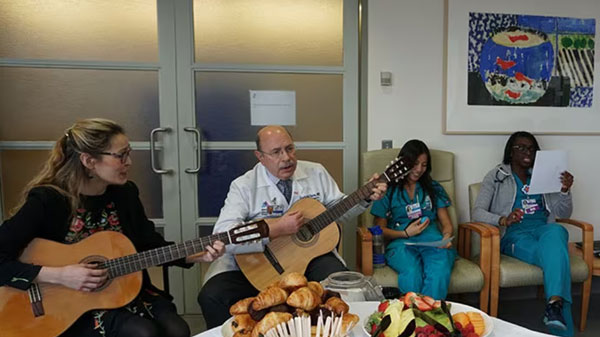
In the film, and in life, Sara often plays guitar during breakfast music sessions with his team, encouraging them to express feelings about patients' struggles.
Avoiding Hero Syndrome
Sara believes patients should be free from "hero syndrome," the expectation to fight illness for loved ones or others: "We do not want patients to feel like heroes. I do everything possible for anyone we can cure and help people accept their illness. But when no options remain, they need to know they have permission to die and do not have to fight."
In cancer, "hero syndrome" describes a patient or relative acting as a hero fighting the disease, trying to demonstrate strength and resilience. This can be difficult for patients and may not help them live their lives. It can also prevent patients and families from seeing and accepting the reality of the illness.
- Related topic: The Term "War on Cancer" Does More Harm Than Good
Sara values his colleagues' feelings about patients' challenges and encourages them not to feel ashamed of sharing or showing emotions. Concluding the interview, he adds: "I believe the film is very realistic. The tears in my last scene were real, because I felt as though I were looking at a patient who had died."
Sources
Was this article helpful?
Your feedback helps us improve our content.




Reader comments
Share your comment
Your name and comment are published only after administrator approval. Your email address is never shown to visitors.
Be the first to comment.