
Cabozantinib Receives FDA Approval for Pancreatic and Extrapancreatic Neuroendocrine Tumors

In this article
Neuroendocrine tumor (NET) patients with limited options have received promising news. On March 26, 2025, the Food and Drug Administration (FDA) approved cabozantinib (Cabometyx) for previously treated adults and children aged 12 and older with well-differentiated pancreatic (pNET) and extrapancreatic (epNET) neuroendocrine tumors. This opens a new option, particularly for advanced disease.
Neuroendocrine tumors are highly heterogeneous, complicating treatment. Cabozantinib's substantial delay in progression regardless of tumor origin or grade is particularly encouraging.
Who Is Eligible?
The new FDA approval covers patients with:
-
Unresectable disease
-
Locally advanced or metastatic disease
-
Previous systemic treatment
-
Well-differentiated pNET or epNET
Cabozantinib is now available for both adult and pediatric patients aged 12 and older.
CABINET: Evidence of Cabozantinib's Effectiveness
The FDA decision is based on data from the randomized, placebo-controlled phase 3 CABINET trial , which demonstrated that cabozantinib substantially delayed disease progression.
pNET Cohort
-
Total patients: 99
-
Randomization: 2:1 (cabozantinib:placebo)
-
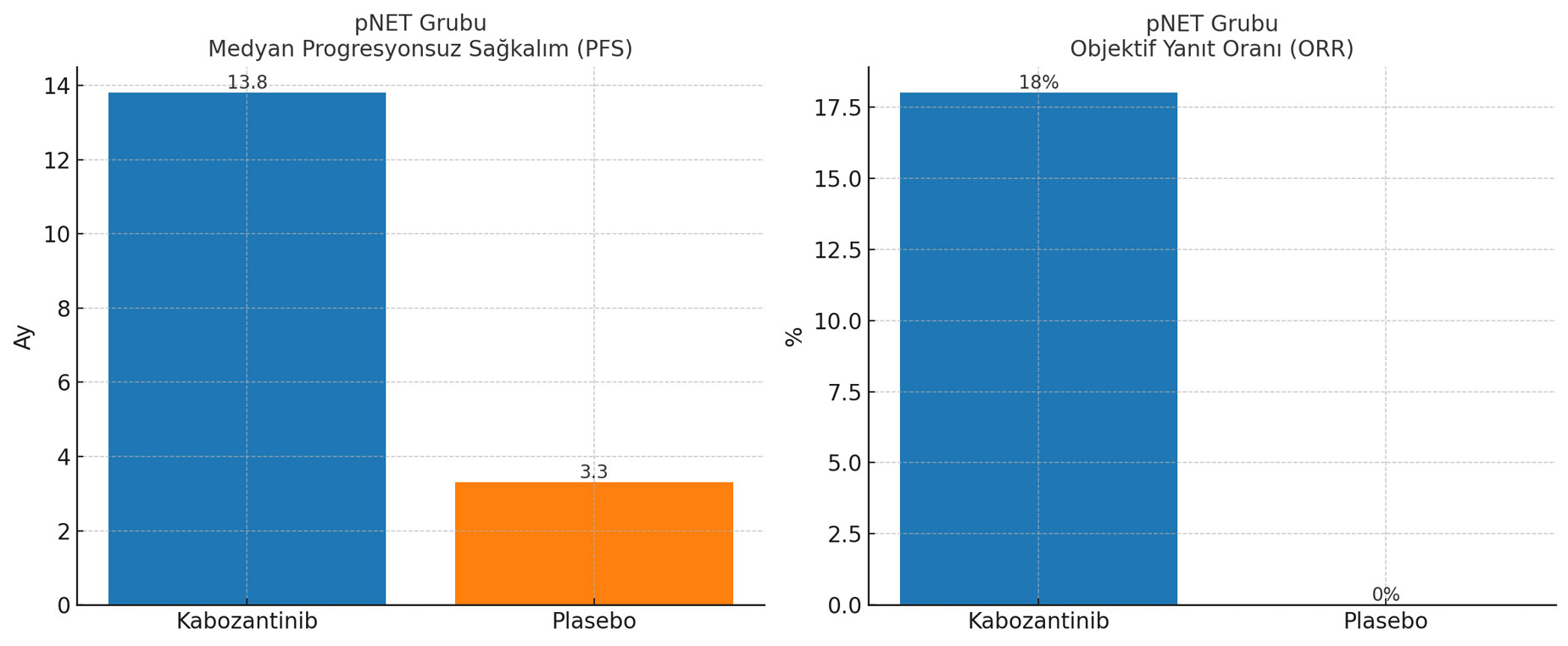
Median progression-free survival (PFS):
-
Cabozantinib: 13.8 months
-
Placebo: 3.3 months
-
A 78% reduction in cancer progression risk. Hazard ratio (HR): 0.22
-
-
Objective response rate (ORR):
-
Cabozantinib: 18%
-
Placebo: 0%
-
These findings show a 78% reduction in disease progression with cabozantinib compared with placebo.
epNET Cohort
-
Total patients: 199
-
Median PFS:
-
Cabozantinib: 8.5 months
-
Placebo: 4.2 months
-
HR: 0.40
-
-
ORR:
-
Cabozantinib: 5%
-
Placebo: 0%
-
This corresponds to an approximately 60% reduction in progression risk in epNET.
Overall Survival Data Remain Immature
Overall survival data are not yet mature. Many placebo patients crossed over to cabozantinib as treatment progressed:
-
52% in the pNET cohort
-
37% in the epNET cohort
This complicates interpretation of overall survival analyses.
Dosing and Safety
Dose:
-
Adults and children aged ≥12 years (≥40 kg): 60 mg/day
-
Children aged ≥12 years (<40 kg): 40 mg/day
Continue until disease progression or unacceptable adverse reactions.
Adverse Reactions
Cabozantinib is already approved for several indications, including renal cell and medullary thyroid cancers. Adverse reactions in CABINET were consistent with its established safety profile. No new safety signals were identified.
CONCLUSION: An Effective Option for Rare, Challenging Tumors
Although rare, neuroendocrine tumors can be difficult to treat and substantially affect quality of life. This FDA approval provides a valuable option, particularly for previously treated patients with advanced disease. CABINET strongly supports clinically meaningful benefits in both pancreatic and extrapancreatic NET.
Sources
Was this article helpful?
Your feedback helps us improve our content.




Reader comments
Share your comment
Your name and comment are published only after administrator approval. Your email address is never shown to visitors.
Be the first to comment.