
Edema in Cancer: Causes, Symptoms and Treatment Methods

In this article
Edema in cancer: swelling is not a diagnosis, but a question
Swelling in a patient with cancer is not a single disease. A blood clot in the leg, lymphedema caused by removal of the underarm lymph nodes, and fluid accumulation caused by spread to the peritoneum are all described with the same word — yet the urgency, cause and treatment of the three are completely different. This article explains how to distinguish swelling using three questions: is it on one side or both sides, does it develop over hours or months, and can it be treated or only managed?
- The advice to "drink plenty of water to flush out edema" is wrong and dangerous for some patients. Salt should be restricted, not water — and your physician sets the fluid limit.
- The advice to "protect the arm with lymphedema, do not use it or lift weights" has been disproved. Controlled weight training does not worsen lymphedema; on the contrary, it reduced flare-ups from 29% to 14% .
- The distinction "if it pits, it is heart/kidney disease; if not, it is lymphedema" is invalid. Early-stage lymphedema also pits; this distinction leads the patient in the wrong direction.
- Traditional prohibitions such as avoiding blood pressure measurements, blood draws and flying were not found to be associated with lymphedema risk in a prospective study. The actual determinants are cellulitis (skin infection), axillary dissection, regional irradiation and excess weight.
- Diuretics do not work for lymphedema — in the words of the international consensus document, their long-term use "should be discouraged." There is also a simple laboratory test that determines whether they will work for malignant abdominal fluid.
What is edema?
Edema is swelling caused by excessive fluid accumulation in the tissues. Normally, fluid in blood vessels enters and leaves the tissues in a balanced manner. When this balance is disrupted — when pressure inside the vessels rises, the vessel wall becomes permeable, blood protein falls, or the lymphatic system's capacity to collect fluid is insufficient — fluid remains in the tissue.
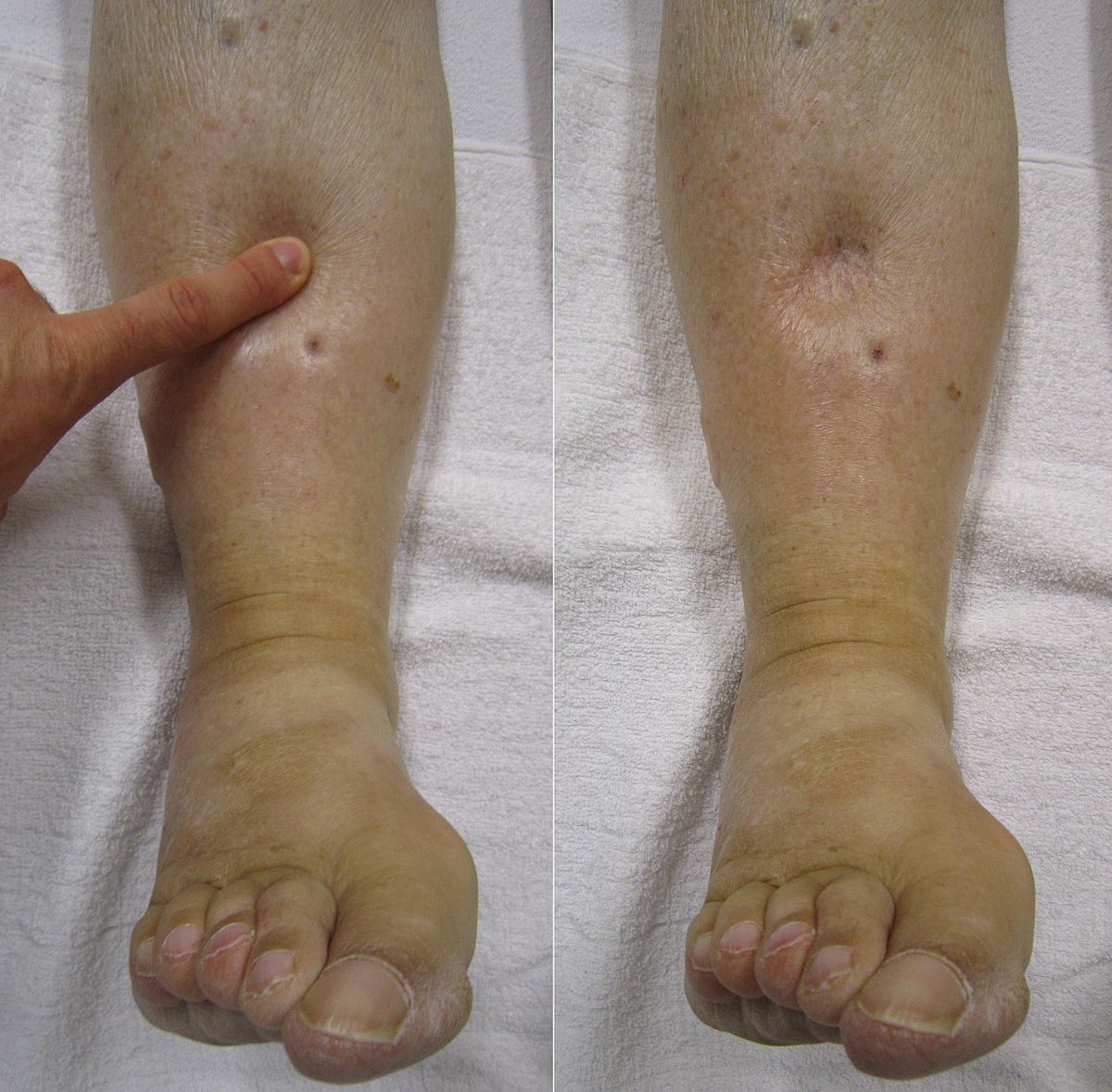
It is commonly explained as follows: if pressing with a finger leaves a pit, the cause is the heart, kidneys or liver; if not, it is lymphedema. This distinction is not valid.
The staging text of the International Society of Lymphology states this explicitly: in Stage 1, "pitting may occur"; in Stage 2, "pitting is evident" and only in late Stage 2 and Stage 3 "pitting may disappear." In other words, most early- and intermediate-stage lymphedema pits. A patient relying on this criterion may spend months looking for the cause in the wrong place.
The actual useful questions for distinguishing the causes are: Is the swelling on one side or both sides? How quickly did it develop — hours or months? Where in the body did it start? Were lymph nodes removed from the same side, or was radiation therapy given? Can the skin on top of the second toe be lifted (Stemmer's sign — inability to lift it favors lymphedema)?
First question: one side or both sides?
This single question eliminates half of the possible causes.
| One-sided swelling | Bilateral swelling | |
|---|---|---|
| What does it suggest? | A regional "plumbing" problem: obstruction in that limb's vein or lymphatic pathway | A systemic problem: heart, kidneys, liver, medication or low blood protein |
| Main causes | Deep vein thrombosis (blood clot), lymphedema, tumor compression of a vein, cellulitis | Heart failure, kidney failure, liver disease, medications (cortisone, some blood pressure medicines, painkillers), low blood protein in advanced disease |
| Urgency | If it developed over hours to days and is painful, red and warm: an emergency. It may be a clot or infection | It usually develops over days to weeks; it is urgent if accompanied by shortness of breath |
- Rapidly developing, painful, tense swelling in one leg — this may be deep vein thrombosis. Clot risk is markedly elevated in patients with cancer, and a clot traveling to the lung is life-threatening.
- Sudden shortness of breath, chest pain, palpitations, a feeling of faintness or coughing up blood — this may be pulmonary embolism. Call 112.
- Redness, increased warmth, tenderness, fever and chills at the site of swelling — cellulitis (skin infection). It requires antibiotics, and delayed treatment permanently worsens lymphedema.
- Swelling developing together in the face, neck and arms, prominent neck veins, shortness of breath that increases when bending forward — this may be compression of the superior vena cava.
- Severe headache, nausea, impaired vision, confusion or a seizure — brain edema. An emergency.
- Weight gain of 2-3 kilos within a few days — this indicates fluid retention in the body; heart or kidney status should be assessed.
Causes of edema in cancer
| Cause | How does it happen, and where does it occur? |
|---|---|
| Removal or irradiation of lymph nodes | The most typical and most specific cause of edema in cancer. The return pathway for lymph fluid is disrupted; it may appear months or even years later. It occurs in the arm with breast cancer, the leg with gynecological and prostate cancers, and the face and neck with head and neck cancers. |
| Venous clot (deep vein thrombosis) | Cancer increases the tendency to clot. Typically, rapidly developing painful swelling in one leg. It requires urgent assessment. |
| Tumor compression of a vein or lymphatic pathway | Intra-abdominal and pelvic tumors can cause swelling in the legs; masses in the chest cavity can cause swelling in the face, neck and arms. |
| Spread to the peritoneum (malignant ascites) | Fluid accumulation in the abdomen in ovarian, stomach, colon and pancreatic cancers. Abdominal tightness, early satiety, shortness of breath and weight gain. |
| Fluid around the lung (pleural effusion) | Common in lung and breast cancer. Shortness of breath that increases with exertion and a dry cough. |
| Medications | Corticosteroids (retain salt and water), nonsteroidal painkillers (reduce sodium excretion by the kidneys), some blood pressure medicines (calcium channel blockers), and some hormonal and targeted therapies. Drug-related edema is generally bilateral, begins at the ankles, and subsides when the medication is discontinued. |
| Heart, kidney and liver diseases | Most patients with cancer are older; these diseases coexist with cancer and are the most common causes of edema. |
| Low blood albumin | ⚠ This association is weaker than commonly thought. Low albumin is generally a marker not of malnutrition, but of the inflammatory process and capillary leakage; by itself it rarely causes edema, and intravenous albumin does not treat this edema. |
| Immobility | Accumulation in the hands and feet due to gravity in patients who lie or sit for long periods. In intensive care, intravenous fluids, sepsis and organ failure also contribute. |
Given for brain edema, dexamethasonereduces brain edema due to vascular leakage (vasogenic edema), with an effect typically seen within 24-72 hours. The rounded facial appearance that develops with prolonged use is more a matter of redistribution of fatty tissue than true edema — the two should not be confused. Other cortisone derivatives, however, can cause true edema by retaining salt and water.
Lymphedema: the form of edema most characteristic of cancer
Lymphedema is not cancer. It is a type of edema caused by lymph fluid accumulating in tissues. It develops when cancer surgery or radiation therapy damages lymph nodes; thus it is not the cancer itself, but a late consequence of its treatment. There is no cell proliferation involved.
The accumulating fluid is rich in protein; over time, this causes tissue to harden and increases susceptibility to skin infections (cellulitis). Lymphedema generally does not disappear completely, but it can be controlled and its progression stopped. Starting treatment early makes a substantial difference.
How common is it?
Lymphedema in head and neck cancers is less well known but more widespread: reported rates span a very broad range, approximately one fifth after unilateral selective neck dissection and higher after bilateral and multimodal treatments. Particularly overlooked here is externally invisible internal (pharyngeal-laryngeal) lymphedema — presenting as voice changes, throat fullness and difficulty swallowing. Since we could not find a validated pooled rate for leg lymphedema after gynecological cancers, we do not provide a figure here.
What actually determines risk? (And what does not?)
The study following 632 patients with regular arm measurements provides some of the most informative data in this field — because it measured both actual risk factors and prohibitions repeated for years but never confirmed at the same time.
| Factors that actually increase risk | Factors not found to be associated with risk |
|---|---|
| Having had cellulitis (skin infection) — the strongest determinant (p<0,001) | From that arm, having blood drawn (p=0,62) |
| Axillary lymph node dissection (p<0,001) | Into that arm, having injections (p=0,77) |
| Radiation therapy to regional lymph nodes (p=0,036) | Air travel — 1-2 flights (p=0,77), 3 or more flights (p=0,91), flights longer than 12 hours (p=0,54) |
| Having a body mass index of 25 or above (p=0,024) | On that arm, having blood pressure measured — although it appeared associated in univariate analysis, the association disappeared in multivariate analysis |
The list given to patients for years — "do not have blood pressure measured, blood drawn or injections in that arm; do not fly" — was not supported by prospective measurement. In contrast, the strongest determinant in the same study was skin infection . Thus, efforts should focus not on a list of prohibitions, but on skin care, early treatment of scratches and wounds, and weight control.
This does not mean the prohibitions are "completely meaningless" — using the other arm when possible is a reasonable choice. However, these choices should not become a source of fear or restrict the patient's life. According to the data, drawing blood or measuring blood pressure in that arm when necessary is not a disaster. There is no evidence concerning saunas and extreme heat; claiming either "it is safe" or "it is harmful" would be unfounded.
Lymphedema treatment: compression is the driving force, massage an adjunct
The standard treatment for lymphedema is complex decongestive therapy(CDT): compression, exercise, skin care and manual lymphatic drainage used together. However, these four components do not carry equal weight, and patient information often presents their order in reverse.
| Method | Evidence |
|---|---|
| Compression (bandages, sleeves, stockings) | This is the real driving force of treatment. In the Cochrane review, bandaging alone reduced swelling by 30-37% . In advanced disease, inelastic (flat-knit) products are superior to elastic ones. There are also data for preventive use: in a study of 307 patients wearing sleeves after axillary dissection, arm swelling at one year was 42% vs 52% (by bioimpedance), and by volume measurement, 14% vs 25%. |
| Manual lymphatic drainage (a special massage technique) | The Cochrane review states: "Manual lymphatic drainage is safe and may offer additional benefit to compression bandaging in reducing swelling." This additional benefit, above the 30-37% provided by bandaging, is 7,11%and was mainly seen in mild-to-moderate disease. The authors stated that this needed confirmation with randomized data. Thus, massage is useful but is not a treatment on its own; it cannot replace compression. |
| Exercise | See the section below — this is the most important change in thinking in the field. |
| Skin care and infection prevention | Cellulitis is the strongest risk factor for lymphedema (p<0,001). Keeping the skin moisturized, treating scratches and wounds early, and taking care with nail care are integral parts of treatment, not "additional advice." |
| Diuretics | They have no role in lymphedema. The consensus document of the International Society of Lymphology states: "Long-term use of diuretics should be discouraged; they provide marginal benefit in treating peripheral lymphedema and have the potential to cause fluid and electrolyte imbalances." |
| Surgery (lymphovenous anastomosis, lymph node transfer, liposuction) | For selected cases unresponsive to conservative treatment. A review of 73 publications reported an average reduction in excess volume with lymphovenous anastomosis of 27,6% — but the distribution of results ranged from an increase of 87 mL to a reduction of 93,5% . For lymph node transfer, the average was ~43,6%; liposuction is mainly appropriate for hardened, non-pitting tissue. In the review's own words: "Well-conducted clinical studies providing high-level evidence are still lacking in this field" — across all three methods, there are only 3 randomized studies and none is blinded. |
| Immediate lymphatic reconstruction (LYMPHA) | Connecting lymphatic channels to a vein during lymph node dissection. In a meta-analysis, the rate of lymphedema after the procedure in the upper extremity was 2,7%, and in the lower extremity 3,6% — however, this meta-analysis has no control group; these are single-arm rates, not an effect size. |
For years, patients with lymphedema were told to "protect your arm, use it without strain, do not lift weights." This advice has been disproved by a randomized study.
The PAL study (Schmitz et al., N Engl J Med 2009) assigned 141 breast cancer survivors with lymphedema to supervised, progressively increasing weight training or a control group:
- An increase in arm volume of 5% or more: 11% (weight training) vs 12% (control) — no difference
- Lymphedema flare-up: 14% vs 29% (p=0,04) — half as common among those doing weight training
- Lower symptom severity (p=0,03); muscle strength increased significantly in both groups (p<0,001)
- No serious adverse events were observed
In the same team's 154-person prevention study, lymphedema developed in 11% versus 17%; the difference was even more pronounced in the subgroup with five or more lymph nodes removed: 7% versus 22%.
How should it be done? Exercise in these studies was not arbitrary: it was performed wearing a properly fitted compression garment, under supervision, starting with very low weights and increasing gradually . A patient with lymphedema should also start this program following a physiotherapist's assessment. But the conclusion is clear: avoiding movement is not protective; fear has never been a treatment.
Abdominal fluid (malignant ascites)
Fluid accumulation is common in patients with spread to the peritoneum and causes a substantial symptom burden: abdominal tightness, early satiety, shortness of breath and weight gain. Median survival after diagnosis is generally 5-7 months ; it is longer in ovarian cancer.
SAAG (serum-ascites albumin gradient) is calculated by subtracting the albumin level in abdominal fluid from the blood albumin level, and indicates where the fluid comes from:
- If SAAG is above 1,1 — portal venous pressure is elevated (liver involvement, cirrhosis). Diuretics and salt restriction work.
- If SAAG is below 1,1 — fluid comes directly from the tumor in the peritoneum. In this situation, there is generally no response to diuretics. One of the sources states this directly: "malignant ascites generally does not respond to diuretic therapy."
This distinction matters in practice: managing a patient who will not respond with a diuretic both delays relief and causes kidney and electrolyte problems.
Drainage (paracentesis) provides the fastest relief; symptoms improve in approximately 90% of cases. In outpatient practice, 4-6 liters per session is considered safe. There is an important difference from cirrhosis: routine albumin infusion after drainage is not considered necessary in malignant ascites. Moreover, removing less or more than 2,5 liters did not change the time until the next drainage — in other words, "removing less and returning often" offers no advantage.
For patients requiring repeated drainage, a tunneled indwelling catheter is an option: symptom control has been reported at around 96%; leakage at approximately 20%, and infection and blockage at 1-4%. Note: catumaxomab, once used, was withdrawn from the market in 2017 and is not in clinical use.
Fluid around the lung (pleural effusion)
It is one of the most common correctable causes of shortness of breath in cancer. Median survival after diagnosis ranges from 3-12 months; therefore, when choosing treatment, the number of days spent in hospital is a measure at least as important as shortness of breath.
There are currently two established options, and the patient's preference largely determines which is chosen:
| Indwelling pleural catheter | Talc pleurodesis | |
|---|---|---|
| How? | A thin catheter passed under the skin allows regular drainage at home | Adhering the two pleural layers by administering talc into the pleural space |
| Shortness of breath | On day 42, no difference (24,7 vs 24,4 mm; p=0,96). At month 6, a difference favoring the catheter (−14,0 mm; p=0,01) | |
| Hospital stay | 0 days | 4 days — difference −3,5 days (p<0,001) |
| Need for repeat procedures | 6% | 22% (p=0,03) |
| Adverse events | 40% | 13% — not in favor of the catheter (p=0,002) |
Thus, a catheter allows patients to stay out of hospital and reduces the need for repeat procedures, but has a higher adverse-event rate. The two are equivalent in the short term for shortness of breath. The right choice depends on the patient's priorities — do they find days in hospital or living with a catheter more difficult? This decision should be made together with the patient. One study showed that the pleurodesis rate increased with daily catheter drainage (37%) compared with drainage according to symptoms (11%).
Blood clot (venous thromboembolism): the most urgent cause of edema
Cancer markedly increases the risk of clotting. This risk varies considerably by cancer type (per 1.000 person-years):
There has been an important change in treatment over the last ten years: in many patients, injectable low-molecular-weight heparin, long the standard, has begun to be replaced by new-generation oral blood thinners (DOACs) . Randomized studies support them; however, there is an important warning:
In comparative studies, oral medications were found to be at least as effective as injections against recurrent clots (for example, 5,6% versus 7,9% with apixaban). However, a bleeding signal is a common finding across the sources, and in one study major bleeding was significantly higher in the edoxaban arm (6,9% versus 4,0%; p=0,04). In the source's words, this increase "is mainly confined to patients with gastrointestinal cancer."
Thus, medication selection should be considered differently in a patient with stomach, bowel or esophageal cancer. This decision should be made jointly by an oncologist and a hematologist.
Preventive blood thinners remain controversial: in a study of high-risk outpatients, the primary outcome was not significant (6,0% versus 8,8%; p=0,10), and approximately half of the patients discontinued the medication early. Thus, giving preventive medication to everyone is not standard practice.
In compression of the superior vena cava, the situation is different: swelling develops simultaneously in the face, neck and arms. More than 90% of cases are due to lung cancer and lymphomas. Stent placement provides relief within 24-72 hours in approximately 95%; chemotherapy and radiation therapy produce a response over 7 days to 3 weeks in 59-83%. Stenting takes priority in life-threatening symptoms; in tumors highly sensitive to chemotherapy (small-cell lung cancer, lymphoma), however, obtaining a tissue diagnosis first and planning treatment accordingly are essential.
What should and should not be done in everyday life?
This sentence is very common in Turkish sources, and it is wrong. There is no evidence that drinking water "flushes out" edema; what should be restricted is salt, not water.
Moreover, it is directly harmful in some patients: in heart failure, abdominal fluid accumulation, and particularly SIADH, which is common in small-cell lung cancer, (inappropriate water retention by the body), excessive fluid intake worsens the condition and can lower blood sodium to dangerous levels.
The correct approach: your daily fluid amount should be determined by your physician. Some patients need restriction and others do not — this varies with the cancer type, heart and kidney status, and blood sodium level.
- Reduce salt. This is the main dietary intervention in edema management. Watch for hidden salt in instant soups, tomato paste, pickles, processed meats and packaged foods.
- Move — do not avoid it. The pumping action of the calf muscle reduces leg edema. In lymphedema, supervised, progressively increasing resistance training halved flare-ups. Do not remain in the same position for long periods.
- Use your compression garment regularly. Put it on in the morning, while edema is still minimal. It must be individually measured for you; a loose or excessively tight product causes harm instead of benefit.
- Take skin care seriously. Cellulitis is the strongest risk factor for lymphedema. Keep the skin moisturized, clean and treat scratches and wounds early, and be careful when cutting nails and having pedicures. If you notice redness, increased warmth and fever, seek medical attention without delay.
- Elevate your legs. Support your feet above heart level when sitting and lying down.
- Monitor your weight. Excess weight increases lymphedema risk (BMI 25 and above; p=0,024), and sudden weight gain is the earliest indicator of fluid retention. Weight gain of 2-3 kilos over a few days should be reported to your physician.
- Have two conditions ruled out before starting compression: an untreated clot and impaired arterial circulation. Compression is not prohibited in an acute clot — the real problem is covering swelling with a bandage without recognizing the clot and treating it. Advanced arterial disease with a low ankle-brachial pressure ratio, however, is a genuine contraindication.
- Distinguish between types of massage. Manual lymphatic drainage is a very gentle, superficial technique performed by a trained physiotherapist — it is not deep tissue massage. Do not confuse them; do not apply forceful massage to a swollen limb.
- Do not take diuretics or herbal "edema tea" on your own. They are ineffective in lymphedema, often produce no response in malignant ascites, and uncontrolled use disrupts electrolyte balance.
- Choose comfortable clothing and shoes; avoid socks with tight elastic and crossing your legs for long periods.
Frequently asked questions
- Could swelling in my leg be a sign of cancer?
- Leg swelling is most often due to something other than cancer — varicose veins, impaired circulation, the heart, kidneys or medications. However, this should not be used as a reassuring dismissal: unilateral, rapidly developing, painful leg swelling should be considered a clot until proven otherwise and a clot can sometimes be the first sign of cancer that has not yet been diagnosed. Tumors in the lower abdomen can also cause leg swelling by compressing a vein. In brief: it is usually not cancer, but it is not a finding to dismiss without investigation either.
- Is lymphedema cancer? Does it go away?
- Lymphedema is not cancer; it is lymph fluid accumulating in the tissues and develops as a late consequence of cancer treatment. It generally does not disappear completely, but can be controlled and its progression stopped. Starting compression and exercise treatment early makes a substantial difference. If neglected for a long time, the skin hardens and episodes of infection become more frequent.
- Can I exercise and lift weights with my arm affected by lymphedema?
- Yes — and this is the most important change in the field. In a randomized study, supervised, progressively increasing weight training did not increase arm volume and also reduced lymphedema flare-ups from 29% to 14%. However, the conditions matter: with a properly fitted compression garment, starting with very light weights, progressing gradually and initially under supervision. Start the program following a physiotherapist's assessment.
- Am I really prohibited from having blood pressure measured or blood drawn in that arm, or from flying?
- In a study following 632 patients with prospective measurements, none of these was associated with lymphedema risk — blood draws (p=0,62), injections (p=0,77), flights (p=0,77 and 0,91). Although blood pressure measurement appeared associated in univariate analysis, this association disappeared in multivariate analysis. Preferring the other arm when possible is a reasonable habit, but these issues should not become a source of fear. Direct your energy toward skin care, early treatment of infections and weight control — these are the proven risk factors.
- Can edema develop after chemotherapy, and does it resolve?
- It can. Its most common cause is cortisone-derived medications given alongside chemotherapy retaining salt and water; some medications also increase vascular permeability, with immobility and intravenous fluids during treatment contributing. This swelling is generally mild and subsides when treatment ends. However, unilateral, painful or rapidly increasing swelling is a different matter — report it without waiting for it to resolve.
- Should I take a diuretic for edema?
- It depends on the situation, and your physician makes the decision. It is effective for generalized edema due to the heart or kidneys. In lymphedema, however, it is ineffective — the international consensus document says long-term use should be discouraged. For abdominal fluid, a simple calculation called SAAG determines whether there will be a response: it works if the source is the liver/portal vein, and generally does not if the fluid comes directly from the tumor in the peritoneum. Do not use it on your own; uncontrolled use causes kidney and electrolyte problems.
Glossary
- Lymphedema
- Protein-rich edema caused by accumulation of lymph fluid in tissues. It is not cancer.
- Sentinel (guard) lymph node
- The first node reached by lymph flow from the tumor. Removing only this node reduces lymphedema risk to approximately one quarter compared with removing all the underarm nodes.
- Axillary dissection
- Removal of the underarm lymph nodes together.
- Complex decongestive therapy (CDT)
- Standard treatment for lymphedema: compression, exercise, skin care and manual lymphatic drainage.
- Manual lymphatic drainage
- A very gentle, superficial guiding technique performed by a trained physiotherapist. It is not deep tissue massage.
- Cellulitis
- Bacterial infection of the skin and subcutaneous tissue. The strongest risk factor for lymphedema and the most common cause of flare-ups.
- Stemmer's sign
- Inability to lift the skin on top of the second toe with the fingers. An examination finding favoring lymphedema.
- Ascites
- Accumulation of fluid in the abdominal cavity. SAAGis the calculation that distinguishes the source of this fluid and determines treatment.
- Paracentesis / thoracentesis
- Procedures using a needle to drain fluid from the abdominal cavity and the pleural space, respectively.
- Pleurodesis
- Adhering the two layers of the pleura to each other to prevent fluid accumulation.
- Venous thromboembolism (VTE)
- Formation of a clot in a vein (deep vein thrombosis) and its travel to the lung (pulmonary embolism).
- SIADH
- A hormonal condition causing inappropriate water retention by the body; common in small-cell lung cancer. Drinking excessive water is harmful in these patients.
DROZDOGAN Academy Commentary
Edema is one of the topics in oncology where the distance between a "symptom" and an "emergency" is shortest. The same word describes both a chronic problem to be managed for months and a clot requiring intervention that day. While preparing this article, however, something else particularly caught our attention: some advice given to patients for years did not stand up when tested.
⚡ Why does this topic matter?
Swelling is the finding patients notice most easily but find hardest to interpret. Misinterpretation causes harm in two directions: dismissing unilateral leg swelling as "just edema" means missing a clot; assuming mild ankle swelling means cancer progression causes unnecessary fear. Putting the right questions in order prevents both mistakes.
✅ Strengths / things that are improving
There are real gains in this field. Widespread sentinel lymph node biopsy has reduced lymphedema risk to approximately one quarter — one of surgery's most tangible quality-of-life gains. A randomized study overturned the fear of exercise. For pleural fluid, there is now an option that can meet the patient's priority of "fewer days in hospital." Many patients can now use oral medication rather than injections for clots. It has become clear that, unlike cirrhosis, malignant ascites does not require routine albumin support.
⚠️ Limitations / what should not be overstated
Lymphedema surgery is promising but the evidence is weak: across all three methods, there are only three randomized studies, none blinded, and results range from a reduction of 93,5% to an increase in volume. The seemingly impressive 2,7% rate for immediate lymphatic reconstruction comes from a meta-analysis with no control group — it is not an effect size. Manual lymphatic drainage adds around 7% benefit on top of compression; yet patient information often puts massage first and compression second. And the advice to "drink plenty of water" is not merely unfounded, but directly harmful to some patients.
🩺 Our position in practice
- First, we ask "is it on one side?" New unilateral swelling is a clot until shown otherwise; imaging should not wait.
- We teach patients to monitor their weight. A gain of 2-3 kilos over a few days is the earliest sign of fluid retention that patients can detect themselves at home.
- In lymphedema, we put compression first and massage second — that is the order supported by the evidence.
- We do not prohibit exercise; we prescribe it. With an appropriate garment, gradually and initially under supervision.
- Instead of a list of prohibitions, we discuss skin care and weight. Cellulitis is the strongest risk factor; the patient's energy should be directed there.
- For abdominal fluid, we do not start a diuretic without checking SAAG. Keeping a patient who will not respond on a diuretic delays relief and also harms the kidneys.
- For pleural fluid, we leave the choice to the patient. Catheters and pleurodesis are equivalent for shortness of breath; the decision should reflect the patient's own answer to "days in hospital or living with a catheter?"
❓ Open questions
The true effect of lymphedema surgery cannot be known without controlled studies. The preventive value of immediate lymphatic reconstruction should be tested in a study with a control arm. There is still no reliable pooled figure for the true frequency of leg lymphedema after gynecological cancers. And deciding who can accept the bleeding risk of oral medication for clots in patients with gastrointestinal cancer remains a case-by-case decision.
- Corrections made: The advice to "drink plenty of water to flush out edema" was removed (unfounded; harmful in heart failure, ascites and SIADH). The "pitting/non-pitting" distinction was corrected using statements from the international staging text. Exercise restrictions in lymphedema were reversed based on randomized study results. Prohibitions on blood pressure measurement, blood draws and flying were put into perspective alongside the prospective study's p values. It was stated that compression is not absolutely prohibited in acute clots; the real problem is covering swelling without identifying the clot. It was added that the association between low albumin and edema is weaker than thought and that albumin infusion does not treat this edema. A distinction was made that dexamethasone's rounded-face effect is more a redistribution of fat than true edema. The headings' id tags were removed.
- Figures not provided because they could not be verified: the pooled frequency of leg lymphedema after gynecological cancers; numerical results of one preventive anticoagulant study (AVERT); point values of the Khorana risk score; the limit of volume that may be removed during thoracentesis and figures concerning the risk of pulmonary edema; the confidence interval of the sentinel biopsy subgroup (it appears arithmetically inconsistent as published, so only point estimates were used). Since no evidence was found for saunas and extreme heat, neither "safe" nor "harmful" was stated.
- Information cited from secondary sources: frequencies of head and neck lymphedema, subgroup rates in the preventive exercise study, and detailed statistics from some pleural effusion studies were cited without access to their primary texts; therefore, broad ranges and qualitative statements were preferred in these sections.
- Türkiye: Apart from a single-center cross-sectional study of 67 patients from Kahramanmaraş, no verifiable Turkish data were found. Registries of certified lymphedema therapists and lists of accredited centers could not be verified. No information was provided concerning SGK reimbursement for compression garments; the current SUT text should be consulted on this matter.
- Internal links ("Related topics") are estimated addresses; they should be replaced with the actual addresses on the website before publication.
This article is for information and does not replace individualized medical advice. Decide on changes to medication, fluid restriction or exercise programs together with your treatment team.
References
- DiSipio T, Rye S, Newman B, Hayes S. Incidence of unilateral arm lymphoedema after breast cancer: a systematic review and meta-analysis. Lancet Oncol. 2013;14(6):500-515.
- Ferguson CM, Swaroop MN, Horick N, et al. Impact of ipsilateral blood draws, injections, blood pressure measurements, and air travel on the risk of lymphedema for patients treated for breast cancer. J Clin Oncol. 2016;34(7):691-698.
- Schmitz KH, Ahmed RL, Troxel A, et al. Weight lifting in women with breast-cancer-related lymphedema. N Engl J Med. 2009;361(7):664-673.
- Schmitz KH, Ahmed RL, Troxel AB, et al. Weight lifting for women at risk for breast cancer-related lymphedema: a randomized trial. JAMA. 2010;304(24):2699-2705.
- Ezzo J, Manheimer E, McNeely ML, et al. Manual lymphatic drainage for lymphedema following breast cancer treatment. Cochrane Database Syst Rev. 2015;(5):CD003475.
- Paramanandam VS, Dylke E, Clark GM, et al. Prophylactic use of compression sleeves reduces the incidence of arm swelling in women at high risk of breast cancer-related lymphedema: a randomized controlled trial. J Clin Oncol. 2022.
- International Society of Lymphology. The diagnosis and treatment of peripheral lymphedema: 2016 consensus document. Lymphology. 2016;49(4):170-184.
- Lilja E, et al. Surgical treatment of lymphedema: a systematic review. Gland Surg. 2024.
- Davies HE, Mishra EK, Kahan BC, et al. Effect of an indwelling pleural catheter vs chest tube and talc pleurodesis for relieving dyspnea in patients with malignant pleural effusion: the TIME2 randomized controlled trial. JAMA. 2012;307(22):2383-2389.
- Thomas R, Fysh ETH, Smith NA, et al. Effect of an indwelling pleural catheter vs talc pleurodesis on hospitalization days in patients with malignant pleural effusion: the AMPLE randomized clinical trial. JAMA. 2017;318(19):1903-1912.
- Walker AJ, Card TR, West J, Crooks C, Grainge MJ. Incidence of venous thromboembolism in patients with cancer. PLoS Med. 2012.
- Raskob GE, van Es N, Verhamme P, et al. Edoxaban for the treatment of cancer-associated venous thromboembolism (Hokusai VTE Cancer). N Engl J Med. 2018.
- Agnelli G, Becattini C, Meyer G, et al. Apixaban for the treatment of venous thromboembolism associated with cancer (CARAVAGGIO). N Engl J Med. 2020;382(17):1599-1607.
- Khorana AA, Soff GA, Kakkar AK, et al. Rivaroxaban for thromboprophylaxis in high-risk ambulatory patients with cancer (CASSINI). N Engl J Med. 2019;380(8):720-728.
- National Cancer Institute. Lymphedema (PDQ) — Health Professional Version.
- Malignant ascites: diagnosis and management. Ann Palliat Med. (review)
- Superior vena cava syndrome: diagnosis and management. Ann Palliat Med. (review)
Was this article helpful?
Your feedback helps us improve our content.




Reader comments
Share your comment
Your name and comment are published only after administrator approval. Your email address is never shown to visitors.
Be the first to comment.