
Forgetting What Disease Looks Like Thanks to Vaccines

In this article
In 2009, Microsoft founder Bill Gates gave a TED talk about the harm malaria causes worldwide. In his talk, Gates said that sharks, which kill 10 people a year, were once considered dangerous. He continued: "But compared with tiny mosquitoes that claim 725.000 lives every year, sharks really are incomparably insignificant.". In the fifth minute of the TED talk, "Malaria is, of course, spread by mosquitoes. I brought some along so you can experience this," he said. After saying this, he walked to the front of the stage and opened the glass jar in his hand, releasing the mosquitoes. "I am releasing them to roam around the auditorium. There’s no reason only poor people should have this experience."
Assuming Every Shiny Surface Is Clean...
As Carmine Gallo describes in these lines, we are people who try to see only with our eyes and forget what we cannot see or consider it unimportant. In fact, we are people who assume every shiny surface is clean . Let us briefly look at how, through a popular "mistaken" attitude toward vaccination, we managed to bring a disease we had "forgotten" back into the light of day.
A disease that had almost been eradicated made a noisy comeback in the winter of 2015. The USA was experiencing its worst measles outbreak in twenty years, because thousands of parents had chosen not to vaccinate their children. Measles vaccination began in 1963; before that, 500.000 children contracted measles every year in the USA alone and hundreds died... Measles is more contagiousthan Ebola, tuberculosis or influenza, has no specific treatment, and can remain suspended in the air or be detected on surfaces for two hours in an environment where an infected person has been present.
The situation threatened public health so greatly that the CDC (US Centers for Disease Control and Prevention) and the White House did not leave matters to chance. Today was the TV show on which President Barack Obama appeared and said that the science was "indisputable."
According to Obama, "We’ve looked at this again and again. There are many reasons to get vaccinated, but I can’t see a single reason not to… You should vaccinate your children." Obama urged families to "listen to the science, look at the facts." This well-intentioned statement probably did not produce the result he expected. After all, emotionless facts and figures had been invoked to influence emotional people. The CDC director also warned the public on major television channels that measles could become a "major epidemic." He, too, presented viewers with plenty of data but told no personal story.
Despite overwhelming evidence that vaccines protect children, two events caused families to doubt. The first was an article in the prestigious medical journal The Lancet linking childhood vaccinations with autism. There was a serious problem with the research—it was not true. The doctor who conducted the research had fabricated the data , and the journal that published the article took the unprecedented step of apologizing and retracting the article. Dozens of subsequent studies found no association between vaccines and autism.
The fabricated story could have been all the evidence people needed to reject the false association between vaccines and autism. But something else happened that would revive the anti-vaccine movement, and this time it took the form of a story. An attractive celebrity—a former Playboy model—publicly rejected the evidence that vaccines are beneficial and said she "knew" the measles vaccine had caused her son’s autism. "My son is my science," she told the cheering studio audience.
In February 2019, a dream holiday turned into a nightmare for a French family. Shortly after arriving in Costa Rica, their unvaccinated five-year-old son became the country’s first measles case since 2014. The unvaccinated parents also tested positive for the virus, which they were believed to have brought from France. The family was quickly quarantined, and Costa Rican authorities contacted people at risk. A few weeks later, two American children—also unvaccinated—contracted measles in the country. Again, authorities had to act quickly to quarantine them.
To protect a population against measles, at least 95 percent of people need to be vaccinated, a higher threshold than for most other infections. When last measured in 2017, Costa Rica had a vaccination rate of 96 percent for the disease; in 2017, France’s measles coverage was only 90 percent. These figures were not actually surprising for France: according to the world’s largest health indicator survey, with data from 144 countries, one in three French people thought vaccines were unsafe—the world’s highest rate—and nearly one in five believed they were ineffective.
Note: According to the survey whose results were announced in 2019 and which was conducted in 144 countries, Wellcome Global Monitor , in France one in three people thinks vaccines are unsafe, the highest rate on this issue!
Until the late 1980s, the French media rarely put health scandals on their agenda. Journalists focused on medicine’s great successes and trusted the statements of professors. A blood transfusion scandal shook the country in the 1990s. During the preceding decade, thousands of people had received HIV-infected blood, because the link between HIV and AIDS had not been fully understood. Most recipients of HIV-infected blood had died. Global news would witness the headline "Transfusion of Death," followed by the world’s media for nearly a decade.
Former health minister Edmond Hervé had been declared guilty. Hervé was said to have delayed introducing a blood screening test developed by an American company until a competing French product was released.
The statements and stories that followed laid the groundwork for France’s anti-vaccine attitude.
Stories Overshadow Scientific Data...
Personal stories are hard to resist. Stories overshadow data. In this situation, the medical community needs to tell its own stories to counter anti-vaccine rhetoric: stories of children suffering from encephalitis, a complication of measles that roughly means inflammation of the brain, or stories of families who lost their children to a disease that had disappeared from communities...
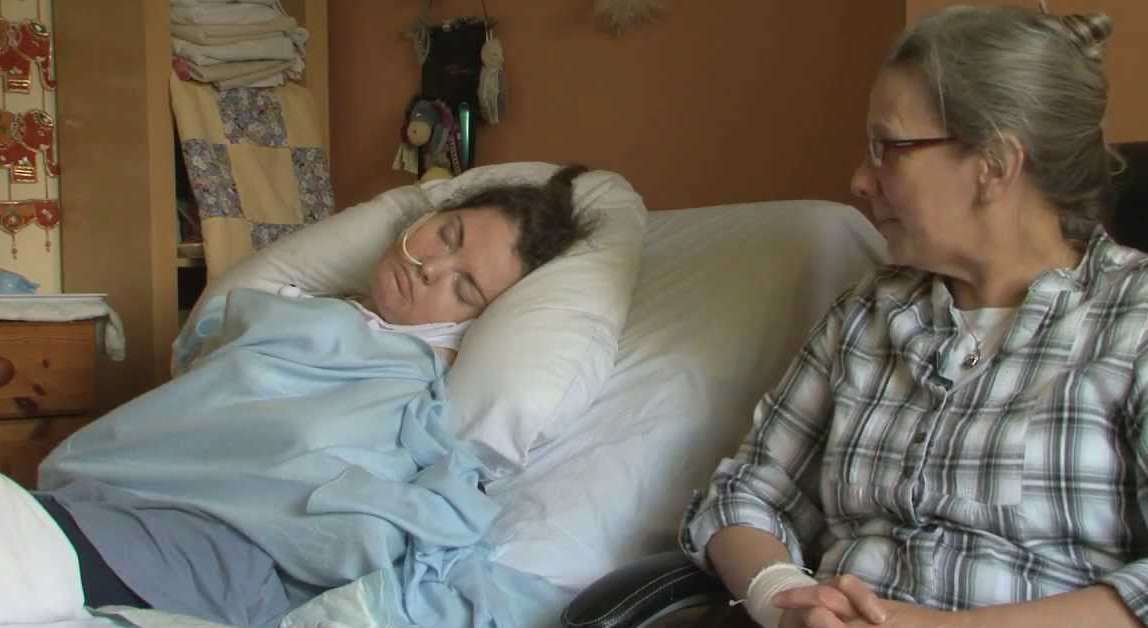
What families need to hear in this situation are the true, deeply disturbing stories of those worldwide in 2015, the 145.000 individuals thought to have died of measles . For example, the story of Sarah Clow: Clow was not vaccinated against measles as a child. Measles attacked her entire body, including her brain. She remained in a coma for eight weeks and is now deaf and partially blind. Or Sarah Walton, who contracted measles at 11 months old. Although she recovered from the disease, Sarah developed a measles-related viral infection 24 years later. Her central nervous system was completely destroyed. Her mother, who cares for Sarah, describes the situation in a video taken at her daughter’s bedside as she lies almost unresponsive with a feeding tube in her nose.
What Is the World Seeing Now?
In just the first three months of 2019, measles occurred 314 times in the USA. In New York’s Rockland region, one of the main locations where these cases appeared, a state of emergency was declared, and unvaccinated children were banned from public spaces.
In France, the government increased the number of mandatory vaccines in January 2018 from three to 11. Previously, the three mandatory vaccines—diphtheria, tetanus and polio—had vaccination rates of 95 percent or higher. But the other eight vaccines, including measles, meningococcal C and hepatitis B, were merely recommended, and coverage was lower. The public perception that "if it’s recommended, it can’t be that important" led authorities to make vaccination mandatory. Under the recently introduced law, in France, children had to have all their vaccinations to attend a public school. The results also showed a positive increase in this direction: the percentage of babies receiving their first meningococcal C vaccine dose in 2017 was 39 percent, rising in 2018 to 76 percent. Other EU countries where childhood vaccinations were likewise mandatory for this reason were Italy, Hungary, Bulgaria, Croatia, the Czech Republic, Latvia, Poland, Slovakia and Slovenia.
- Related Topic: 4 Important VACCINES You Should Know About Even Though They Are Not in the Routine Vaccination Schedule
Melinda Gates, Bill Gates’s wife and an expert on measles infection, summarizes the anti-vaccine situation beautifully: "Women in developing or underdeveloped countries know the power of vaccines. They walk ten kilometers in the heat with their children and queue for vaccination because they have encountered many deaths. We have forgotten what measles deaths are like… but women in Africa know death, and they want their children to survive.
" Yes, most of us have forgotten what disease looks like. We have forgotten how important the proper use of chemicals is for human life. Since we have this technology, we should recognize how fortunate we are and make use of it. Vaccines are among the best public health interventions we have, and they work.
Sources
2. MosaicScience - How France is persuading its citizens to get vaccinated
Was this article helpful?
Your feedback helps us improve our content.




Reader comments
Share your comment
Your name and comment are published only after administrator approval. Your email address is never shown to visitors.
Be the first to comment.