
From Karkinos to Cancer: How Did a Sea Creature Give This Disease Its Name?

In this article
Day 17 (Cancer History in 365 Days Series)
Human history is more than the rise and fall of empires: it is also the history of biological vulnerability. From Queen Atossa’s hidden breast lump to a Scythian king’s bones, cancer has existed throughout history. Yet its conceptual framework and today’s language of ‘oncology’ were shaped by ancient Greek physician-philosophers.
Why did we call this disease ‘Crab’? And why did we spend 1500 years searching for its cause in the wrong place—‘Black Bile’?
Medicine’s Conceptual Journey
1. In the Shadow of the Claws: The Etymology of ‘Karkinos’
The modern medical word ‘Cancer’ comes from the Latin cancer , meaning ‘crab,’ a direct translation of the Greek ‘Karkinos’ (Καρκίνος) . Why did ancient physicians, particularly Hippocrates and his followers, identify this disease with a crustacean? The answer lay in both its physical appearance and its behavior.
The Roman Celsus and the Separation of Terms
The person translating the disease’s name into Latin was the Roman encyclopedist, who lived from 25 BCE - 50 CE, Aulus Cornelius Celsus. Beyond translation, he classified the disease by stage:
- Cacoethes: He used this term for early, nonulcerated, painless hardenings (Greek for ‘malignant’).
- Carcinoma: He retained this term for advanced, ulcerated, tissue-destroying lesions.
2. The Theory That Locked Medicine in Place for 1500 Years: Black Bile (Melancholy)
Medical histories and popular culture frequently repeat a myth: ‘Hippocrates said Black Bile causes cancer.’ This is partly true but largely incomplete.
Hippocrates’ Search for Balance
For Hippocrates and his students, disease reflected imbalance among four bodily fluids (Blood, Phlegm, Yellow Bile, Black Bile). Hippocratic texts generally describe cancer as ‘inflammation’ or fluids accumulating in the wrong place. Yet Hippocrates did not establish a rigid equation attributing cancer exclusively and solely to black bile. He placed greater importance on clinical observation.
In De atra bile (On Black Bile), Galen declared, ‘Cancer is caused particularly by black bile,’ establishing this connection as a law. According to Galen:
- ‘Mild’ black bile produces nonulcerated (hidden) cancer.
- ‘Sharp and burning’ black bile produces ulcerated open sores.
This theory halted medical progress throughout the Middle Ages. Viewing cancer as a ‘systemic fluid disorder’ established the belief that local surgery (cutting out tumors) could not work.
3. ‘Noli Me Tangere’: Do Not Touch!
This expression best captures ancient physicians’ helplessness and ethical dilemma. Imagine ancient surgery: no anesthesia (patients in agony), no antibiotics (infection risk nearly 100%), no blood transfusions. Operating on a deep-seated tumor could mean killing the patient through blood loss or sepsis.
Hippocrates therefore established, in Aphorisms (6.38), oncology’s oldest, most dramatic, and longest-lasting rule:
In Latin, the principle became ‘Noli me tangere’ (Touch Me Not) . Following it, physicians attempted only superficial tumors, such as lip or skin lesions, through cauterization or excision. They dared not touch breast, uterine, or internal-organ tumors, using only herbal poultices and opium for pain.
This ‘untouchability’ metaphor was so powerful that centuries later it named Filipino writer Jose Rizal’s famous novel (Noli Me Tangere). Rizal described social corruption as an ‘incurable cancer that hurts the patient when touched.’
Sources
- Hippocrates: "The Father of Modern Medicine" - CancerQuest. Accessed: January 14, 2026.
- Etymology of the Word Cancer - Crab Museum. Accessed: January 14, 2026.
- The Crab: Facing Cancer in Greco-Roman Antiquity - Antigone Journal.
- In a Word: The Cancer Connection | The Saturday Evening Post.
Was this article helpful?
Your feedback helps us improve our content.
Reader comments
Share your comment
Your name and comment are published only after administrator approval. Your email address is never shown to visitors.
Be the first to comment.
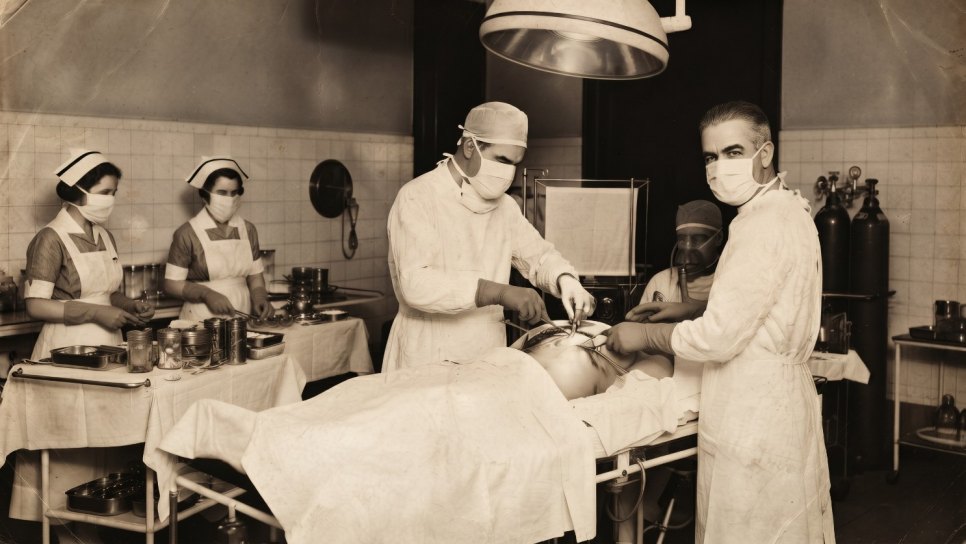



From Yesterday’s Fear to Today’s Hope…
Hippocrates’ ‘Crab’ (Karkinos) metaphor remains relevant after 2500 years. Although we now understand cancer molecularly, its invasion of surrounding tissues and persistent recurrence show the sharpness of ancient observations.
Our greatest difference, however: We no longer fear touching that ‘Crab.’ Modern surgery, targeted drugs, and immunotherapy have broken the ‘Noli Me Tangere’ (Do Not Touch) rule. We now not only touch cancer but target and destroy it molecularly. These silent historical witnesses remind us how far we have come.