
The Ancient Egyptian Myth of "Male Menstruation": Bloody Urine and a Bladder Cancer Epidemic

In this article
Day 13 (Cancer History in 365 Days Series)
The Nile was Egypt's lifeblood, but its waters also harbored a silent killer that devastated people for millennia.
In our previous article, we examined medicines in the Ebers Papyrus. Today, we explore how a parasite—Schistosoma—planted seeds of bladder cancer throughout a civilization thousands of years before the microscope.
This story shows that cancer can result not only from modern chemicals but also from natural biological cycles. It is history’s first example of "Environmental Carcinogenesis".
The Disease's Historical Journey
1550 BC
"AAA" Disease: The Ebers Papyrus described an epidemic of bloody urine (hematuria) and recommended antimony treatment.
The 1100s BC
20th-Dynasty Mummies: Parasite eggs caused tissue calcification and cancer.
1910
Ruffer's Discovery: Sir Marc Armand Ruffer rehydrated mummies and observed fossilized eggs under a microscope.
Today
WHO Classification: Schistosoma haematobium, classified as a Group 1 Carcinogen—definitely cancer-causing.
1. The Man Who Made Mummies Speak: Sir Ruffer
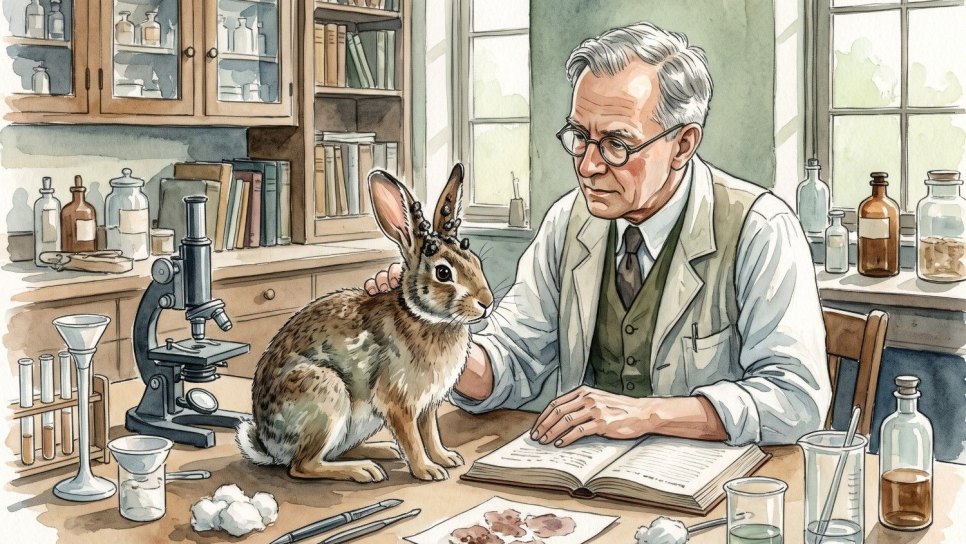
Until 1910, mummies were viewed merely as visual archaeological objects. British pathologist Sir Marc Armand Rufferused a special solution developed in Cairo—Ruffer's solution—to soften dried kidney tissue dating back 3000 years.
A Surprise Under the Microscope
Ruffer saw not grains of sand but thousands of parasite eggstrapped in tissue. This discovery launched paleoparasitology and named the disease devastating Egypt: schistosomiasis (bilharzia).
2. From the Nile to the Bladder: A Deadly Cycle
Ancient Egyptian agriculture required barefoot work in Nile waters, creating ideal conditions for parasite transmission. Here is how a biological agent led to cancer:
Contact
Farmers and children enter Nile waters containing larvae—cercariae—released by snails.
Settlement
Larvae penetrate skin, travel through blood, settle in vessels around the bladder, and lay eggs.
Carcinogenesis
Embedded eggs cause chronic inflammation. Years of irritation lead to deadly Squamous Cell Carcinoma.
3. "AAA" Disease: A Misinterpreted Epidemic
The "aaa" disease frequently mentioned in the Ebers Papyrus was actually hematuria—bloody urine—the most prominent sign of schistosomiasis. Hieroglyphs depicted it with a symbol of blood coming from the phallus (penis).
Disease was so widespread (45-50%) that Egyptians sometimes misinterpreted bloody urine in men as "male menstruation" or a sign of puberty and fertility, rather than a pathological condition.
Ancient Treatment: Antimony
Although Egyptian physicians did not know its parasitic origin, they treated it using the toxic metal antimony .
An interesting fact: antimony compounds continued to treat schistosomiasis in modern medicine until the 20th century. Ancient knowledge remained valid for millennia.
Was this article helpful?
Your feedback helps us improve our content.


Reader comments
Share your comment
Your name and comment are published only after administrator approval. Your email address is never shown to visitors.
Be the first to comment.