
What Is Carcinogenesis? How Does a Normal Cell Become Cancerous?

In this article
What Is Carcinogenesis?
Carcinogenesis, oncogenesis or tumor formation is the process by which disruption of a normal cell's genetics transforms it into a cancer cell that divides uncontrollably; in other words, the process of a cell becoming cancerous. This process is defined by cellular, genetic, and epigenetic changes and abnormal cell division.
The English term is carcinogenesis, formed by combining "carcino-" (cancer) and "genesis" (formation). In Turkish, it is also rendered as karsinogenezis.
How does carcinogenesis occur? Why do our healthy cells become cancer cells? Let's take a closer look at this process.
What Is a Normal Cell's Life Cycle?
To understand carcinogenesis better, we first need to understand a normal cell's life cycle. Like us, our cells have a life cycle. They grow and, when they reach a certain size, undergo mitosis, the cell division process that produces 2 new cells. Of course, this cycle is tightly monitored and managed by our DNA. We can compare our DNA to an instruction manual. It is so detailed that it even contains instructions for a process called apoptosis, in which a cell destroys itself under certain conditions while causing minimal harm to its surroundings, and even instructions for repairing errors that occur in the manual itself. DNA also controls cellular aging (senescence). Thus, our DNA contains information not only about division but about all our functions; this article, however, will focus mainly on cancer-related genes.
What Are Cancer-Related Genes?
DNA has a ladder-like, double-helix structure consisting of 4 types of nucleotide (Adenine, Thymine, Cytosine, and Guanine). DNA gives cells instructions on what to do.

Figure 1: Human DNA consists of 3 billion nucleotide pairs, and approximately 2% of the DNA helix is responsible for producing proteins, the basic building blocks of cells. These meaningful sections of DNA are called genes . Our DNA contains approximately 20 thousand genes , and the combination of all genes is called the genome. Of the genes in humans, more than 500 have been found to be associated with cancer.
In cancer genes, inherited or acquired (somatic) mutations may trigger carcinogenesis and increase the risk of developing cancer.
Cancer-related genes are divided into 3 main classes:
- Tumor suppressor genes: Prevent uncontrolled cell proliferation.
- Oncogenes: Mutationally overactivated forms of “proto-oncogenes,” which are normally responsible for cell proliferation.
- DNA repair genes: Responsible for repairing DNA damage (Table 1).

Today, carcinogenesis is explained using a multistep development model. We will use a similar model in our explanation.
The Stages of Carcinogenesis
1. The First Step in Carcinogenesis: Genetic Disruption
A normal, healthy cell does not turn into a cancer cell all at once. This occurs over years as organisms are exposed to carcinogens, substances that cause damage to DNA.
DNA damage alone does not immediately result in carcinogenesis. For carcinogenesis to occur, DNA damage must exceed the cell's repair capacity and accumulate. DNA damage can accumulate in 2 basic ways:
- Defects in DNA repair mechanisms (for example, as a result of changes in inherited cancer genes) and/or
- Accumulation of DNA damage following heavy exposure to environmental carcinogens (heavy smoking, excessive alcohol use, obesity, etc.)
Note: In 85% of cases, the genetic damage responsible for cancer develops during life because of environmental factors, and cancer risk increases with age; approximately 15% results from damaged genes passed down from parents.
In conclusion, accumulation of DNA damage is the fundamental mechanism of carcinogenesis!
Figure 2: Two mechanisms are illustrated in the diagram below:
- Above: How DNA repair mechanisms and apoptosis prevent DNA damage from accumulating
- Below: How mutations accumulated because of defective DNA repair or heavy carcinogen exposure lead to carcinogenesis
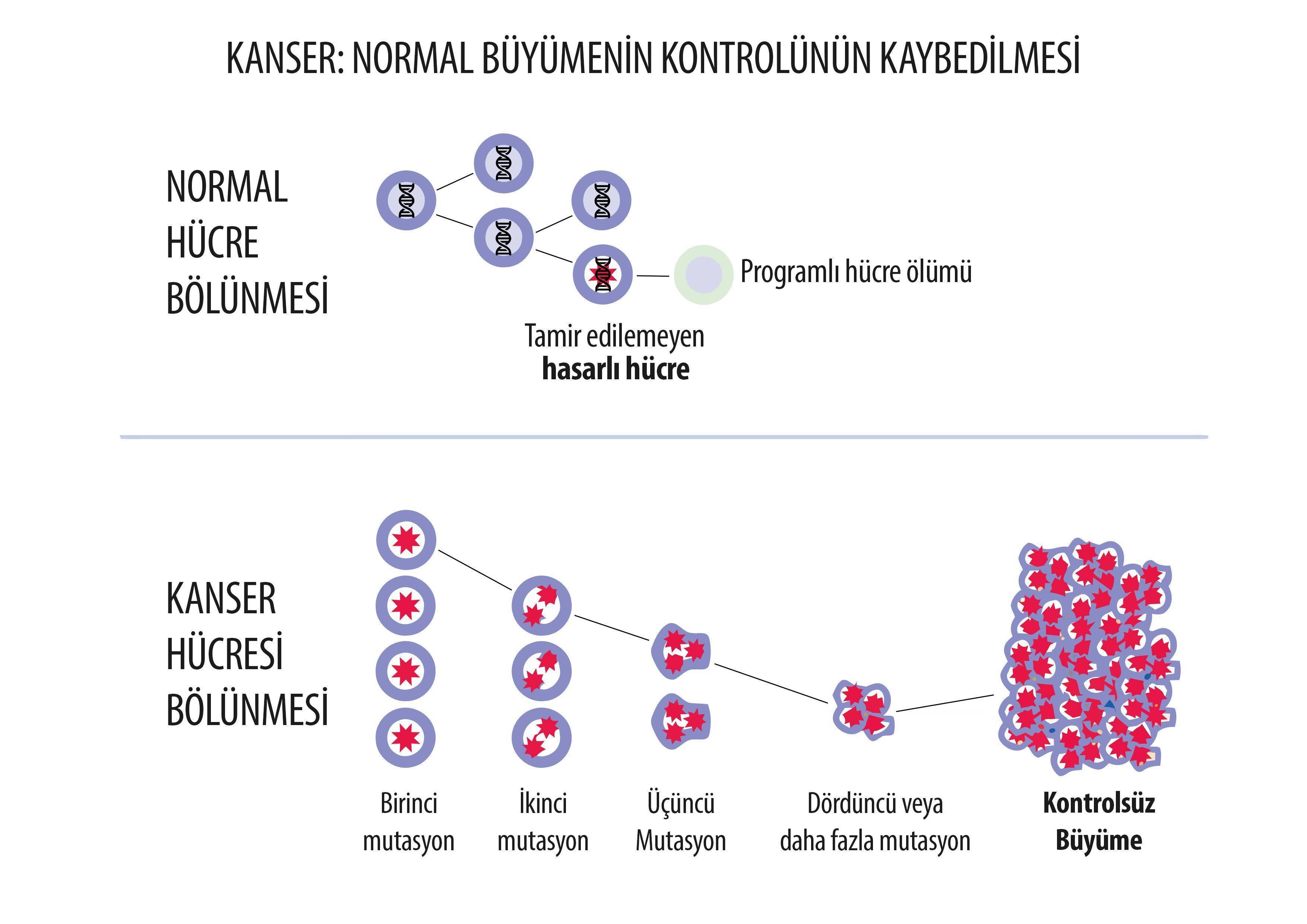
Figure 3: Carcinogens are divided into endogenous (produced by our bodies) and exogenous (to which we are exposed from outside), making 2 types. Bile acids and free oxygen radicals are examples of endogenous carcinogens, while smoking and radiation are examples of exogenous carcinogens.

Cells already possess a mechanism for repairing damage to their genomes (DNA repair genes), but this mechanism does not always work perfectly, or errors may be too large to repair. A cancer-related error that escapes repair (not every error in the genome necessarily causes cancer; many other genetic diseases also exist) is passed to daughter cells through division, and these genetically damaged cells gradually begin to form a colony.
For a cell that has become cancerous to be detected by any oncological imaging method, it must divide approximately 30 times. When this happens, the tumor will reach a size of approximately 1 cubic centimeter, a weight of 1 gram, and 1 billion cells.
2. The Promotion Stage
At this stage, cancerous cells begin dividing rapidly under certain environmental stimuli.
The substances driving cells to divide rapidly during this process do not have to be carcinogens. Any factor that stimulates cell division will affect cancer cells. For example, the sex hormone estrogen stimulates growth of the cancer mass (tumor) in some types of breast cancer.
Nutrition is an important factor in reducing the effects of both carcinogens and these promoting substances. Dietary fiber is inversely associated with cancer, particularly colon cancer. Thus, by increasing your fiber intake, you may reduce your risk of developing colon cancer (see How Much Dietary Fiber Should We Consume?).
An animal study showed that reducing calorie intake by 30% both reduced tumor growth and prolonged survival. Although the mechanism is not fully understood, it is thought that reduced oxidation and the resulting reduction in DNA damage lead to this effect.
Other compounds in fruit and vegetables have also been observed to slow cancer formation. Vegetables called crucifers, such as broccoli, cauliflower, cabbage, and Brussels sprouts, are rich in nutrients, fiber, glucosinolates (sulfur-containing chemicals), indoles, and isothiocyanates. Animal experiments have found that these substances prevented cancer development in various organs in rats and mice.
In humans, healthy diets are known to reduce the risk not only of cancer, but of many cancers. However, the aim of “risk reduction” and the aim of “treatment” are different matters. The Mediterranean diet is among diets that reduce cancer risk, but there is no diet approved for cancer treatment (tumor shrinkage). Nevertheless, people diagnosed with cancer are, of course, advised to follow a healthy eating pattern.
3. Further Mutations and the Malignant Tumor
As mentioned earlier, a healthy, normal cell does not become a cancer cell all at once. Genetic damage must accumulate for this to happen. We defined the first step in cancer as a genetic mutation, but this does not mean genetic mutation is confined to the first step. In this sense, becoming cancerous can be understood as a parameter rather than a "Yes / No" answer. A cell that begins its cancer journey with a mutation continues this journey with new mutations at each step (see Figure 1).
A cell that loses the ability to destroy itself through apoptosis (programmed cell death) because of a mutation may later undergo another mutation and acquire the ability to hide from immune system components. With the next mutation it may direct the body's nutrient supplies toward itself, and with another it may acquire the ability to divide very rapidly.
Through these changes, cancer cells acquire numerous advantageous characteristics, known as the Hallmarks of Cancer. Figure 4 shows the 10 Hallmarks of Cancer.
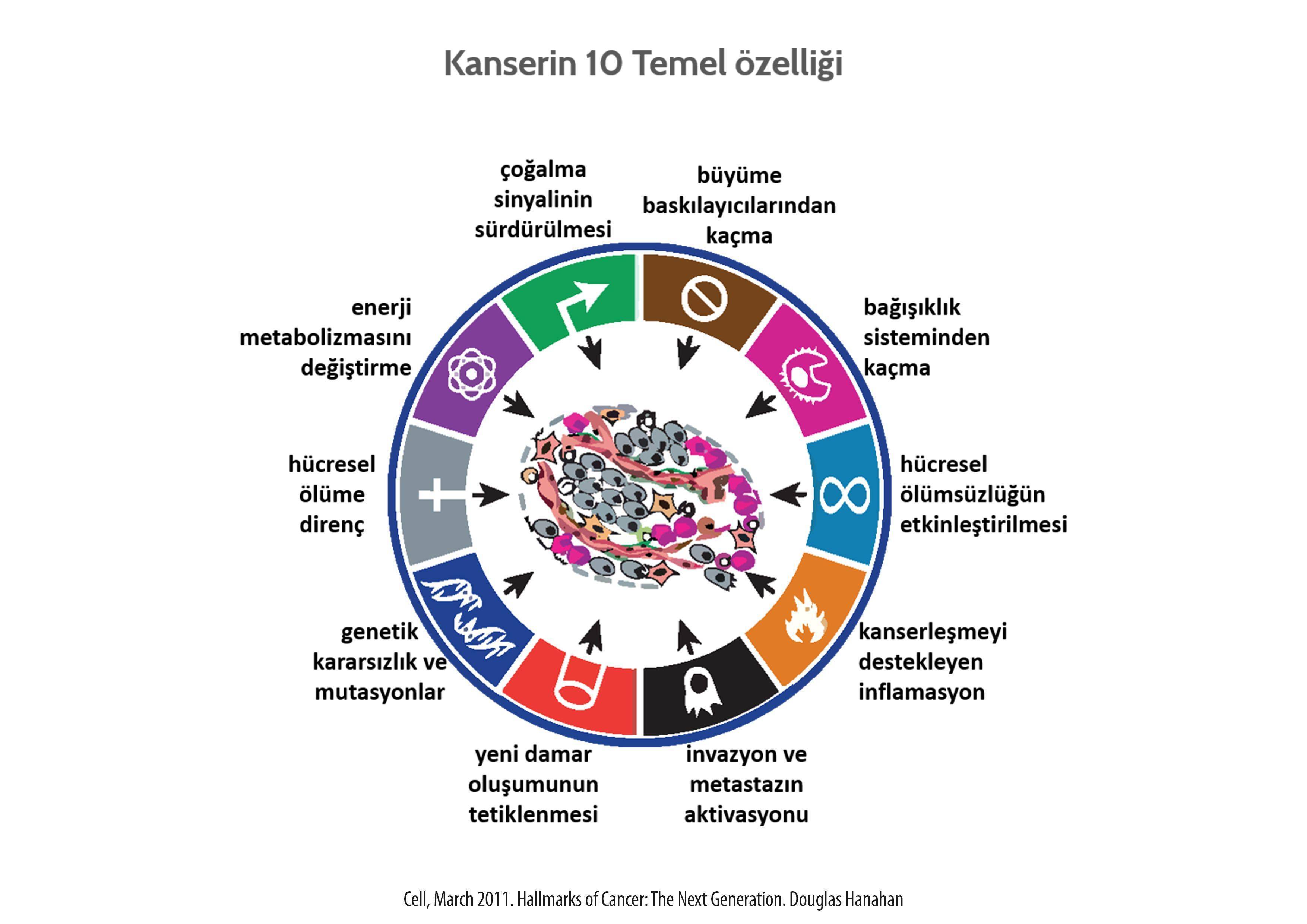
This is also the main reason cancer risk increases with age: accumulation of genetic errors in our cells... Just as applications on our phones gain new features through regular updates, cancerous cells continually acquire new features through mutations.
A cancer cell carries numerous and varied "genetic" differences compared with a normal cell; under a microscope, however, there are some better-known "visible" differences. Some of these are summarized below in Figure 5.

Conclusion
Carcinogenesis refers to cancer formation, a highly complex process. Cancer is a genetic disease at the cellular level, and its being genetic means that accumulated genetic damage is the critical process in a cell becoming cancerous. How far cancer can progress through these mutations is currently beyond our ability to observe. Cancer responds to each new treatment with a mutation that makes it insensitive to that treatment. Of course, this should not make us pessimistic. Improving survival rates with every new treatment developed are a success for medicine. We successfully treat many cancers in their early stages and have begun achieving encouraging results in the advanced stages of many others. There are also cancers we aim to turn into chronic diseases.
*
Other, Less Familiar Theories
There are other theories about carcinogenesis and cancer treatment that are outside the mainstream. These theories may be used to justify certain alternative cancer treatments, but they must be distinguished from mainstream cancer theories with testable hypotheses and rational foundations.
A few alternative theories based on scientific evidence have recently begun to gain acceptance. Some scientists think cancer may arise from aneuploidy (numerical and structural chromosome abnormalities) rather than mutations and epigenetic changes. They also view cancer as a metabolic disease in which the cell redirects oxygen away from the energy-producing pathway (oxidative phosphorylation) toward a pathway producing free oxygen radicals. This leads to energy production through aerobic glycolysis rather than oxidative phosphorylation, and increased oxidative stress from accumulating free oxygen radicals (the oxidative stress theory of cancer).
Some authors have called the assumption that cancer results from sequential random mutations too simplistic, proposing instead that it results from innate genetic errors that prevent the body from limiting cell proliferation. A related theory proposes that cancer is an atavism, an evolutionary return to primitive multicellular life forms. The genes responsible for uncontrolled cell growth and cooperation between cancer cells are very similar to those that allowed the first multicellular life forms to come together and develop. Although these genes persist in the genomes of more complex animals such as humans, more recently evolved genes keep them under control. If the newer controlling genes become inactive for any reason, the cell may revert to its more primitive programming and proliferate uncontrollably. This theory is an alternative to the idea that cancers begin with invasive cells evolving within the body. Instead of further evolution, they have a fixed number of primitive genes that are gradually activated and give them limited variability.
As stated before discussing them, these theories are inadequate in terms of scientific evidence and logic, but this does not prove they are entirely wrong. Further research is required.
Was this article helpful?
Your feedback helps us improve our content.




Reader comments
Share your comment
Your name and comment are published only after administrator approval. Your email address is never shown to visitors.
Be the first to comment.