
A New Milestone in Small Cell Lung Cancer: Lurbinectedin Plus Atezolizumab

In this article
Small cell lung cancer (SCLC) is a highly aggressive tumor, usually associated with smoking, that can metastasize early. In extensive-stage (advanced; ES-SCLC) disease in particular, recurrence or progression often occurs quickly despite an initial response. This increases the need for maintenance treatments that can improve long-term survival.
#ASCO25 featured the phase 3 IMforte study, pointing to a potentially transformative development: Lurbinectedin , a next-generation chemotherapy drug, significantly improved both progression-free survival (PFS) and overall survival (OS) when combined with the immunotherapy agent atezolizumab.
The IMforte Study: Details and Findings
Study Design:
-
Total number of patients: 660 (patients with ES-SCLC without brain metastases before treatment)
-
Induction treatment: 4 cycles of carboplatin + etoposide + atezolizumab
-
Maintenance treatment phase: 483 patients
-
Control group: Atezolizumab (1200 mg IV every 3 weeks)
-
Experimental group: Atezolizumab + lurbinectedin (3.2 mg/m² IV every 3 weeks)
-
Key Findings:

Progression-Free Survival (PFS):
-
Experimental group: 5.4 months
-
Control group: 2.1 months
-
HR: 0.54; P < 0.0001. A 46% reduction in the risk of cancer progression
-
6-Month PFS: 41.2% (experimental) vs 18.7% (control)
-
12-Month PFS: 20.5% vs 12%
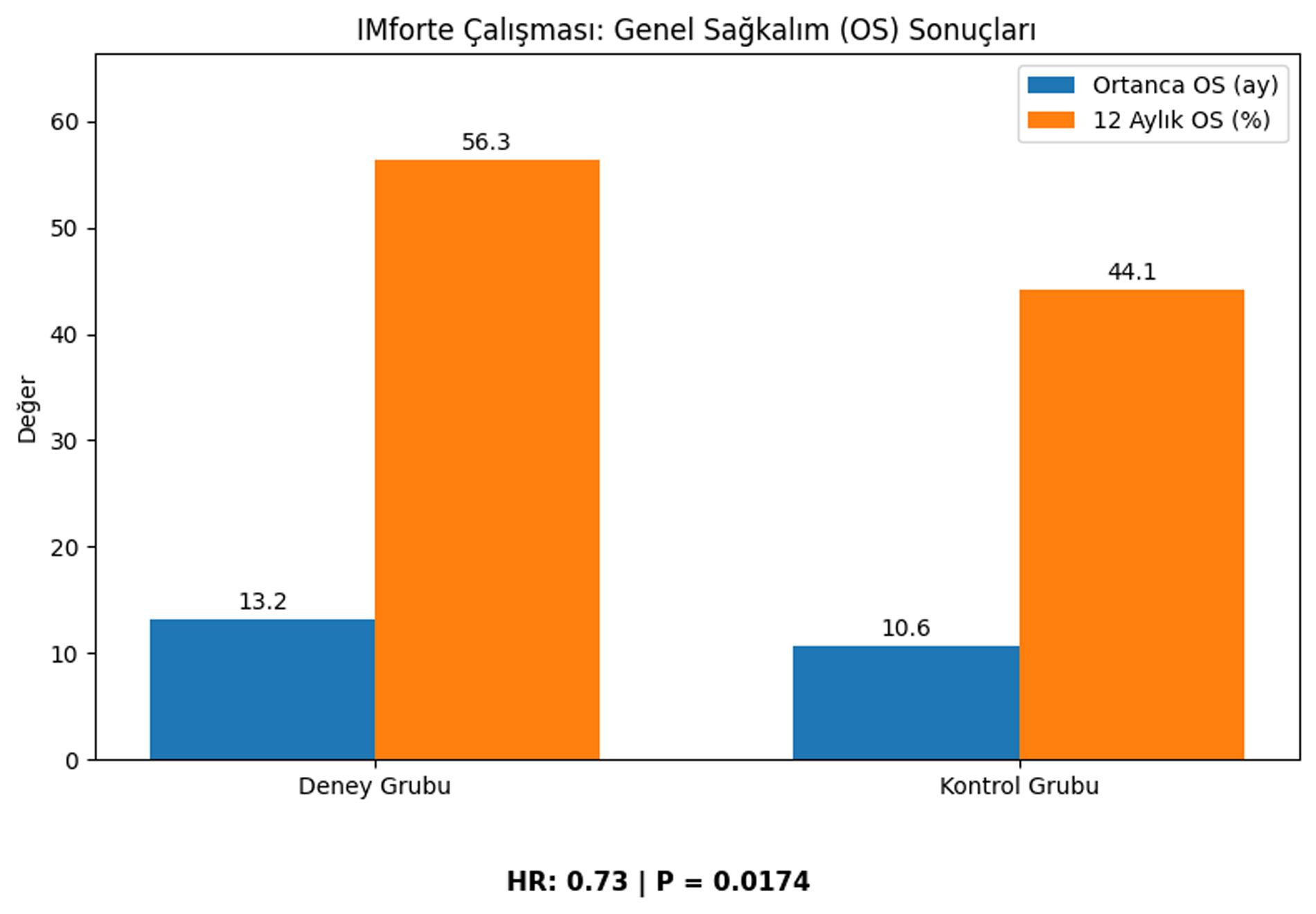
Overall Survival (OS):
-
Experimental group: 13.2 months
-
Control group: 10.6 months
-
HR: 0.73; P = 0.0174. A 27% reduction in the risk of death.
-
12-Month OS: 56.3% vs 44.1%
Safety Profile:
-
Grade 3/4 adverse reactions: 25.6% (experimental) vs 5.8% (control)
-
Grade 5 (fatal) adverse events: 0.8% vs 0.4%
-
Treatment discontinuation rate: 6.2% vs 3.3%
What Is Lurbinectedin (Zepzelca®)?
Origin:
Lurbinectedin is a compound derived from marine organisms. It is a more potent and selective version of ET-743, a compound obtained from the marine organism Ecteinascidia turbinata. In 2020, the FDA granted it accelerated approval for metastatic small cell lung cancer treatment.
Key Characteristics:
-
Active ingredient: Lurbinectedin
-
Brand name: Zepzelca®
-
Drug class: Transcription inhibitor, alkaloid-derived antineoplastic agent
-
Route of administration: IV infusion every 21 days (approximately 1 hour)
-
FDA approval: June 15, 2020 (2nd-line treatment)
-
Licensing status in Türkiye: Not licensed; included on the overseas medicines list and requires special TİTCK authorization
Mechanism of action:
-
It binds to DNA and inhibits RNA Polymerase II.
-
Stops oncogenic transcription
-
Triggers apoptosis (programmed cell death)
-
Facilitates immune activation in the tumor microenvironment
Most Common Adverse Reactions:
-
Anemia (96%), leukopenia (72%), fatigue (58%), thrombocytopenia (44%)
-
Nausea, loss of appetite, vomiting, diarrhea, neutropenic fever
-
Pneumonia, elevated liver enzymes, skin ulceration
Clinical and Strategic Interpretation
With these findings, lurbinectedin emerges as a strong candidate not only for second-line treatment but also for first-line maintenance therapy . This strategy:
-
Prolongs tumor control
-
Deepens the effect of immunotherapy
-
May make the immune response durable by establishing long-term T-cell memory
Conclusion: Is a New Standard Emerging?
According to ASCO25 data, lurbinectedin plus atezolizumab could become a new standard for ES-SCLC. Although not yet licensed in Türkiye, this FDA-approved agent can be obtained with special authorization. This promising development could mean longer survival for more patients in clinical practice.
Sources
Was this article helpful?
Your feedback helps us improve our content.


Reader comments
Share your comment
Your name and comment are published only after administrator approval. Your email address is never shown to visitors.
Be the first to comment.