
Small-Cell Lung Cancer: Carboplatin, Etoposide, and Atezolizumab Regimen

In this article
Body Surface Area Calculator
Estimated Glomerular Filtration Rate (eGFR)
Small-Cell Lung Cancer and the Carboplatin + Etoposide + Atezolizumab Regimen
Since the FDA's approval of the immunotherapy Tecentriq, containing atezolizumab, in 2019, carboplatin + etoposide + atezolizumab has become an extensive-stage small-cell lung cancer (ES-SCLC) treatment used as standard first-line therapy .
Small-cell lung cancer grows rapidly and tends to metastasize early. Despite high response rates, the risk of recurrence is substantial. Combining the traditional chemotherapy agents carboplatin and etoposide with immunotherapy offers a more effective approach aimed both at reducing tumor burden and strengthening the immune system's ability to target cancer .
Clinical studies have shown that this combination significantly prolongs overall survival and delays disease progression.
This article discusses how carboplatin + etoposide + atezolizumab works, administration protocols, side effects, and important aspects of patient management .
How Does Carboplatin + Etoposide + Atezolizumab (Tecentriq®) Work?
Carboplatin and etoposide are chemotherapy medicines designed to slow cancer cell growth and kill the cells.
Atezolizumab enhances the immune system's ability to specifically target and kill cancer cells through immunotherapy . Some cancer cells can evade specialized cancer-fighting immune cells called T cells. One way is by secreting a protein called programmed death-ligand 1 (PD-L1) . PD-L1 inhibits T-cell activation and prevents the immune system from recognizing cancer.
Atezolizumab binds to and blocks PD-L1, allowing T cells to remain active so that immune cells can recognize and destroy cancer cells.
Important Considerations:
- Active, known, or suspected autoimmune disease
- Long-term immunosuppressive treatment or systemic corticosteroids, including conditions requiring more than 10 mg of prednisone or equivalent daily
Eligibility Criteria:
Patients should meet the following conditions:
- Previously untreated extensive-stage small-cell lung cancer (ES-SCLC)
- An ECOG performance score of 0 to 2
- Adequate bone marrow, liver, and kidney function
- Access to a treatment center experienced in managing atezolizumab's immune-related adverse reactions.
Treatment Goals:
Carboplatin + etoposide + atezolizumab is given to shrink tumors, reduce lung cancer symptoms, and help patients live longer. It is generally not intended to provide a complete cure.
Tests:
- At baseline: Complete blood count, platelets, creatinine, calcium, alkaline phosphatase, ALT, total bilirubin, LDH, sodium, potassium, TSH
- Before each cycle: Complete blood count, creatinine, alkaline phosphatase, ALT, total bilirubin, LDH, sodium, potassium, TSH
- When clinically indicated: Chest X-ray, ECG, morning serum cortisol, lipase, glucose, calcium, serum or urine hCG (required for women of childbearing age if pregnancy is suspected), free T3 and free T4, serum ACTH, testosterone, estradiol, FSH, LH, ECG
Premedication:
- Carboplatin: Use an antiemetic protocol for highly emetogenic chemotherapy.
- For etoposide hypersensitivity in a patient's history: administer hydrocortisone and diphenhydramine.
- For atezolizumab infusion reactions in a patient's history: give 50 mg oral diphenhydramine and acetaminophen.
Induction (4 cycles):
Every 3 weeks:
- Day 1: Intravenous (IV) carboplatin infusion over 30 minutes (AUC 5)
- Days 1, 2, and 3: IV etoposide infusion over 60 minutes (etoposide 100 mg /m2)
- Day 1: IV atezolizumab infusion over 60 minutes (1200 mg)
- If tolerated, subsequent infusions may be given over 30 minutes.
Maintenance:
- Atezolizumab is infused IV over 30 to 60 minutes:
- Every two, three, or four weeks.
Estimated Total Infusion Time:
- Day 1 of cycles 1-4: up to 3 hours.
- Days 2 and 3 of cycles 1-4: up to 2 hours.
- Maintenance with atezolizumab alone: up to 1 hour.
Infusion times are based on clinical trials but may vary with physician preference or patient tolerance. Premedication and IV fluids, such as hydration, may extend the total time.
Carboplatin + etoposide + atezolizumab is generally administered in an outpatient treatment center, allowing patients to return home afterward.
Treatment Cycle:
Carboplatin + etoposide + atezolizumab is repeated every 3 weeks (21 days), which constitutes 1 cycle.
This cycle may be repeated up to 4 times, followed by atezolizumab alone until it stops working or intolerable side effects occur.
Treatment duration depends on response, tolerance, and the number of cycles prescribed.
Side Effects
Each medicine in a multidrug regimen has its own side effects. When used together, treatment-related effects reported in clinical trials provide the best estimate of what to expect.
According to clinical studies, the most common side effects of carboplatin + etoposide + atezolizumab across all grades are shown below:

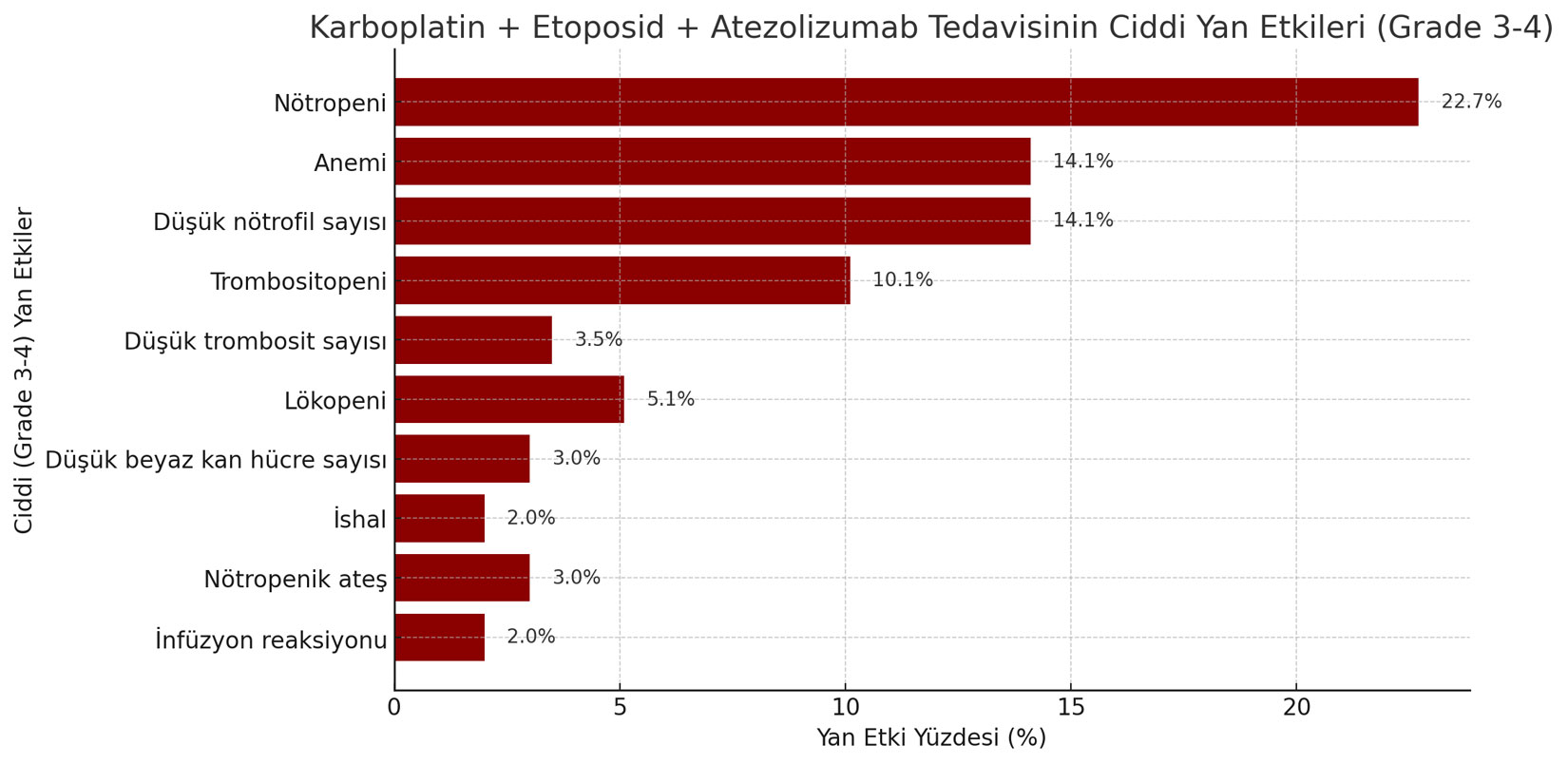
The bar chart below shows the severe (Grade 3-4) side effects of carboplatin + etoposide + atezolizumab:
Points to Remember
- Patients do not necessarily experience the same side effects in the same way. They may be mild in some and severe in others.
- Side effects can change over time. Some are more noticeable initially, while others appear or diminish during treatment.
- Side effects may lead to treatment delays, dose reductions, or a change of medicine.
- Some can be treated or prevented with medicines. Preventive treatment is called “prophylaxis.”
What Happens When I Receive Treatment?
- Blood tests are performed before treatment begins.
- For each cycle, blood tests are taken on or before the first day.
- Dose and treatment duration may be adjusted according to blood results and/or other side effects.
- A doctor or nurse practitioner examines you before each cycle, every 3 weeks.
- Your first appointment takes longer because the nurse explains the treatment plan's possible side effects and how to manage them.
- It may be helpful to bring someone with you to the first appointment.
- You will receive prescriptions for anti-nausea medicines, which you should obtain from your own pharmacy.
- Please bring these medicines to every treatment appointment.
- Your nurse will explain when to take them.
- You will also need to take anti-nausea medicines at home after treatment.
- Preventing nausea is easier than treating it once it begins, so follow your doctor's instructions.
Managing Side Effects
1- Allergic Reactions
Atezolizumab, carboplatin, and etoposide can rarely cause allergic reactions.
Possible symptoms include:
- Facial flushing
- Dizziness
- Rash or itching
- Fever or chills
- Swelling
- Chest discomfort
- Dizziness or feeling faint
- Difficulty breathing
Symptoms may appear immediately or within a day after treatment, either with the first dose or after many doses.
Tell your nurse immediately if these symptoms occur during treatment.
If they occur after leaving the clinic, contact your oncologist immediately.
Note: Etoposide may cause a burning sensation if it leaks under the skin.
Tell your nurse immediately if you notice pain, burning, stinging, or any change while the medicine is being given.
2- Low White Blood Cells (Leukopenia/Neutropenia)
- White blood cell counts may decrease after treatment. They generally return to normal after the final treatment.
- White blood cells protect against infection. Low counts increase infection risk.
To Help Prevent Infection:
- Your oncologist may prescribe prefilled syringes containing filgrastim to prevent a fall in white blood cells.
- Wash your hands frequently and always after using the toilet.
- Avoid crowds and people who are ill.
- Seek emergency care immediately for signs of infection, such as fever above 38°C or 100°F, chills, cough, or burning when urinating.
3- Low Platelets (Increased Bleeding Risk)
- Platelet counts may fall after treatment but generally return to normal after the final treatment.
- Platelets help blood clot. Low levels may cause easy bruising and bleeding.
To Help Prevent Bleeding:
- Avoid bumps, cuts, and burns.
- Blow your nose gently and do not pick it.
- Prevent constipation.
- Brush gently with a soft toothbrush because your gums may bleed easily.
- Medicines such as aspirin (ASA) and ibuprofen may increase bleeding risk.
- Do not suddenly stop medicines prescribed by your doctor.
4- Nausea and Vomiting
- Nausea and vomiting may occur after treatment and continue for some time.
- Uncontrolled vomiting can quickly lead to dehydration.
To Prevent and Manage Nausea:
- Take prescribed anti-nausea medicines regularly before and after treatment.
- Drink plenty of fluids.
- Eat and drink in small, frequent amounts.
- See the suggestions for managing nausea.
- Tell your healthcare team if nausea or vomiting persists.
5- Mouth Sores and Tenderness
- Mouth sores may develop a few days after treatment.
- Sores on the tongue, inside the mouth, or in the throat, and bleeding gums, may increase infection risk.
To Prevent and Manage Mouth Sores:
- Brush with a soft toothbrush after meals and before bed.
- If your gums bleed, use gauze instead of a toothbrush.
- For oral hygiene, you may use this rinse: add ¼ teaspoon of baking soda and ¼ teaspoon of salt to 1 glass of warm water. Rinse several times daily.
- Try the food suggestions for mouth sores for relief.
6- Fatigue and Low Energy
- You may feel tired and weak during treatment.
- Do not drive or operate heavy machinery if very tired.
7- Pain or Tenderness Along the IV Site
- Pain or tenderness may occur where the needle was inserted.
- To Reduce Discomfort: Apply a cold compress or soak the area in cold water for 15-20 minutes several times daily.
8- Loss of Appetite and Weight Loss
- Loss of appetite and weight loss may occur after treatment and persist after treatment ends.
- Be sure to consult your dietitian.
- Weigh yourself weekly.
- Always consult your doctor if you have difficulty eating.
9- Changes in Taste
- Keep Your Mouth Clean
- Brush your teeth and tongue frequently.
- Use a soft-bristled toothbrush.
- Try different foods, flavors, and drinks.
- Keep a list of foods that suit you.
- Focus on foods that taste good at the time, even if you eat the same foods for a while.
- Drink plenty of fluids with meals; this may help improve taste.
- Inadequate fluid intake can cause dry mouth and worsen taste changes.
- Eat small meals and snacks throughout the day.
- Eating frequently helps maintain adequate nutrition.
- You may suck sugar-free hard candies or mints, or chew sugar-free gum.
This may help remove unpleasant tastes between meals.
10- Hair Loss
- Hair loss is common with etoposide and may begin a few days or weeks after treatment starts.
- Hair may become thinner or fall out completely.
- Your scalp may be tender.
- Facial and body hair may also be lost.
- Hair regrows after treatment and sometimes during treatment.
- Its color and texture may change.
Suggestions for Hair Loss:
- Apply mineral oil to the scalp to reduce itching.
- If eyelashes and eyebrows fall out, wear a wide-brimmed hat and glasses to protect your eyes from dust and dirt.
- Use accessories such as wigs or scarves.
When to Seek Urgent Medical Care
Emergency care is recommended if the following occur.
Rarely, you may experience these allergic reaction symptoms:
- Dizziness
- Rapid heartbeat
- Facial swelling
- Difficulty breathing
Changes in bowel habits or diarrhea
- Black, tarry stools
- Blood or mucus in stools
- Abdominal pain
Eye symptoms
- Changes in vision
- Eye pain or redness
Signs of infection
- Fever above 37.5°C
- Chills
- Severe sore throat
- Severe cough or green phlegm
- Cloudy or foul-smelling urine
- Painful, tender, swollen, or red wounds
Signs of bleeding
- Black or tarry stools
- Blood in urine
- Small red spots on the skin
- Large bruises
Signs of heart or lung problems
- Rapid or irregular heartbeat
- Chest pain or pressure
- Shortness of breath or difficulty breathing
- Swelling in the feet or lower legs
- Fainting
Signs of liver problems
- Yellowing of the eyes or skin
- White or clay-colored stools
Signs of kidney problems
- Lower back or flank pain
- Blood in urine
- Swelling in the feet or lower legs
- Changes in urine amount or color
Signs of blood sugar problems
- Excessive thirst
- Frequent urination
YOU MUST SEEK EMERGENCY CARE for symptoms such as these!
Sources
Was this article helpful?
Your feedback helps us improve our content.


Reader comments
Share your comment
Your name and comment are published only after administrator approval. Your email address is never shown to visitors.
Be the first to comment.