
Breast Cancer in Young Women: The Gap Between Fertility Preservation in Theory and Practice

In this article
Many women experience emotional shock after a cancer diagnosis and initially do not even think about fertility. Yet this issue must not be overlooked, especially for patients with early-stage breast cancer who do not yet have children or might have considered having them if they had not been diagnosed. Fertility plans should not be dismissed as an indulgence because someone has cancer; neglecting them may lead to serious regret later. A new study examines fertility preservation strategies and the barriers faced by young women with breast cancer. It sheds important light on how healthcare professionals and society should approach these women's plans for a family. This is not only a medical issue but a deeply human one affecting emotional and social well-being. The findings may therefore play a critical role in developing counseling and support strategies for both healthcare professionals and young patients.
Worldwide, more than 2 million new breast cancers and about one-sixth as many new ductal carcinoma in situ cases are diagnosed each year. Although most occur in older adults, about 10% of new breast cancers are diagnosed in women aged 45 and younger. Tumors in this group tend to be more aggressive, and patients may receive intensive treatments, including multidrug chemotherapy, that affect fertility.
Chemotherapy may directly damage reproductive organs (gonadotoxic effects), or pregnancy may need to be postponed until adjuvant treatment is complete. Standard endocrine treatment, in particular, can last 5 to 10 years. This lengthy process can affect fertility. Chemotherapy and prolonged treatment may therefore temporarily or permanently reduce a woman's ability to have children.
Changing Ages and Attitudes Toward Pregnancy in the Postmodern Era
As postponing pregnancy until the 30s and 40s becomes more common, a young woman diagnosed with breast cancer is increasingly likely not to have started or completed her family and to be concerned about treatment-related infertility. International guidelines recommend addressing this issue in adolescent and young adult cancer patients, yet recent studies suggest fertility still receives insufficient attention. Even when it is discussed, options, access to preservation strategies and their effectiveness may be limited. Fertility concerns can also affect treatment decisions, such as choosing or declining chemotherapy or not starting or continuing adjuvant hormonal treatment.
Some earlier studies have examined fertility concerns in young breast cancer patients. In a European study by Ruggieri and colleagues, 34% of 297 patients surveyed when making treatment decisions reported no concerns about infertility.
This issue is highly important for women's quality of life during and after treatment and for their future family planning. The study is therefore an important step toward understanding the difficulties young women with breast cancer face and providing more effective support.
Discussed Too Little, Put into Practice Even Less
A comprehensive prospective study at Dana-Farber Cancer Institute examined young women's fertility concerns and preservation efforts after a breast cancer diagnosis. Many newly diagnosed patients were concerned about fertility and discussed it with their oncologists. However, only a small proportion actively used fertility preservation strategies. This suggests that young breast cancer patients may face significant barriers to addressing their substantial fertility concerns effectively.
According to the study, barriers to fertility preservation for cancer patients include:

On December 22, 2023, Cancer Medicine published the study by Kermadec and colleagues.
The Main Fertility Concerns of Women with Breast Cancer
- Concern That Pregnancy May Increase Recurrence Risk: A substantial proportion of participants worried that pregnancy could increase the risk of breast cancer recurrence (the cancer returning). This concern was reported by 55% of women who wanted children and 42% of those who did not.
- Childcare and Cancer Recurrence: Women worried about caring for their children if cancer returned. This concern affected 37% of women who wanted children and 21% of those who did not.
- The Child's Risk of Developing Cancer: Among women considering having children, 45% worried that their children might have an increased cancer risk, compared with 11% of those not considering children.
Study Design
The researchers analyzed data from "Young and Strong: An Education and Supportive Care Intervention Study for Young Women with Breast Cancer", a cluster-randomized controlled trial testing an intervention program for young women with breast cancer.
Between 2012 and 2013, patients completed surveys within 3 months of diagnosis and at 3, 6 and 12 months after diagnosis. Questions covered sociodemographics, psychosocial factors, fertility concerns and fertility preservation strategies.
Of 467 women at 54 US cancer centers, 419 were evaluable for fertility concerns. Median age was 40 (range = 22–45); 11% were Black, 6% Hispanic and 75% already had children. Cancer was stage I (35%), II (51%) or III (14%), and 82% had received chemotherapy.
Univariable and multivariable models were used to investigate sociodemographic, clinical and psychosocial predictors of fertility concerns.
Results
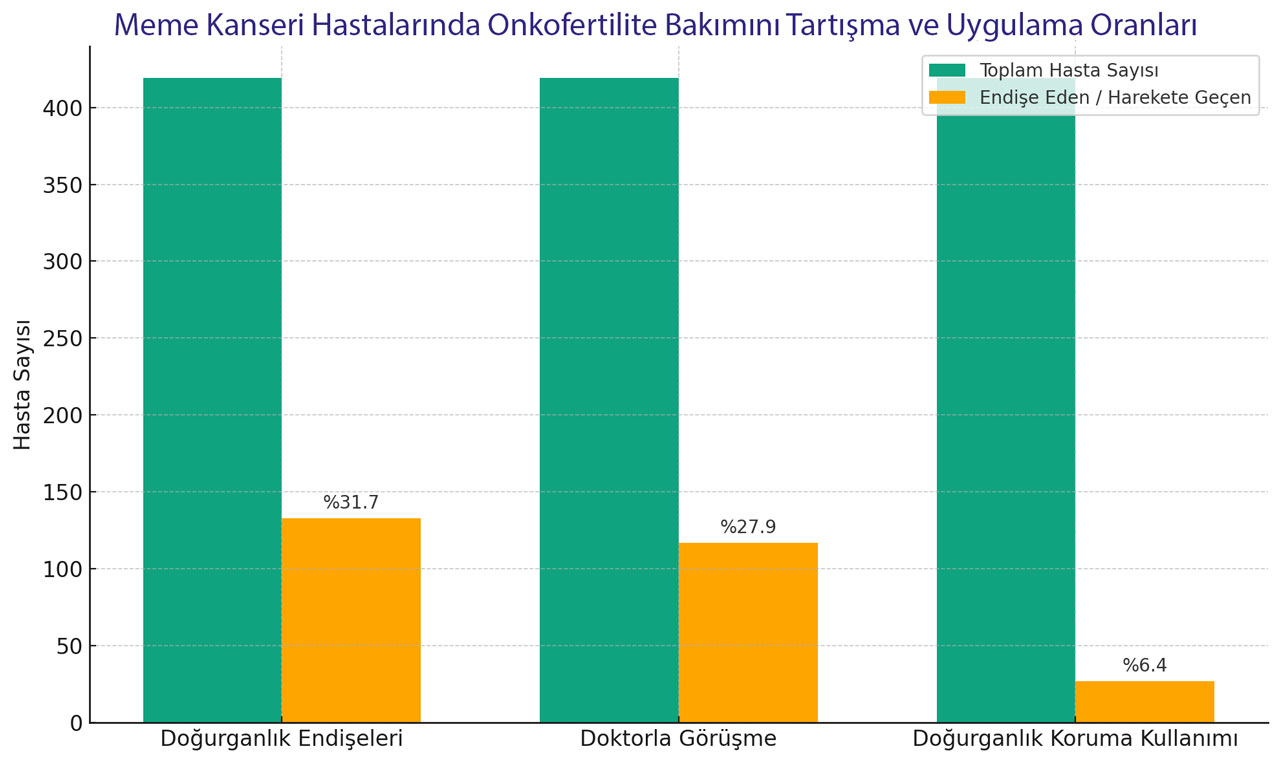
When making treatment decisions, 133 participants (32%) reported fertility concerns, and 47% of these women said those concerns affected their decisions.
Although healthcare providers are advised to refer patients interested in fertility preservation to reproductive specialists, only 22% of women with fertility concerns (just 6.4% of all patients) used fertility preservation strategies.
In multivariable modeling, a history of difficulty conceiving and younger age were more strongly associated with fertility concerns.
In conclusion, many young women newly diagnosed with breast cancer have fertility concerns that influence treatment decisions. Although patients and doctors discussed these concerns, only a small group actively used fertility preservation strategies. This highlights the need to reassess counseling and provide more effective support for young breast cancer patients. The findings may guide healthcare providers and patients toward more comprehensive information and support on the interaction between fertility preservation and treatment decisions.
Related topic: Carrying a BRCA Mutation Does Not Prevent Pregnancy After Breast Cancer Treatment
Sources
Was this article helpful?
Your feedback helps us improve our content.




Reader comments
Share your comment
Your name and comment are published only after administrator approval. Your email address is never shown to visitors.
Be the first to comment.