
Genetic Engineer Okan Çakır from Our OncoTrust Team Completes His Master’s Degree at Edinburgh Napier University at the Top of His Class

In this article
My acquaintance with Muharrem Okan Çakır goes back to 2008, when he was still a middle-school student. I was working as a medical oncologist at Akdeniz University, and his aunt had become my patient. I remember him as a bright child who wanted to study space sciences. His mother told me he had even acquired amateur telescopes and loved watching the night sky. His aunt, who had devoted great effort to caring for and raising him when he was very small, had advanced ovarian cancer and died of the disease within a few years. I know this deeply affected Okan and that he even promised her he would do meaningful work toward treating it. Yes, while moving from adolescence into young adulthood, Okan had decided what he wanted to be.
Sometimes Your Profession Chooses You!
As someone working in cancer medicine who has treated tens of thousands of patients, I have encountered many similar stories, but Okan continued his differently. He truly kept his promise to his aunt, redirecting all his excitement about distant skies to something very close: what happens inside our bodies.
While still in high school, he had partly understood that cancer is a complex genetic disease at the cellular level. Thinking he needed a different path to become a cancer researcher, he chose genetic engineering at university.
After his aunt died, I did not see Okan again until 2015, when a lovely coincidence brought us together. In 2015 he successfully graduated from Yeditepe University’s Genetic Engineering Department and was accepted for a master’s degree in Glasgow, Scotland. But he had stomach complaints and came with his mother to the hospital where I worked to resolve them before going abroad. Waiting for the gastroenterologist, he accidentally stood outside my clinic door. When I opened it, I saw Okan and his mother. I did not immediately recognize him: the child I had seen 7 years earlier had become a young man almost twice as tall. But I recognized his mother immediately. Asking why they were there, I learned his story and that he would soon leave home as a cancer researcher. We went straight into my office, talked about cancer medicine, and have never parted since.
In Glasgow, Okan began working on 3-dimensional tissue microchips mimicking normal tissue to improve laboratory experiments before human clinical trials and even remove the need for some animal experiments. He did excellent work. One study even won first prize at the National Cancer Congress in our country. But while he continued his master’s program on a scholarship, the United Kingdom held the Brexit vote, and the public chose to leave the European Union. This was a major disappointment for Okan, whose master’s degree was supported by an EU project, and he had to return home. But these were the first steps of a much better beginning.
Basic and Clinical Sciences Come Together
When Okan returned to Antalya because of Brexit, we worked much more closely, and this seemingly unfortunate event became a fine opportunity for everyone. One of the biggest difficulties for basic scientists is being unable to contact directly the people experiencing the problem—the patients—in the subject on which they may spend a lifetime. Cancer professionals unable to interact directly with patients and their real problems, in other words removed from the clinic, may struggle to ask the right questions leading to positive outcomes. Conversely, clinicians working at an intense treatment pace may struggle to keep up with increasingly deep and broad science and technology. Our partnership therefore began a wonderful new learning process.

Besides sharing knowledge and experience and conducting scientific studies with Okan, we created social projects explaining cancer medicine to children. With other young colleagues I had mentored during and before this process, we formed a team spanning many disciplines: cancer professionals, computer engineers, medical students, an art therapist, software specialist, medical informatics specialist and palliative care specialist, called OncoTrust . With OncoTrust, in 2016 and 2017, we participated 2 times in the Antalya Science Festival, explaining medicine with the newest scientific and technological tools to the public, especially children and young people.
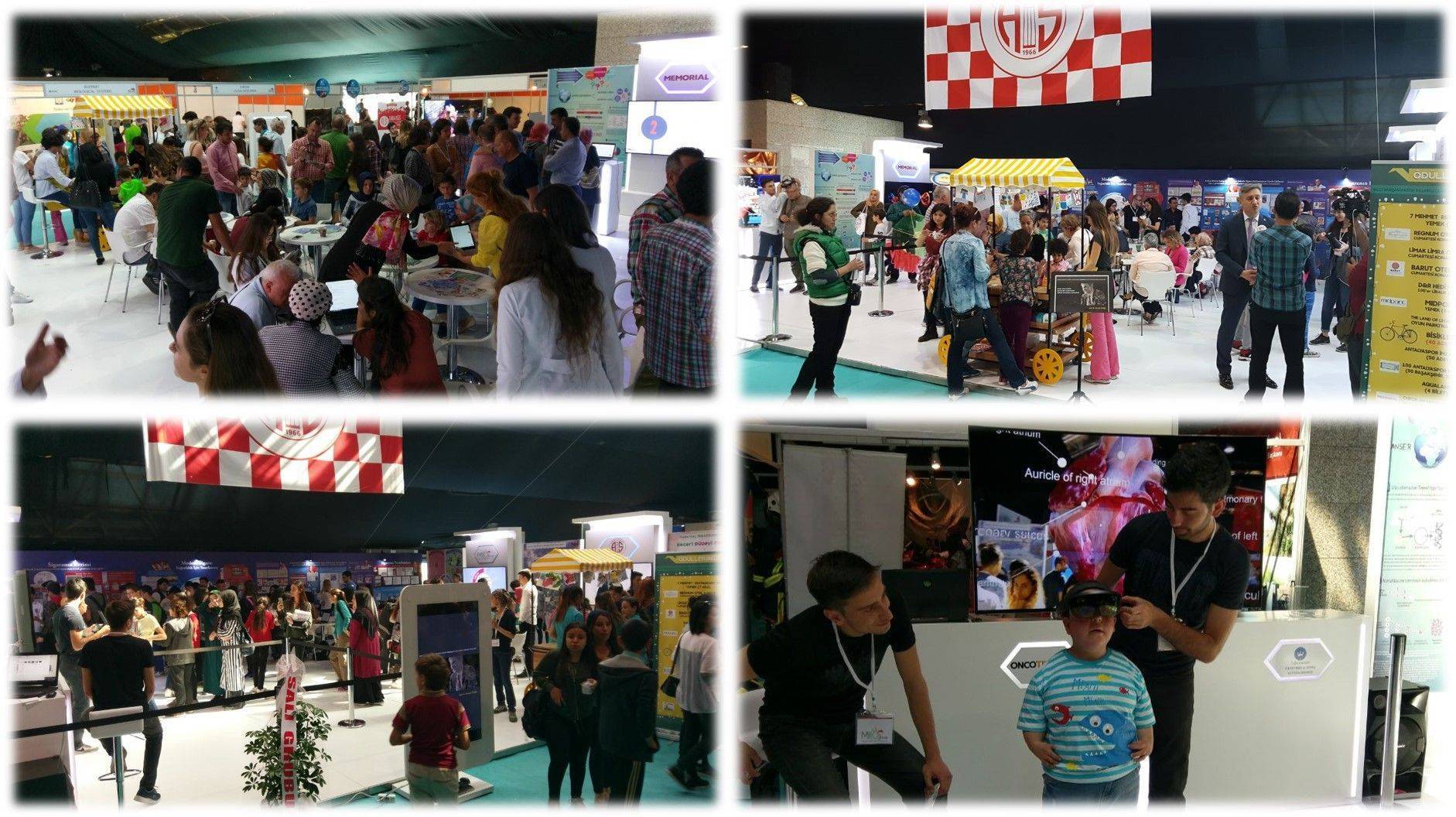
Okan also presented studies prepared with our OncoTrust team for 2 consecutive years at the European Toxicology Congress. During this time he reapplied to overseas master’s programs and was accepted by the Drug Development and Biomedical Sciences Department at Edinburgh Napier University in Scotland. This time, we shared our journey without any interruption in communication, continuously exchanging new knowledge.
Largely through Okan’s efforts, we could learn firsthand and in great detail about worldwide advances in cancer medicine and genetics. The most striking included CRISPR gene-editing technology and the living drug CAR-T cellular therapies.
While successfully continuing his master’s program in Edinburgh, Okan came to our country 2 times and spoke at important oncology congresses about the current state and potential of genetic cancer therapies and CRISPR, considered one of the century’s discoveries. His thesis was on “The Androgen Receptorin Prostate Cancer” and made an important scientific contribution; perhaps this work could open the door to a new cancer drug.
On 28 June 2018, the graduation ceremony that excited us all took place, and we learned Okan had completed his master’s program at the top of his class .
Let us conclude Okan’s story with a memorable saying by a scientist he greatly admires: “Fear nothing in life; only try to understand everything.” (Madame Curie). Our young scientist Okan also says: “Without fearing cancer, we will continue developing treatments without stopping.”
In these years of rapid scientific progress, I hope Okan’s story encourages many young people and wish to emphasize again how proud our entire team is of him. We hope that, having gone abroad as a spark, he will return to his country as a ball of fire alongside many young people and achieve many successes.
Was this article helpful?
Your feedback helps us improve our content.




Reader comments
Share your comment
Your name and comment are published only after administrator approval. Your email address is never shown to visitors.
Be the first to comment.