
Hobbies and Mental Health: A Comprehensive Study Across 16 Countries

In this article
Population aging places an additional burden on health systems worldwide, as older people face a range of social and psychological challenges. To help alleviate these difficulties, many countries encourage participation in hobbies to support and improve mental health. However, it remains unclear whether the benefits are consistent across different national settings. This study examines the relationships between hobby engagement and various aspects of mental health in 16 countries, drawing on five longitudinal studies involving 93 thousand participants .
Why This Study Matters
Although advances in healthcare have helped people live longer, healthy life expectancy (the average number of years a person is expected to live in good health without disability, physical or psychological illness, or injury) has not kept pace with increases in life expectancy. This creates unsustainable pressures on health and social care systems worldwide, leading to financial and workforce planning challenges. Exploring cost-effective strategies to improve older adults' mental health and well-being is important for meeting their needs and supporting the sustainability of global health and social care systems.
Aging populations may face social and psychological challenges such as loneliness, social isolation and deteriorating mental health. These challenges are associated with greater physical multimorbidity and mortality. Worldwide, the population aged 65 and older is growing faster than other age groups. According to the United Nations, in 2019, one in 11 people was aged 65 or older , and this proportion is expected to rise by 2050 to one in 6 .
There is global interest in how participation in psychosocial activities can help address these challenges.
The article groups hobbies into several categories. Examples include:
- Physical Activities: This category includes activities involving physical movement, such as sports, walking and dancing.
- Arts and Cultural Engagement: Cultural and artistic activities such as painting, listening to or playing music, and attending theater performances fall into this category.
- Social and Community Engagement: This category includes social activities such as community service, group activities and participation in social clubs.
These hobbies may extend older people's "third age" and create a period of "productive aging," prevent age-related declines in mental health and improve overall well-being.
Many countries have therefore introduced policies and recommendations supporting hobbies and leisure activities to maintain and improve mental health and well-being, particularly by increasing participation among older adults.
These policies draw on a substantial body of research showing how hobbies can improve multiple dimensions of older adults' mental health and well-being. These include negative symptoms and clinical diagnoses of depression and psychiatric conditions, experiential well-being (such as positive and negative affect), evaluative well-being (such as life satisfaction), and a sense of purpose in life.
Research Findings
This article was designed to examine the association between hobby engagement and mental health in adults aged 65 and older, using five longitudinal studies across different countries. The research includes longitudinal studies following participants living in England, Japan, the US and China.
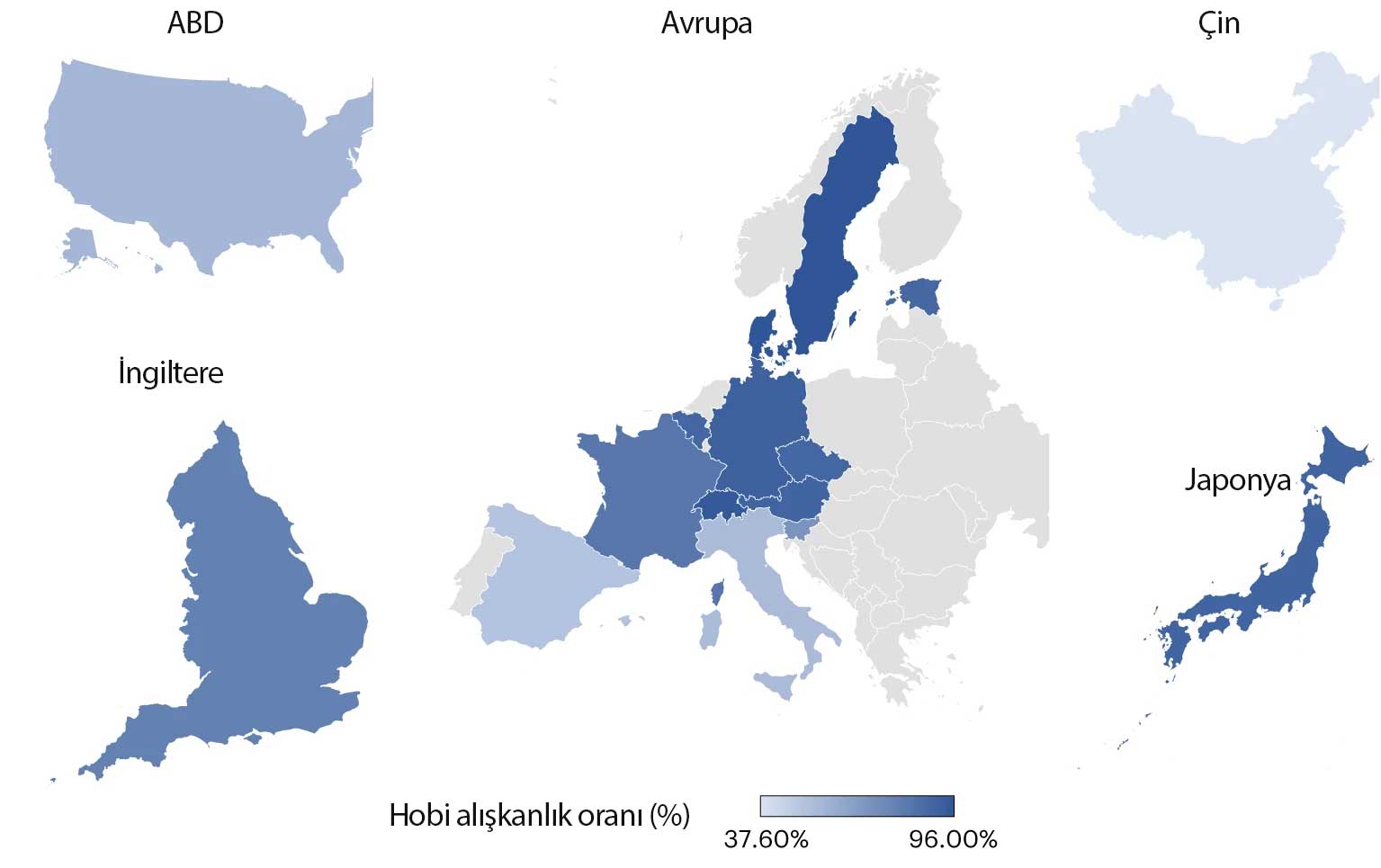
Hobby participation rates vary substantially between countries. For example, only 51% of participants in Spain have a hobby, compared with 96% in Denmark. Participation is highest in Denmark, Sweden and Switzerland, while the lowest rates are observed in Italy, Spain and China.
Furthermore, hobby engagement is more common in countries with higher World Happiness Index scores and life expectancy.
Other important findings include:
Study Participants and Demographics
- The research used data collected from 93,263 participants across 16 countries.
- Participants' mean ages ranged from 71.7 to 75.9.
- Most participants were women, except in China, Japan and Germany.
- More than 70% of participants were retired, except in China, Japan and Spain.
- More than 60% of participants had experienced long-term mental or physical health problems.
The Relationship Between Hobby Engagement and Mental Health
- Hobby engagement showed a negative association with depressive symptoms and positive associations with self-reported health, happiness and life satisfaction.
- Engagement in hobbies was associated with fewer depressive symptoms, better self-reported health, greater happiness and higher life satisfaction.
- Hobby engagement was also associated with country-level factors explaining differences between countries, such as the World Happiness Index, national wealth and life expectancy.
Directionality and Country-Level Factors
- The effects of hobby engagement on mental health were markedly influenced by country-level factors, such as a country's economic and social characteristics.
- Hobby engagement is more common when a country has a higher World Happiness Index score, income per person (national wealth) and life expectancy. However, participation is lower when the Gini index, a measure of national income inequality, is higher.
Sensitivity Analyses
- Analyses stratified by sex showed that hobby engagement was beneficial for both women and men.
- Positive effects of hobby engagement were also observed among retired participants.
Conclusion
The positive effects of having hobbies were observed globally, across cultural differences, emphasizing the importance of hobby engagement for public health policy and practice worldwide. Its positive effects on mental health were also strongly associated with the happiness index and life expectancy of the country where individuals lived. These findings may play an important role in developing policies and programs that encourage hobbies to improve older people's quality of life and relieve pressure on health systems. Increasing hobby engagement among older populations should therefore become an international priority for promoting healthy life expectancy and reducing the burden that population aging places on healthcare systems.
Sources
Was this article helpful?
Your feedback helps us improve our content.




Reader comments
Share your comment
Your name and comment are published only after administrator approval. Your email address is never shown to visitors.
Be the first to comment.