
Is Small Cell Lung Cancer Hereditary?

Small cell lung cancer (SCLC) is a cancer type most commonly, and indeed almost exclusively, seen in people who smoke heavily. Historical data show that SCLC has rarely occurred in people who have never smoked. However, some inherited mutations may increase the likelihood of developing SCLC. It is also important to note that a genetic mutation that is inherited does not necessarily mean that a person will develop lung cancer.
Lung cancer has several different types. Approximately 15% of lung cancers are SCLC, while about 85% are non-small cell lung cancer (NSCLC).
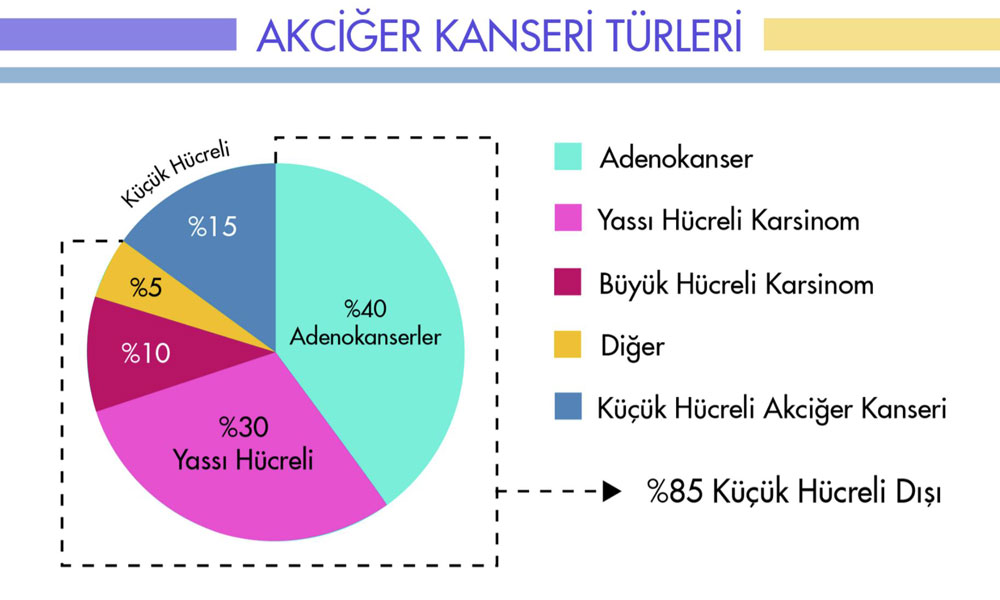
What distinguishes small cell lung cancer from non-small cell lung cancers is its rapid growth and the early development of widespread metastases. Although SCLC is initially very sensitive to chemotherapy and radiation, most patients will experience disease recurrence or cancer progression within a few months or up to 1 year after initial treatment.
Genetic Mutations in Small Cell Lung Cancer
Small cell lung cancer (SCLC) occurs when certain cells in the lungs grow rapidly and uncontrollably, forming a tumor. Cancers begin to develop when genetic mutations affect genes that control cell growth and division or repair damaged DNA. Most lung cancer cases result from genetic changes known as noninherited somatic mutations.
The US National Organization for Rare Disorders states that two main somatic mutations associated with SCLC affect the TP53 and RB1 genes. The TP53 gene provides instructions for making a protein called p53, and the RB1 gene for making pRB. Both proteins are tumor suppressors, meaning they regulate cell growth and division; mutations in these genes weaken the suppression of tumors forming in the body.
Below is an overview of cancer-related genes:

New Information on the Genetics of Small Cell Lung Cancer
In 2021, a group of researchers published a scientific paper examining 87 people with SCLC. After analyzing 607 genes from each individual, the researchers found genetic mutations that increased the likelihood of developing SCLC in 43.7% of participants. Approximately 10% of these were inherited genetic mutations. The paper's authors conclude that some inherited genetic mutations may make some people more likely to develop SCLC. Inheriting a genetic mutation does not mean that a person will necessarily develop small cell lung cancer, but the risk increases markedly if that person smokes.
The American Cancer Society also states that, although genes may play a role in the development of lung cancer, only a small number of lung cancers occur solely because of inherited mutations.
2020 Global Cancer Statistics reports that 2.2 million people were diagnosed with lung cancer in one year. Based on these data, approximately 330 thousand people are diagnosed with small cell lung cancer each year, and 33 thousand people with SCLC may carry inherited genetic mutations.
Should Genetic Testing Be Performed for SCLC?
To determine whether a person has potential inherited genetic mutations that could increase the risk of developing certain cancer types, oncologists use genetic tests. For some cancer types, oncologists may also recommend genetic testing as part of diagnosis and staging. This can help identify tumor characteristics and determine whether particular treatment options may be beneficial.
However, genetic tests are not currently used routinely in SCLC diagnosis and treatment planning. Our knowledge of genetic mutations and other genetic changes that may lead to SCLC remains limited.
What Causes Small Cell Lung Cancer, and What Factors Contribute?
Smoking is the primary cause of SCLC. Tobacco smoke contains cancer-causing chemicals, or carcinogens, that damage DNA in cells. According to a review conducted in 2020, 85% of lung cancer cases are due to smoking, while approximately 99% of small cell lung cancers are estimated to result from tobacco and tobacco products.
Exposure to the following constitutes other risk factors:
- Asbestos
- Radon (a naturally occurring gas produced by the breakdown of uranium in rocks and soil)
- Inhalation of various chemicals, such as arsenic, cadmium, silica and coal products
- Diesel exhaust
- Air pollution
How Can Small Cell Lung Cancer Be Prevented?
There are several ways to reduce the risk of developing SCLC. Foremost among them is not smoking. Tobacco use is such a common cause of SCLC that never starting to smoke is the most effective prevention strategy. Nevertheless, quitting smoking may also reduce the likelihood of developing SCLC in people who smoke. If a person stops smoking before developing cancer, lung tissue may gradually begin repairing itself.
In 2018, a study examined a group of people who smoked an average of 21.3 packs of cigarettes a year. The researchers compared lung cancer rates among those who were currently smoking and those who had quit within the previous 5 years. People in the second group were found to be 39.1% less likely to develop lung cancer.
Other ways to reduce SCLC risk include reducing exposure to cigarette smoke, asbestos and radon. However, this may sometimes be beyond a person's control.
- Related topic: 10 Important Reasons for Cancer Patients to QUIT SMOKING
How Is SCLC Diagnosed?
Genetic tests are not currently used to diagnose SCLC. People should consult a doctor if they experience any of the following symptoms:
- Recurrent cough
- Shortness of breath
- Difficulty breathing
- Wheezing
- Difficulty swallowing
- Blood in saliva
- Loss of appetite
- Unexplained weight loss
- Lethargy (persistent weakness of vital functions)

If SCLC is suspected on the basis of the above, the following tests may be used:
- Laboratory tests on blood, urine or body tissue samples
- Chest X-rays or CT scans to look for lung tumors
- Testing some living cells taken from the lungs for cancerous growth through a biopsy
Summary
Cancer occurs because of genetic mutations that lead to uncontrolled cell growth and division. People may acquire these genetic mutations during their lives. In some cases, certain inherited genes may increase the risk of developing SCLC. However, inherited genetic mutations are generally not sufficient on their own to cause cancer. Having an inherited genetic mutation does not mean that someone will develop cancer. It means that the likelihood of this happening may increase.
Smoking is the primary cause of SCLC. To help reduce their risk of developing this cancer type, people need to avoid smoking.
Sources
2. Durland, J., et al. (2020). Genetics, mutagenesis. ncbi.nlm.nih.gov/books/NBK560519/
3. Genetics, not just smoking, influence small cell lung cancer risk. (2021). ccr.cancer.gov/news/article/genetics-not-just-smoking-influence-small-cell-lung-cancer-risk
4. Lung cancer. (n.d.). cancer.org/cancer/lung-cancer.html
5. Lung cancer. (2020). medlineplus.gov/genetics/condition/lung-cancer/
6. Lung cancer genomic testing (EGFR, KRAS, ALK). (n.d.). mskcc.org/cancer-care/types/lung/diagnosis/genetic-testing
7. Siddiqui, F., et al. (2020). Lung cancer. ncbi.nlm.nih.gov/books/NBK482357/
8. Small cell lung cancer. (2019). rarediseases.org/rare-diseases/small-cell-lung-cancer/
9. Small cell lung cancer treatment (PDQ)–patient version. (2021). cancer.gov/types/lung/patient/small-cell-lung-treatment-pdq
10. Tindle, H. A., et al. (2018). Lifetime smoking history and risk of lung cancer: Results from the Framingham Heart Study. ncbi.nlm.nih.gov/pmc/articles/PMC6235683/
11. Tlemsani, C., et al. (2021). Whole-exome sequencing reveals germline-mutated small cell lung cancer subtype with favorable response to DNA repair-targeted therapies [Abstract]. pubmed.ncbi.nlm.nih.gov/33504652/
Was this article helpful?
Your feedback helps us improve our content.




Reader comments
Share your comment
Your name and comment are published only after administrator approval. Your email address is never shown to visitors.
Be the first to comment.