
Medical History's First Big Data Analyst: Bernardino Ramazzini and the Nuns

In this article
From within the body to the rhythm of society: the moment Ramazzini, the “Father of Occupational Diseases”, discovered the great link between lifestyle and cancer.
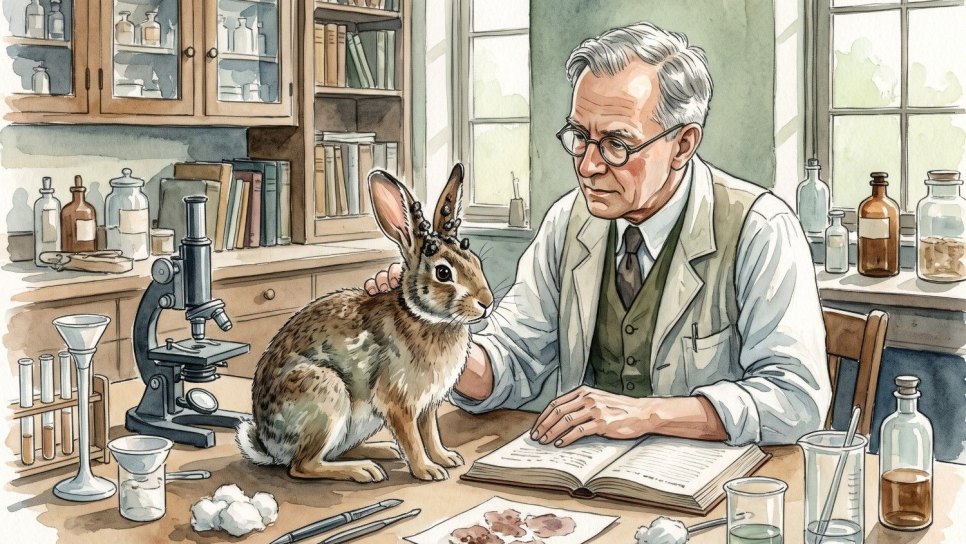
Throughout the history of cancer, physicians had always directed their lenses “inside” the body, into the silent depths of tissues and cells (Day 59). But at the beginning of the 18th century, Bernardino Ramazzini lifted his head from the microscope and looked at society and human lifestyles for the first time in medical history. He realised that cancer's secret was not merely a biological accident, but was also linked to “what people did” and “how they lived”. The foundations of the concepts of “risk factors” and “preventive medicine” used in oncology today were laid by the statistical spark Ramazzini found in convent records.
Working as a professor of medicine at the University of Padua, Bernardino Ramazzini (1633-1714) made a striking addition to medical practice as it had continued since Hippocrates. He considered it insufficient for doctors to ask patients only “where does it hurt?” and asked the golden question that changed the course of medicine: “What is your occupation?”
The Question Hippocrates Forgot and the Statistical Awakening
Ramazzini studied more than 50 occupational groups, from tailors to bakers and from miners to bakers. He compiled his observations in his monumental work, published in 1700, De Morbis Artificum Diatriba (Treatise on the Diseases of Workers). Yet the most striking analysis in his book concerned a special group living apart from society: nuns.
By comparing nuns' health records with those of married women, Ramazzini performed medical history's first “comparative risk analysis”.
Cancer of the cervix (cervical cancer) was almost absent among nuns, whereas breast cancer rates were frighteningly high.
The Convents' Silent Tragedy: Virginity and Breast Cancer
Why were these devout women, removed from the turmoil of the world, struck particularly hard by the “Crab”? Ramazzini concluded that this tragic situation arose from the nuns' “celibate” (unmarried) lifestyle.
The Theory Confirmed by Modern Oncology
Although Ramazzini's theory that “celibacy causes instability in breast tissue” was formulated with the limited biological knowledge of his time, his epidemiological conclusion was flawless. Today we know that never having given birth (nulliparity) and never breastfeeding directly increase breast cancer risk by increasing a woman's lifetime exposure to oestrogen. Similarly, by avoiding the sexually transmitted HPV virus, they were naturally protected against cervical cancer.
The Birth of Epidemiology: Cancer Becomes a “Lifestyle” Issue
This historic observation by Ramazzini proved that cancer was not merely an “internal misfortune”. For the first time, cancer had been linked to lifestyle, reproductive history and hormonal balance. The science that studies the distribution and causes of diseases in society, Modern Epidemiology, was born from these convent records.
But humanity's risky relationship with the outside world would soon become even more dramatic with the sooty breath of the Industrial Revolution.
Tomorrow (Day 61), we will enter England's sooty chimneys. We will witness the tragedy of “child chimney sweeps” and Percivall Pott's striking discovery proving cancer's link to “chemicals from outside”!
The Silent Cry Within the Data
Bernardino Ramazzini taught us that, to provide “sound guidance” in oncology, we must look not only at a patient's biopsy but also at their **life story**. The nuns' silent tragedy is the earliest lesson in how biological restoration can be maintained not only with drugs, but by respecting nature's own cycle (childbirth, breastfeeding, hormonal balance).
From a health informatics perspective, Ramazzini was medical history's first “big data” analyst. By breaking millennia of medical silence with the question “what is your occupation?”, he transformed cancer from a matter of fate into a “subject of research”. Healing means reading the details of life accurately and repairing the mistakes in those details through science.
Scientific References and Further Reading
- 1. Ramazzini B. De Morbis Artificum Diatriba (Diseases of Workers). 1713. (English Translation: American Journal of Public Health, 2001).
- 2. Franco G. "Ramazzini and workers' health." The Lancet, 1999;354(9181):858-861.
- 3. Mukherjee S. The Emperor of All Maladies: A Biography of Cancer. Scribner, 2010.
- 4. CancerQuest. "The History of Cancer: Early Cancer Epidemiology." The American Cancer Society.
Was this article helpful?
Your feedback helps us improve our content.


Reader comments
Share your comment
Your name and comment are published only after administrator approval. Your email address is never shown to visitors.
Be the first to comment.