
Mirvetuximab Receives Full FDA Approval for Ovarian, Fallopian Tube, or Primary Peritoneal Cancer

In this article
On 22 March 2024, the United States Food and Drug Administration (FDA) approved mirvetuximab soravtansine-gynx (Elahere, ImmunoGen, Inc. [now part of AbbVie]) for adults with FRα-positive, platinum-resistant epithelial ovarian, fallopian tube, or primary peritoneal cancer.
To receive this treatment, patients must previously have received one to three systemic treatment regimens. Patients should be selected for folate receptor alpha (FRα) positivity using an FDA-approved test. Mirvetuximab soravtansine-gynx previously received accelerated approval for this indication in 2022.
Innovations in cancer treatment can bring life-saving changes in medical oncology. One striking example is the development of mirvetuximab soravtansine-gynx (Elahere), designed for patients with folate receptor alpha (FRα)-positive, platinum-resistant epithelial ovarian, fallopian tube, or primary peritoneal cancer. This drug, initially granted accelerated approval in 2022, received full FDA approval on 22 March 2024 based on a broader clinical dataset. This represents wider recognition of the treatment's potential and safety.
The Importance of Folate Receptor Alpha
Folate receptor alpha (FRα) is a protein expressed in certain cancers, particularly epithelial ovarian cancer, at a rate of 35-40% , and increases folate uptake in these cancer cells. Folate is critical for cell growth and DNA synthesis, so overexpression of this receptor supports cancer cell growth and spread. High FRα expression offers a unique opportunity to develop targeted therapies, and mirvetuximab soravtansine-gynx is an important step toward realizing this potential.
How Is FRα Tested?
Folate receptor alpha (FRα) testing uses several methods, chiefly immunohistochemistry (IHC), flow cytometry, and fluorescence imaging techniques.
Testing Methods
- Immunohistochemistry (IHC): Widely used to determine FRα expression. This technique uses antibodies to identify the presence and intensity of FRα in tissue sections. It has an important role particularly in clinical studies and diagnostic procedures.
- Flow Cytometry: This technique measures FRα expression on the cell surface. Fluorescently labeled antibodies identify surface antigens on individual cells.
- Fluorescence Imaging: FRα-targeted fluorescent agents enable intraoperative visualization of tumors. This method may help remove tumor tissue more effectively during surgery.
The Most Widely Used Method
Immunohistochemistry (IHC) is currently the most widely used method. It is commonly preferred for identifying and classifying FRα expression. For example, the IHC test used to determine folate receptor alpha (FRα) positivity in the MIRASOL clinical trial used the VENTANA FOLR1 (FOLR1-2.1) clone. This clone was used as an FDA-approved diagnostic tool designed specifically to identify patients with ovarian cancer showing high FRα expression. The study required FRα membrane staining in at least 75% of tumor cells, with expression intensity of at least 2+.
What the Second FDA Approval Based on MIRASOL Means
Efficacy was evaluated in MIRASOL, a multicenter, open-label, active-controlled, randomized, two-arm study of 453 patients with platinum-resistant epithelial ovarian, fallopian tube, or primary peritoneal cancer.
Patients could have received up to three previous lines of systemic therapy. The study enrolled patients whose tumors were positive for FRα expression as determined by the VENTANA FOLR1 (FOLR1-2.1) RxDx Assay.
Patients were randomized 1:1 to receive mirvetuximab soravtansine-gynx 6 mg/kg (based on adjusted ideal body weight) by intravenous infusion every 3 weeks or investigator-selected chemotherapy (paclitaxel, pegylated liposomal doxorubicin, or topotecan), until disease progression or unacceptable toxicity.
Results
The major efficacy outcome measures were overall survival (OS), investigator-assessed progression-free survival (PFS), and confirmed overall response rate (ORR) assessed by the investigator.
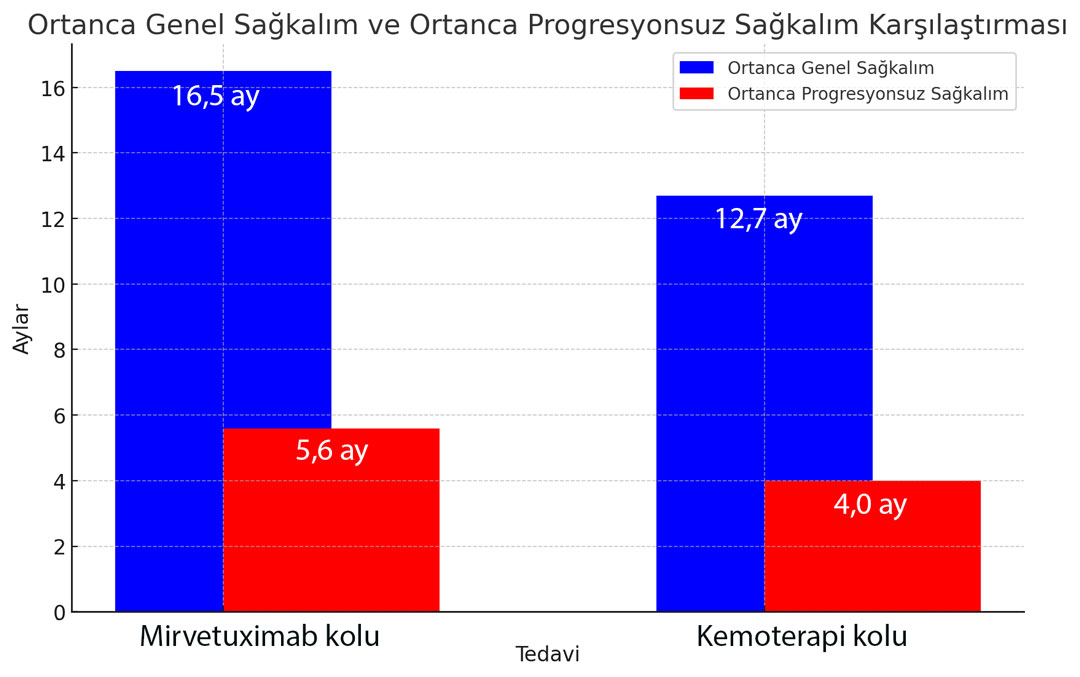
- Median overall survival in the mirvetuximab soravtansine-gynx arm was 16.5 months (95% CI: 14.5, 24.6), versus 12.7 months in the chemotherapy arm (95% CI: 10.9, 14.4) (hazard ratio [HR] 0.67 [95% CI: 0.50, 0.88]; p-value 0.0046).
- Median progression-free survival was 5.6 months (95% CI: 4.3, 5.9) and 4 months (95% CI: 2.9, 4.5), respectively (HR 0.65 [95% CI: 0.52, 0.81]; p-value <0.0001).
- Objective response rates were 42% (95% CI: 36, 49) and 16% (95% CI: 12, 22), respectively (p-value <0.0001).
In SORAYA, the study underlying the earlier accelerated FDA approval, mirvetuximab showed an objective response rate of 31.7%, including five complete responses (95% confidence interval [CI]: 22.9, 41.6).
How Does Elahere (Mirvetuximab Soravtansine-gynx) Work?
ELAHERE (mirvetuximab soravtansine-gynx) is a first-in-class antibody-drug conjugate containing a folate receptor alpha-binding antibody, a cleavable linker, and maytansinoid DM4 chemotherapy, a potent tubulin inhibitor designed to kill targeted cancer cells.
Elahere's accelerated approval is a testament to decades of work devoted to developing next-generation antibody-drug conjugates. We will hear about many more antibody-drug conjugates receiving approval for cancer treatment in the coming years.
What Is an Antibody-Drug Conjugate?
Antibody-drug conjugates use a 'Trojan horse' approach in which an antibody designed to bind a molecular target in the tumor is attached to a chemotherapy agent, allowing the drug to be delivered to a specific tumor cell.
The general structure of antibody-drug conjugates is illustrated below. Target antigens are usually found on the surface of cancer cells. The antibody therefore binds to the cancer cell and then releases the cytotoxic (cell-killing) drug.

Sources
Was this article helpful?
Your feedback helps us improve our content.




Reader comments
Share your comment
Your name and comment are published only after administrator approval. Your email address is never shown to visitors.
Be the first to comment.