
Predicting Lung Cancer Treatment Response from Changes in Circulating Tumor DNA (ctDNA)

In this article
Lung cancer is the leading cause of cancer-related illness and death worldwide. In recent years, treatment of non-small cell lung cancer (NSCLC) has changed substantially through advances in molecular biology. Innovative approaches such as targeted therapy (TT), immune checkpoint blockade (ICB), new-generation tyrosine kinase inhibitors (TKIs), and antibody-drug conjugates (ADCs) have played major roles. These developments have enabled personalized treatment and significantly improved survival.
Although some patients with advanced NSCLC respond to these treatments for a long time, most either do not respond or develop resistance after a brief response. Therefore, predicting who will benefit from treatment is crucial. Assessing circulating cell-free tumor DNA (ctDNA) in blood-based liquid biopsies has emerged as a promising biomarker for this purpose.
What Is ctDNA, and Why Does It Matter?
Circulating tumor DNA testing is a noninvasive way to identify cancer-specific genetic changes through blood samples. It facilitates monitoring of tumor genetic evolution and assessment of disease course without taking tissue samples. In NSCLC, ctDNA is therefore increasingly used routinely to identify genetic mutations and treatment resistance.
Recent research shows that a decrease in ctDNA levels during treatmentcan reliably predict early response and long-term survival. For example, patients with metastatic NSCLC receiving immunotherapy have significantly longer overall survival when a reduction in ctDNA is detected.
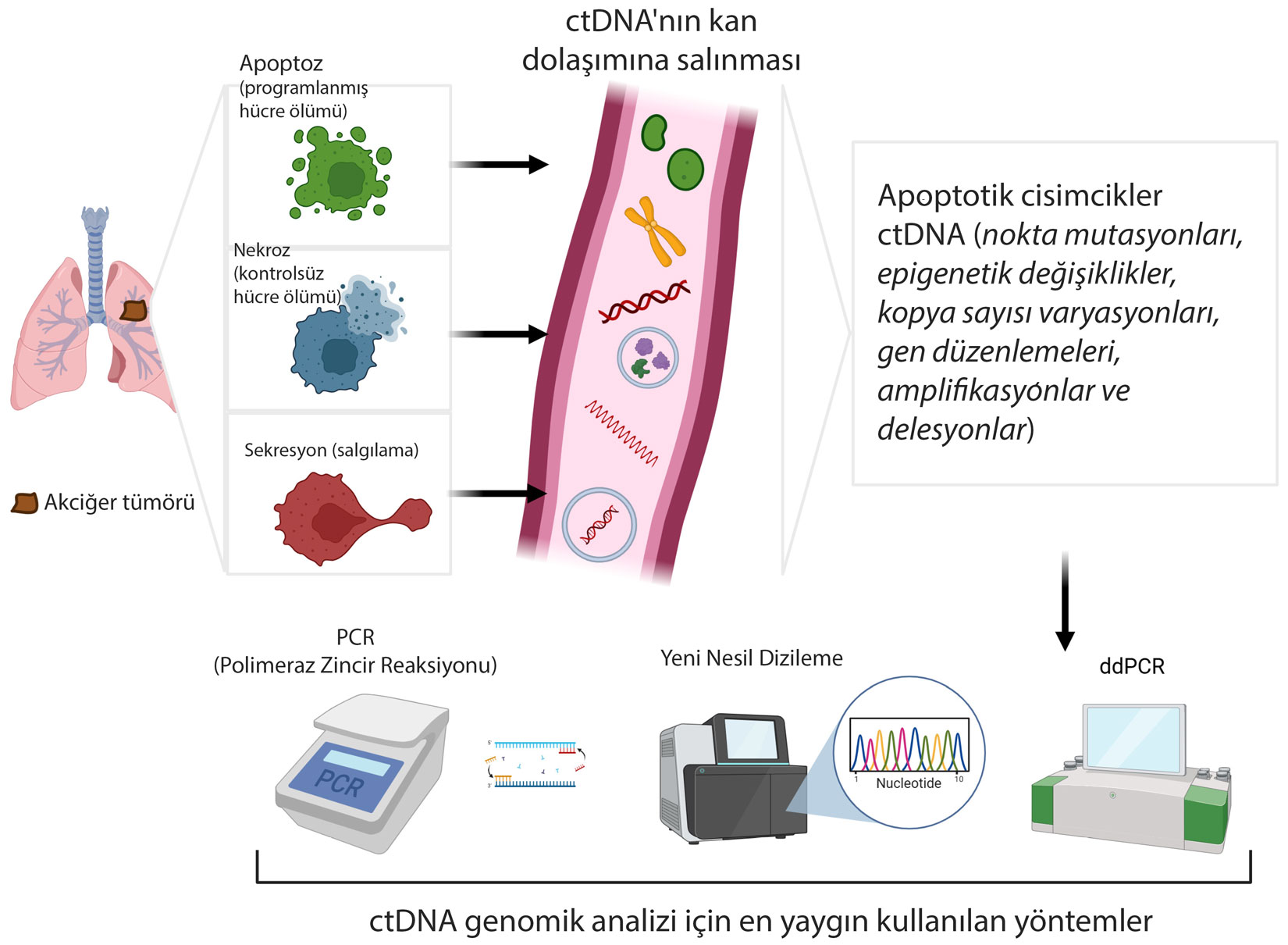
The image aboveshows cells from advanced lung cancer, represented by a lung tumor in the upper left, releasing DNA (ctDNA) into circulation through apoptosis, or programmed cell death, necrosis, or uncontrolled cell death, and secretion. This ctDNA can be detected in the bloodstream. The image also shows methods used to analyze it: PCR and next-generation sequencing (NGS). It illustrates how liquid biopsy can monitor cancer and enable personalized treatment.
New Research: The Role of ctDNA Kinetics
The Oncologist published a new systematic review and meta-analysis on February 25, 2025, in which Leite da Silva and colleagues showed that plasma ctDNA kinetics were a strong marker for predicting response to targeted therapy and immunotherapy in advanced NSCLC.
The researchers evaluated a total of 3047 patients with NSCLC across 32 studies . All patients had received targeted therapy, immune checkpoint inhibitor therapy, or chemotherapy.
Key Findings
-
According to the 31 studies included in the meta-analysis, decreasing or completely clearing ctDNA significantly improved patients' progression-free survival (hazard ratio [HR] = 0.32; P < 0.01). A decrease or complete clearance of ctDNA reduced the risk of cancer progression by 68%.
-
In subgroup analyses of complete ctDNA clearance, the reduction in progression risk was more pronounced: 73% (HR = 0.27).
-
Similar benefits were observed in patients receiving targeted therapy, with a 66% risk reduction, and immunotherapy, with a 67% reduction.
-
Overall survival results from 25 studies showed that decreasing ctDNA reduced the risk of death by 69% (HR = 0.31; P < 0.01).
The researchers emphasized that ctDNA measurements produced similar results across patient groups, regardless of NSCLC subtype, smoking status, or sex.
Conclusions and Commentary
This study demonstrates that serial monitoring of plasma ctDNA during treatment for advanced NSCLC is clinically meaningful and strongly predicts survival outcomes. Integrating ctDNA kinetics into routine practice will help oncologists make earlier, more accurate treatment decisions.
In conclusion, liquid-biopsy ctDNA monitoring has the potential to make NSCLC treatment more effective and personalized in the near future.
Sources
Was this article helpful?
Your feedback helps us improve our content.




Reader comments
Share your comment
Your name and comment are published only after administrator approval. Your email address is never shown to visitors.
Be the first to comment.