
Radiofrequency Ablation Versus Radiotherapy in Recurrent Liver Cancer

In this article
Hepatocellular carcinoma (HCC) is the most common type of liver cancer. At diagnosis, about 40% of patients have early-stage disease and benefit from local/regional treatments.
The risk of recurrence in patients with hepatocellular carcinoma is quite high even when treatment is given at an early stage. The recurrence rate within 5 years after surgery is 50-70%; the 5-year recurrence rate in eligible patients who undergo liver transplantation is 10-20%; and the recurrence rate within 5 years after ablative treatments (such as radiofrequency ablation - RFA) is 60-80%.
Local treatment options for early-stage liver cancer depend on the tumor's size and location and the patient's overall health. Standard local treatments include:
-
Surgical Resection: This is the preferred first-line treatment for eligible patients with early-stage HCC. Surgery enables complete removal of the tumor. However, surgical intervention requires good liver function and an adequate reserve.
-
Liver Transplantation: For patients with HCC, particularly those with multiple small tumors or in whom surgical resection is not possible, liver transplantation offers a curative treatment option. However, finding a suitable donor can be difficult.
-
Local Ablative Treatments: These treatments are used to destroy tumors locally in patients with early-stage liver cancer who cannot undergo surgery or face surgical risks. RFA (Radiofrequency Ablation) and SBRT (Stereotactic Body Radiotherapy) fall into this category and are discussed in detail below.
What Are SBRT and RFA?
- Radiofrequency Ablation (RFA): RFA is a minimally invasive procedure that destroys the tumor with heat by delivering a high-frequency electrical current through a thin needle electrode. It is usually performed under imaging guidance (ultrasound or CT), and patients are often discharged on the same day.
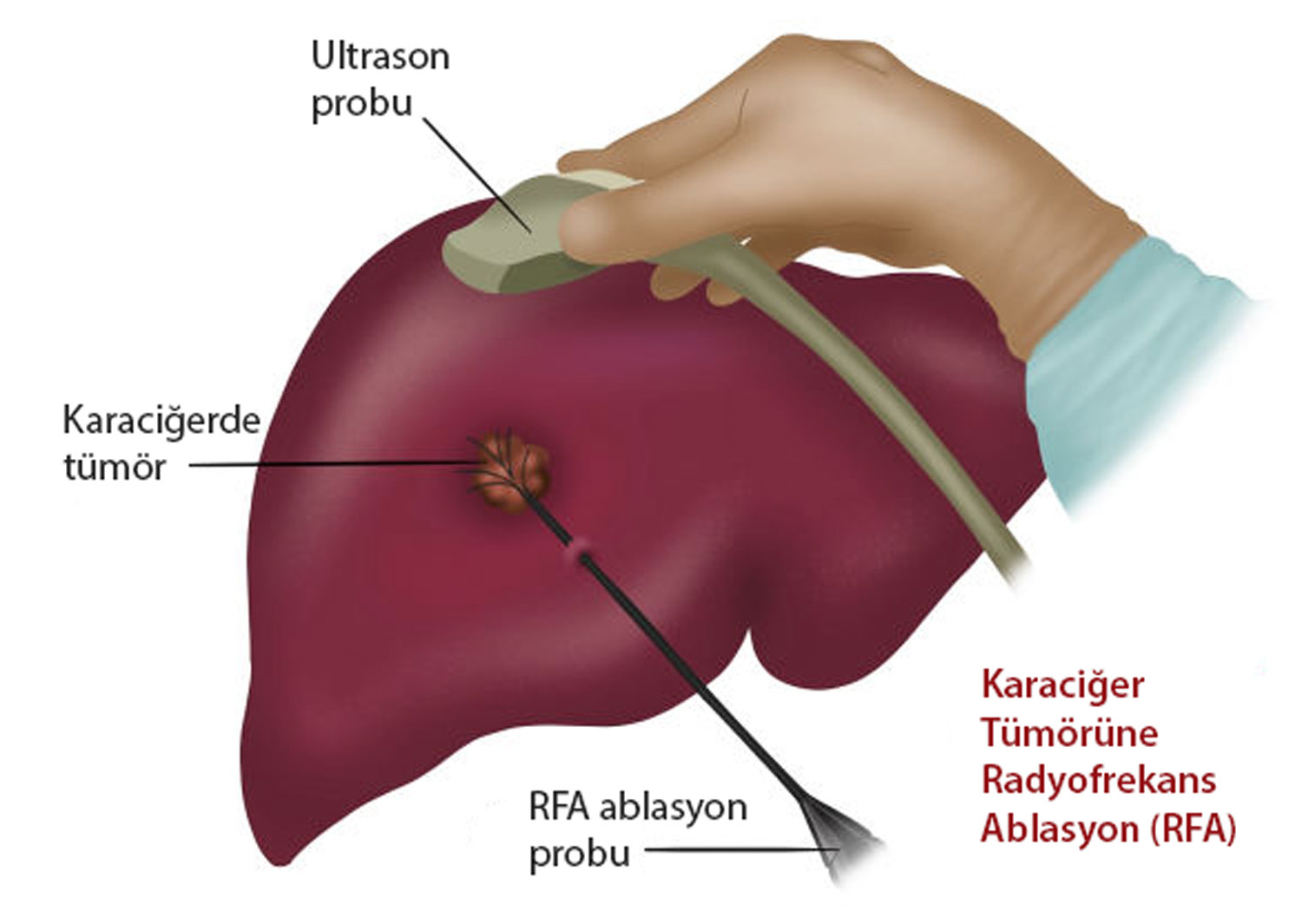
- Stereotactic Body Radiotherapy (SBRT): SBRT is a treatment that directs high-dose radiation beams at the tumor with millimeter precision. It is delivered in multiple treatment sessions using a specialized radiotherapy device. Advanced imaging technologies are used to avoid damaging surrounding healthy tissue during the procedure.

Which Is Better for Treating Recurrent Small Hepatocellular Carcinoma?
On 18 December 2024, Journal of Clinical Oncology published a study presenting comparative data on the efficacy and safety of these two treatments for recurrent small hepatocellular carcinoma (HCC).
SBRT or RFA?
The primary aim of this study is to evaluate the efficacy and safety of RFA and SBRT for recurrent small HCCs (<5 cm).
-
Patient Criteria: Patients with recurrent HCC consisting of a single lesion measuring less than 5 cm in diameter.
-
Groups:
-
SBRT Group: 83 patients.
-
RFA Group: 83 patients.
-
-
Primary Endpoint: Local progression-free survival (LPFS).
-
Secondary Endpoints: Progression-free survival (PFS), overall survival (OS), local control rate, and adverse effects.
Main Findings
1. Local Progression-Free Survival (LPFS)
SBRT provided a clear advantage over RFA in local progression-free survival (LPFS).
-
2-Year LPFS Rates:
-
SBRT: 92.7% (95% CI: 87.3 - 98.5).
-
RFA: 75.8% (95% CI: 67.2 - 85.7).
-
-
Hazard Ratio: A significant difference favoring SBRT (HR: 0.45; P = 0.014).

2. Progression-Free Survival (PFS)
Median progression-free survival (PFS) times were evaluated:
-
SBRT: 37.6 months (95% CI: 26.0 - 49.2).
-
RFA: 27.6 months (95% CI: 20.3 - 34.8).
-
P Value: The difference is not statistically significant (HR: 0.76; P = 0.190).
3. Overall Survival
-
2-Year Overall Survival Rates:
-
SBRT: 97.6% (95% CI: 94.3 - 100.0).
-
RFA: 93.9% (95% CI: 88.9 - 99.2).
-
-
The difference in hazard ratios was not statistically significant (HR: 0.91; P = 0.830).
4. Adverse Effects
-
Acute and Late Adverse Effects:
-
Rates of serious adverse effects are similar in the SBRT and RFA groups.
-
Acute adverse effects: P = 0.436.
-
Late adverse effects: P = 0.715.
-
Treatment Advantages and Disadvantages
Stereotactic Body Radiotherapy (SBRT)
-
Advantages:
-
Better local progression-free survival rates.
-
It is a noninvasive treatment option.
-
It does not require anesthesia during treatment.
-
-
Disadvantages:
-
Equipment costs and the need for experienced specialists.
-
Radiofrequency Ablation (RFA)
-
Advantages:
-
It is a minimally invasive procedure and can usually be performed on an outpatient basis.
-
-
Disadvantages:
-
Its efficacy may be lower in recurrent HCC.
-
Local control rates are lower than with SBRT.
-
Commentary
The study findings showed that SBRT was superior in local control, particularly for HCCs smaller than 2 cm in diameter. However, the two treatments offer similar results in progression-free survival, overall survival, and safety. Treatment should therefore be selected individually, considering factors such as the patient's condition, tumor size and location, and the center's resources.
This study shows that SBRT provides better local control than RFA while offering similar overall survival and safety. Patient characteristics and the center's resources should be carefully considered when choosing a treatment strategy.
Sources
Was this article helpful?
Your feedback helps us improve our content.




Reader comments
Share your comment
Your name and comment are published only after administrator approval. Your email address is never shown to visitors.
Be the first to comment.