
Robert Liston: Surgery in 28 Seconds and the Anesthesia Revolution in Surgery

In this article
A Leg in 28 Seconds, the Legend of 300% Mortality, and Britain's First Operation Under Anesthesia on December 21, 1846
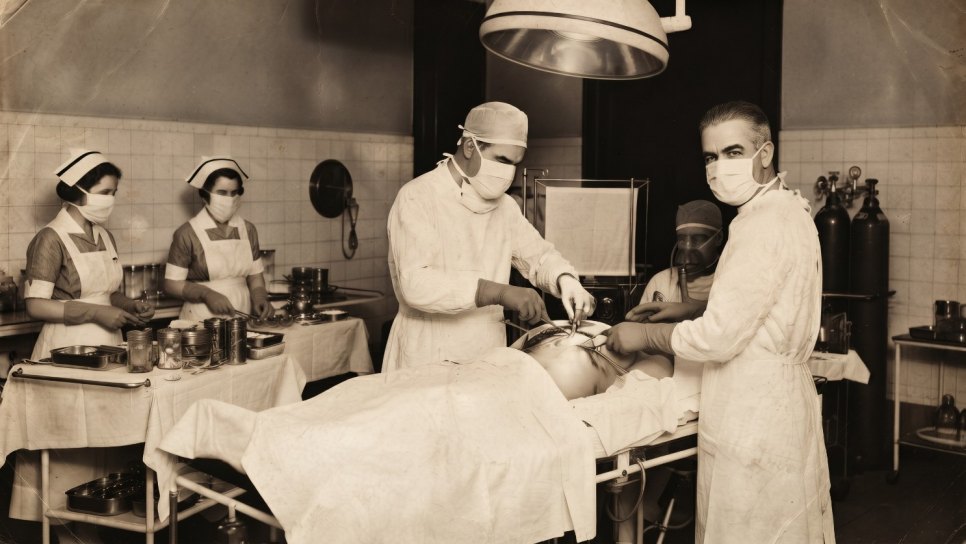
On Monday, December 21, 1846, in the amphitheater-style operating room of London's University College Hospital, before a crowd of students and physicians, the right thigh of a butler named Frederick Churchill was amputated. Throughout the operation, the patient was unconscious — for the first time in British medical history. The person administering the ether was the young Dr. William Squire, who had only just completed his medical education; the hand holding the knife belonged to the most famous and most fearsome surgeon of his time, the 52-year-old Scottish giant Robert Liston. When the operation was completed — as usual, within seconds rather than minutes — Liston turned to his students and uttered one of the most frequently quoted sentences in the history of modern surgery: "This Yankee trick, gentlemen, beats mesmerism by miles!" But this event was not only a beginning; it was also an end. As the greatest star of his time, Liston was the distilled essence of the philosophy of pre-anesthetic surgery: speed, decisiveness, anatomical knowledge, limited sentimentality. He was said to amputate a leg in 28 seconds; his height of 6 feet 2 inches, enormous hands, and booming voice intimidated students and patients alike. The nickname "London's Fastest Knife" came from the British newspapers of the time. The most famous legend surrounding him — the story of an operation in which three people died, with 300% mortality — perfectly captures the atmosphere of the pre-anesthetic surgical age, although its historical truth is disputed. In this article, we will examine Liston's life (from a pastor's home in Ecclesmachan to the luxury of Mayfair), his exile from Edinburgh, the real anatomy of his "fastest knife" identity, and finally the operation in December 1846 by which Liston ended his own era. Liston is the iconic figure of the final decade of pre-anesthetic surgery; also the man who ended that age. Cooper's anatomy (day 76) + Liston's speed = the final decade of breast surgery before anesthesia; the new era brought by ether would be completed by carbolic acid antisepsis in 1867 from Liston's own pupil, Joseph Lister.
October 28, 1794: Ecclesmachan, West Lothian
Robert Liston was born on October 28, 1794, in the pastor's house in Ecclesmachan — his father's church-service residence. His father, Reverend Henry Liston, was an Anglican minister of the Church of Scotland; also an inventor — he is known to have designed a new musical instrument for marking harmony notes. His mother, Margaret Ireland, was a Scottish woman from Culross. Robert was named after his grandfather: Robert Liston Sr., who had once served as Moderator of the General Assembly of the Church of Scotland — the highest representative of the Scottish Church. The family was a devout, educated, socially respected Scottish upper-middle-class household.
Robert's mother died when he was only six. His father raised him alone. This early loss — and a certain inner emotional hardness the adult Liston carried throughout his life — are undoubtedly connected. Alongside his piety, Henry Liston gave his son a strong academic discipline. With clergymen in the family for three generations, everyone expected Robert to become a pastor too; young Liston looked in another direction: medicine.
In 1808 — at age 14 — he was admitted to the University of Edinburgh's medical faculty. This seems an astonishingly early start by modern standards; but it was quite ordinary in the Scottish academic culture of the early 19th century. Edinburgh was then one of the world's strongest medical schools — competing with Paris in Europe and London in Britain. Edinburgh's tradition of anatomy was particularly strong; it had been the anatomy capital of the English-speaking world for two centuries.
The university's most brilliant anatomy teacher, Dr. John Barclay, was the man whose attention Liston soon attracted. In 1810 — at age 16 — he began working alongside Barclay as a formal student-assistant. Barclay ran the "Edinburgh extramural school of anatomy", an institution independent of the university but able to compete with it academically. Alongside Barclay, Liston learned practical anatomy beyond a classical medical education — dissection techniques, preparation of preserved specimens, and the foundations of anatomical pathology.
Talent, Arrogance, and a "Vilely Unpopular" Young Surgeon
EDINBURGH CAREER CHRONOLOGY
- 1808: Entry to the University of Edinburgh's medical faculty at age 14
- 1810: Dr. John Barclay's anatomy assistant
- 1814: At the Royal Infirmary of Edinburgh, the house surgeon position — at age 20
- 1816: At age 22, Royal College of Surgeons of England membership (after a short educational visit to London)
- 1818: At Edinburgh Royal Infirmary, the surgeon position; that same year, he opened his own anatomy class after a disagreement with Barclay
- 1828: At age 34, operating surgeonpromotion
- 1832-1833: Residence at 99 George Street in Edinburgh's New Town
- 1833: Applied for the Anatomy Professorship at the University of Edinburgh; James Syme(five years younger than him) was the man he lost to — Syme's teaching ability was superior
- 1835: Left Edinburgh; moved to London, where at University College Hospital the position of Britain's first Professor of Clinical Surgery was the post to which he was appointed.
The sources of the time describe Liston's personal profile during his Edinburgh years with remarkable consistency. The famous description in Richard Gordon's Great Medical Disasters reads: "a tough, aggressive, argumentative man — generous to the poor, compassionate toward patients, but a highly repellent (vilely unpopular) figure among his colleagues at Edinburgh Royal Infirmary." Liston stood 6 feet 2 inches (188 cm) tall — a giant by the standards of his time; his body was powerful and his voice booming. In the operating room, he intimidated patients and students alike.
An important reason for his unpopularity in Edinburgh was his professional superiority. Liston successfully operated on patients whom others had discharged as "hopeless". In the poor neighborhoods of Grassmarket and Lawnmarket — Edinburgh's miserable old quarters without sewerage — he went door to door finding cases the hospital system had abandoned as "incurable", and performed the operations at home or in his own workshop. His success rate was high. This was difficult for his colleagues to tolerate, because Liston was indirectly disproving their clinical judgments. The Royal Infirmary punished him several times with bans from its wards; he was reinstated; then expelled again. Edinburgh's medical community could no longer accommodate him.
The rejection of his application for the Anatomy Professorship in 1833 became a turning point for Liston. James Syme — Liston's relative, childhood friend, and lifelong rival — won the position. (An ironic family note: Syme's daughter later married Joseph Lister; Lister was also Liston's student.) Although Liston could not stomach the defeat, he moved to London two years later. 1835, University College Hospital was still a newly established, innovative medical center (opened in 1834). The position offered to Liston — Professor of Clinical Surgery — was the first academic chair of its kind in Britain. Expulsion from Edinburgh had turned into a royal chair in London.
1827-1828: The Burke and Hare Murders and Liston's Ethical Courage
An important episode from Liston's Edinburgh period concerns his response to the greatest medical-ethical scandal of his time. In Edinburgh in 1827-1828, two Irishmen named William Burke and William Hare murdered 16 people and sold their bodies to Edinburgh's leading anatomist, Dr. Robert Knox. Amid the shortage of bodies for dissection, Knox bought the bodies without inquiry — a buyer who asked no questions.
When the scandal broke in 1828, Knox became the focus of public outrage. Much of Edinburgh's medical community — concerned about protecting scientific performance — avoided openly opposing Knox. Liston acted differently. He took an open, firm stand against Knox, emphasizing the importance of an ethical chain of assurance for bodies. This shows Liston's uncompromising side on ethical matters, despite his personal arrogance and professional belligerence. Knox later lost his reputation in Edinburgh entirely and was forced to leave the city, three years before Liston's move to London.
University College Hospital and Mayfair: A Star's Mature Years
London was generous to Liston. At University College Hospital, as Professor of Clinical Surgery, he taught before hundreds of students every month; he also established one of Britain's most expensive private practices. His material wealth grew rapidly. For his last seven years — from 1840 until his death in 1847 — 5 Clifford Street, Mayfairwas his home (just off Bond Street). This address was in the most luxurious part of London at the time; Liston's neighbors included aristocrats, parliamentarians, and royal artists.
🛠 THE INSTRUMENTS LISTON LEFT AS A LEGACY
Liston knife: A long, straight or slightly curved, extremely sharp amputation knife. Long enough to pass all the way around a limb with a single turn of the blade. An ancestor of modern scalpels. It became the standard instrument in almost all European surgical workshops in the second half of the 19th century. Today's scalpel-holder designs come from Liston's principles of blade balance.
Liston splint: A long leg splint for femoral fractures. By providing early stabilization of the injured limb, it reduces the risk of shock and additional injury. One of the fundamental principles of modern trauma surgery — "limb stabilization" — became established through the Liston splint.
Bulldog forceps: Small, spring-loaded, self-retaining forceps used to clamp the ends of blood vessels temporarily. A fundamental instrument of vascular surgery and modern vessel repair.
Liston's instruments became one of the largest categories of British surgical instrument exports throughout the 19th century. Despite changing materials and sterilization techniques, their designs still live on at the level of fundamental principles in modern equipment.
28 Seconds, 2,5 Minutes, and a Nickname
For the nickname "London's fastest knife", Richard Gordon's Great Medical Disasters is the source, but the name summarizes the reputation attached to Liston at the time. Gordon writes: "Liston amputated a leg in 2,5 minutes." An even more radical record is also reported: 28 seconds. Florence Nightingale, in Notes on Nursing (1860), refers to this story: "All other things being equal, the danger of an operation is directly proportional to its duration."
His speed was not a personal display, but an ethical necessity. In pre-anesthetic surgery, the only way to keep a patient on the bench was to tie them down with straps and have assistants press down firmly. The patient was fully conscious throughout the operation, feeling and hearing every movement of the knife, every sound of the saw, every drop of blood. Amputating a leg with classical techniques could take more than ten minutes — during that time, a significant proportion of patients were lost to shock, blood loss, or an independent cardiac event. His speed was a direct determinant of the patient's chance of survival.
Three things fueled Liston's speed:
THE THREE FOUNDATIONS OF SPEED
- 1. Extraordinary anatomical knowledge. The dissection experience Liston accumulated over his years in Edinburgh gave him the capacity to know "where to touch what, and how to remove what" without thinking. Every amputation had become an automatic choreography on an anatomical map.
- 2. Physical strength. A height of 188 cm, broad shoulders, strong hands. Physical performance was required to encircle a leg with a single sweep of the knife and use the bone saw forcefully. Liston possessed this to a degree rarely found among the other surgeons of his time.
- 3. Assistant choreography. Liston had trained his team to read seconds. A knife, a saw, a ligature, flap closure — every movement was a synchronization matched in advance. For the assistants, not Liston's current movement but the one or two seconds ahead were the timing they worked to.
There was another thing Liston did noticeably differently from his contemporaries: he took off his frock coat, put on an apron, and washed his hands. This was unusual in the age before antisepsis. Surgeons of the time "operated in coats stiffened with blood — the stiffer the coat, the prouder the surgeon". Suppurative infection was inseparable from surgery, and "cleanliness was next to prudishness" — cleanliness was a moral absurdity. In Sir Frederick Treves's summary: "There was no point in being clean... Cleanliness was considered affected and exaggerated. An executioner might manicure his nails before cutting off a head." This mentality still prevailed around 1847 — until the year when the Hungarian physician Ignaz Semmelweis showed in Vienna that obstetric residents who did not wash their hands caused puerperal fever. Liston's handwashing reflex was far beyond this outlook; an intuitive practice arriving 20 years before hygiene became consciously understood as antisepsis. Joseph Lister's paradigm of carbolic acid antisepsis in 1867 can be read as the scientific grounding of Liston's intuitive practice.
The Ring of Speed Becomes a Legend
At the heart of Liston's mythology is an unquestionably disputed story: a case in which three people died during an amputation, thereby producing 300% mortality . The standard telling of this story is:
One leg amputation, three deaths
As Liston performed a leg amputation at his usual speed, his knife also severed two of his assistant's fingers. The patient later died of sepsis. The assistant died of septicemia too. As if that were not enough, a young physician watching the operation suffered a fatal heart attack from fright when he thought the knife had grazed his clothing.
Three deaths, one operation. The highest operative mortality rate known in historical records.
The historical truth of this story is uncertain. No primary source — Liston's own hospital records, the memoirs of contemporary colleagues, or reports in the Lancet or Edinburgh Medical Journal — confirms the event. The first major written source for the story, dated 1983, is Richard Gordon's Great Medical Disasters — 140 years after the date when the event is said to have occurred. Medical historians classify the story as apocryphal (a reported tale, unverified).
However, whether the story is true is of secondary importance to Liston's mythology. It is an archetypal sceneformed in the collective cultural memory of pre-anesthetic surgery: the surgeon's speed, the abundance of blood, directly shared bodily risks with assistants, and spectators shaken by the sheer horror of the scene. This is an exaggerated but fundamentally accurate summary of the real surgical atmosphere of the time. From this perspective, the "historically unverified" story may be the most accurate one for conveying the spirit of the period to the modern reader.
The real clinical expression of Liston's speed lay in mortality rates. In the 1840s, Liston's amputation mortality at University College Hospital was around 10% — dramatically below the British surgical norm of his time (approximately 25%). In other words, Liston's speed + anatomical knowledge + cleanliness reflex produced real clinical benefit. The myth began to lead a life separate from reality, but there was reality beneath it: Liston was actually saving people.
Frederick Churchill, William Squire, and the "Yankee Dodge"
On Friday, October 16, 1846, in the amphitheater at Boston's Massachusetts General Hospital that would be called the "Ether Dome", the dentist William T.G. Morton, during surgeon John Collins Warren's operation on a vascular tumor in the neck of the painter Gilbert Abbott, used ether to make the operation painless. This day is considered the birth of modern anesthesiology. News of the event would take about two months to cross the Atlantic Ocean — still the age of steamships. Letters reached the ports of Liverpool and Bristol in mid-December.
When the news of ether reached London, Liston immediately tried it. A young physician who had just completed his medical education, aged 22, Dr. William Squire, was the person he assigned to administer the ether. (Squire's taking up the ether apparatus and preparing through rapid practice was a precursor to the speed of training that became standard in modern anesthesiology.)
University College Hospital's amphitheater operating room, London
Patient: Frederick Churchill, a butler (servant), aged 36. Chronic infection of the right thigh complicated by osteomyelitis; prolonged pain, loss of function, and febrile episodes. Indication: above-knee amputation (amputation above the knee).
The crowd filling the operating room to capacity: students, physicians, and hospital administrators from London's medical world. All were there to see this mysterious American "ether" trial with their own eyes. Liston removed his frock coat, put on his apron, and washed his hands.
Squire administered the ether. Within a few minutes, the patient became unconscious. Liston raised the knife and began the operation. After 25 seconds, the leg had been detached. The patient was still unconscious, making no sound and not moving. Closing the wound took several more minutes. Total operating time: approximately 28 minutes (including wound closure). When the patient woke, he did not remember what had happened.
Liston turned to his students and spectators, saying in his booming voice: "This Yankee trick, gentlemen, beats mesmerism by miles!" ("This Yankee dodge, gentlemen, beats mesmerism hollow!")
This sentence is among the most frequently quoted in the history of modern surgery. Its meaning has several layers:
"Yankee dodge" — the Americans' clever trick. With the typical British skepticism of his time, Liston initially tended to see ether as a trick, a piece of theater. But the operation was a real success; the word "dodge" carries a layer of ironic, polite respect.
"Beats mesmerism by miles" — Mesmerism, the theory of "animal magnetism" developed in the 1770s by the Austrian physician Franz Mesmer; the induction of a trance state, which circulated through European salons as a popular trend in the early 19th century. Mesmerist physicians were attempting to perform painless operations by putting patients into a trance — the central figure in this movement in Britain was John Elliotson (Liston's contemporary and rival at UCH). Liston's statement "beats mesmerism by miles" is therefore a politely ruthless allusion to Elliotson: Your trance did nothing; this American chemistry really does the job.
As Britain's and Europe's first operation performed under modern anesthesia (ether) , the operation went down in history. Within three weeks, Europe's other major cities — Paris, Berlin, Vienna, Rome — began their own ether trials. In January 1847, James Young Simpson discovered chloroform in Edinburgh — an alternative more effective than ether and with fewer side effects. The age of anesthesia had begun. Liston's operation that day can be read as the birth certificate of modern surgery.
This passage — from Liston's textbook published in Philadelphia in 1837 — can be read as a statement carrying both the arrogance of his character and his clinical wisdom. Although Liston was famous for his speed, he regarded surgery as a last resort. The belief that "the surgeon's greatest virtue is knowing when not to operate" can be read as a distant ancestral statement of the philosophy of modern minimally invasive surgery. In today's oncological surgery — in the principle of "conservative surgery wherever possible", in breast conserving surgery, sentinel lymph node biopsy, and sphincter preserving rectal surgery — echoes of this philosophy of Liston's can be heard.
The Rupture of an Aneurysm in Mayfair
Only 11 months and 16 days after his ether operation, on Tuesday, 7 December 1847, at his home at 5 Clifford Street in Mayfair, Liston had a ruptured abdominal aortic aneurysm and died as a result. He was 53 years old. Six days after his funeral, more than 500 students, colleagues, and friends came for the ceremony held on 13 December 1847 at St. Michael's Church, Highgate. At Highgate Cemetery West, Terrace Catacombs, Liston was buried.
An aortic aneurysm was an ironic cause of death. Astley Cooper (day 76), who could be considered Liston's contemporary and mentor, had attempted abdominal aortic ligation for the first time in history in 1817 — a poor prognosis for the lower half of the body, but in principle a sign of Cooper's surgical courage. 30 years later, Liston fell victim to precisely the kind of lesion Cooper had tried to treat that day. A closing circle in the history of surgery.
Immediately after his death, his friends and admirers formed a committee (78 members). Two major tributes to Liston were agreed upon: a marble statue and the "Liston Medal". From 1848, University College London began awarding the medal annually for outstanding achievement and original observation in surgery, as a bronze medal designed by the English sculptor Leonard Charles Wyon (1826-1891). The medal is still awarded today. Its obverse bears Liston's profile; its reverse bears the Latin inscription "Clinices Chirurgicae Inter Alumnos Coll. Univ. Lond. Peritissimo" (to the most skilled in clinical surgery among the students of the University of London).
The Transmission of a Surgical Tradition
The historical influence of Liston's anatomical teaching and surgical philosophy long outlived him. The most important transmission took place through his students:
LISTON'S TWO KEY STUDENTS
William Squire (1825-1899): The young physician who served as the ether administrator at Liston's ether operation on 21 December 1846. Squire later became a pioneer in organizing Britain's anesthesia practice. He designed an ether device named after him (Squire's ether inhaler). A central figure in the institutionalization of modern anesthesiology in Britain.
Joseph Lister (1827-1912): Liston's student at UCH. The handwashing reflex he inherited from Liston was placed on a scientific footing over the following 20 years. From 1865 he developed the technique of cleaning wounds with carbolic acid (phenol); in 1867, in The Lancet, he published the series that laid the foundation of modern antisepsis. 20 years after Liston's death from an aortic aneurysm, Lister completely transformed surgery through microbiological awareness — starting from where Liston had stood.
An important family connection: in 1856, Joseph Lister and Agnes Syme married — she was the daughter of James Syme, who defeated Liston in the contest for the Edinburgh Professorship of Anatomy in 1833. The small world of surgical history: the son-in-law of Syme, who drove Liston out of Edinburgh, transformed Liston's intuitive cleanliness into scientific antisepsis.
The Chain Extending to Modern Turkish Surgical Practice
Liston's direct influence on Ottoman/Turkish medicine is limited — students of Tıphane-i Âmire in the 1840s were sent to Europe mostly to Paris; the London and Edinburgh route was used less often. However, Liston's approach to surgery — fast, decisive, based on anatomy, with hygienic reflexes, and considering surgery a last resort — was also transmitted indirectly to Turkish medicine as it became the global paradigm of modern surgery.
The founding figure of modern surgery based on science in Istanbul, Cemil Topuzlu Pasha (1866-1958), was born 19 years after Liston's death. He trained in Paris in the 1880s, then worked in Berlin and Vienna. When he returned to Turkey, he brought Europe's cumulative surgical legacy — Liston's anatomical speed, Lister's antisepsis, Halsted's radical mastectomy, Pasteur's microbiology — to the Istanbul Medical School, the successor of Tıphane-i Âmire. Topuzlu's surgical practice — bleeding control, anatomical precision, postoperative follow-up — belonged to the same intellectual tree as the practice of a direct student of Liston. The Turkish extension of the history of cancer will be examined in detail on day 92 through Cemil Topuzlu's work.
FROM SURGERY BEFORE ANESTHESIA TO MODERN ONCOLOGICAL SURGERY
INFORMATION VERIFIED IN THIS ARTICLE
- Birth and death: 28 October 1794, Ecclesmachan, West Lothian, Scotland — 7 December 1847, Mayfair, London (ruptured abdominal aortic aneurysm). Aged 53.
- Father: Rev. Henry Liston (Church of Scotland pastor and inventor)
- Mother: Margaret Ireland (Culross). She died when Robert was 6 years old.
- Grandfather: Robert Liston Sr., Moderator of the General Assembly of the Church of Scotland
- Mentor: Dr. John Barclay, Edinburgh anatomist, from 1810
- Education: 1808, University of Edinburgh Medical School (aged 14)
- 1814: House surgeon at the Royal Infirmary of Edinburgh (aged 20)
- 1816: Membership of the Royal College of Surgeons of England (aged 22)
- 1818: Surgeon at the Edinburgh Royal Infirmary; opened his own anatomy class
- 1828: Promotion to operating surgeon
- 1833: Application for the Edinburgh Professorship of Anatomy; lost to James Syme
- 1835: UCH London, Britain's first Professor of Clinical Surgery
- 1837: Practical Surgery and Elements of Surgery published (Philadelphia, Haswell edition)
- 1841: Fellow of the Royal Society
- 1840-1847: Residence at 5 Clifford Street, Mayfair
- 21 December 1846: Britain's/Europe's first operation under ether anesthesia. Patient: Frederick Churchill (butler, above-knee amputation). Ether administrator: Dr. William Squire. Quotation: "This Yankee dodge, gentlemen, beats mesmerism hollow!"
- Height: 6 feet 2 inches (188 cm). Strong build, booming voice.
- Speed legend: Leg amputation in 2,5 minutes (Richard Gordon, Great Medical Disasters) or 28 seconds (record; Florence Nightingale's Notes on Nursing quotation).
- The 300% mortality legend: Historically unverified (apocryphal). Standard source: Gordon 1983.
- Actual mortality rate at UCH: Approximately 10% in the 1840s (below the 25% usual at the time)
- Inventions: Liston knife (amputation knife), Liston splint (femoral splint), bulldog forceps
- Liston Medal: Bronze after 1848; designed by Leonard Charles Wyon (1826-1891); University College London's annual surgical medal
- Burial: Highgate Cemetery West, Terrace Catacombs (Camden, Greater London)
- Important students: William Squire (ether administrator, 1846); Joseph Lister (antisepsis, 1867)
- The Lister-Syme connection: In 1856 Joseph Lister married Agnes Syme, the daughter of Liston's former rival James Syme
- Robert Knox-Burke-Hare: Liston took an openly ethical stance against Knox in the Edinburgh cadaver scandals of 1827-1828
The Birth of Anesthesia — Crawford Long, Horace Wells, William Morton, and the Tragic Fight for Priority
For the ether operation Liston performed in London on 21 December 1846, the phrase "the operation that launched modern surgery" is the description a medical historian uses. But behind the news that brought ether to Liston's attention lie the parallel stories of three Americans: a rural physician from Georgia, Crawford Long (1815-1878), a dentist from Boston, Horace Wells (1815-1848), and Wells's former partner, William T.G. Morton (1819-1868). All three claimed to be the "true inventor" of ether or nitrous oxide anesthesia; all three faced poverty, disappointment, and tragic death. Tomorrow we will examine what happened in this race, who was right, and why the most painful dispute over priority in the history of anesthesia took place.
Author's note: The Liston quotations in this article (the preface toElements of Surgery and the "Yankee dodge" remark) have been verified from historical sources. The 28 second amputation record and the 300% mortality legend are accounts originating in the oral tradition of surgery at the time that are difficult to verify with primary sources; the article carefully preserves this nuance. The chain of the Cooper-Liston-Lister surgical legacy identifies the intellectual ancestors of modern Turkish surgery; the bridge extending to the present through Cemil Topuzlu will be detailed on day 92. The dispute over priority in anesthesia (Long-Wells-Morton) will be covered in detail on day 78; Lister's antisepsis on later days; and Halsted's radical mastectomy on day 110.
Sources and Further Reading
- Liston R. Practical Surgery. London: John Churchill, 1837. (Liston's foundational surgical textbook.)
- Liston R. Elements of Surgery. Philadelphia: Haswell, Barrington, and Haswell, 1837. (American edition; the source of the philosophy that "the surgeon must know when not to operate".)
- Liston R. Observations on Some Tumours of The Mouth and Jaws. Medico-Chirurgical Transactions 1837;20(1):165-199. doi:10.1177/095952873702000112. PMC2116728. PMID 20895635.
- Gordon R. Great Medical Disasters. London: Hutchinson, 1983. (The standard popular source for the "fastest knife in the West End" and 300% mortality accounts in Liston mythology.)
- Nightingale F. Notes on Nursing: What It Is, and What It Is Not. London: Harrison, 1860. (Reference to Liston's speed: "All things being equal, the danger of the operation is proportional to its duration.")
- JAMA Editorial. Robert Liston (1794-1847), Surgeon of Edinburgh and London. JAMA 1965;194(3):292-293. PMID 5319604.
- Atlantic Magazine. "Time Me, Gentlemen": The Fastest Surgeon of the 19th Century. October 2012. (The popular account of Liston saying "Time me, gentlemen" to students in the amphitheater.)
- Fitzharris L. The Butchering Art: Joseph Lister's Quest to Transform the Grisly World of Victorian Medicine. New York: Scientific American/Farrar, Straus and Giroux, 2017. (Liston's final years at UCH, the operation on 21 December 1846, and the period when Lister observed as a student.)
- Moore W. The Mesmerist: The Society Doctor Who Held Victorian London Spellbound. London: Weidenfield and Nicolson, 2017. (Liston's rival at UCH, John Elliotson, and the competition between mesmerism and ether.)
- Hill GB. Robert Liston (1794-1847), the fastest knife in the West End. PubMed indexed biographical analyses. (24401493)
- Highgate Cemetery records. Robert Liston memorial, Terrace Catacombs, Highgate West. Find a Grave Memorial ID 6596.
- Bishop WJ. The Early History of Surgery. London: Robert Hale, 1960. (The culture of surgery before anesthesia and Liston's era.)
- Snow SJ. Operations Without Pain: The Practice and Science of Anaesthesia in Victorian Britain. London: Palgrave Macmillan, 2006. (A detailed historical anatomy of the operation on 21 December 1846.)
This article is day 77 of the History of Cancer in 365 Days series. Robert Liston is an iconic figure of the final decade of surgery before anesthesia; he is also the man who ended that era with Britain's first operation under ether anesthesia, which he performed on 21 December 1846. The nickname "London's fastest knife" comes from the collective cultural memory of the period; although the 28 second amputation record and the 300% mortality legend are historically disputed, they accurately convey the atmosphere of surgery before anesthesia. Liston's actual mortality rate at UCH (approximately 10%) was below the usual rate at the time (~25%); in other words, speed + anatomical knowledge + the handwashing reflex produced real clinical benefit. Joseph Lister's carbolic acid antisepsis in 1865-1867, William Halsted's radical mastectomy in 1894, Cemil Topuzlu's modern Turkish surgery — all are links in the intellectual chain Liston opened. Astley Cooper will be covered in detail on day 76, the dispute over priority in anesthesia (Long-Wells-Morton) on day 78, Cemil Topuzlu Pasha on day 92, and Lister's antisepsis and Halsted's radical mastectomy on later days. All dates and biographical data were compiled from primary sources (Practical Surgery 1837, Elements of Surgery 1837, Medico-Chirurgical Transactions 1837), Gordon 1983, Fitzharris 2017, JAMA 1965, and Highgate Cemetery records. This article was prepared from a popular historical perspective; it does not provide medical treatment guidance.
Was this article helpful?
Your feedback helps us improve our content.


Reader comments
Share your comment
Your name and comment are published only after administrator approval. Your email address is never shown to visitors.
Be the first to comment.