
Shunned Like Plague Victims: Fear of Contagion and the Tragic Birth of the First Cancer Hospitals

In this article
Day 52 (The History of Cancer in 365 Days Series)
A story of social exclusion caused by a medical misconception: oncology centers born of fear and patients exiled in Reims.
In the dark period from the late 17th century to the middle of the 18th century, cancer patients had to struggle not only with physical pain but also with society's fear and disgust toward them. A medical authority's declaration of "contagiousness" had become a social verdict driving patients from their homes and cities.
Closed doors and the shadow of the fear of "miasma"
At that time, cancer was characterized, particularly in advanced stages, by ulcerating, foul-smelling, bleeding wounds. Physicians firmly adhered to the theory of "Miasma" (Bad Air) in which diseases were believed to spread through the air.
People began to believe that the odor spreading from open wounds poisoned the air and transmitted cancer to healthy people in the same environment.
Established hospitals such as Hôtel-Dieu refused to admit cancer cases on the grounds of "protecting other patients and staff."
Families had become afraid to keep relatives with cancer in the same home and abandoned them in the streets. Cancer patients were seen as cursed figures like people with leprosy in the Middle Ages. In institutions such as Saint-Lazare in Poland, these patients were commonly given a single name: "The Putrefying" (Putrefied).
A light of compassion in Reims and the city's revolt
While patients writhed in desperation, the cathedral priest in the French city of Reims, Jean Godinot (1661-1749), broke his silence. Donating 25000 pounds from his own fortune, Godinot had a dedicated institution built to serve cancer patients alone.
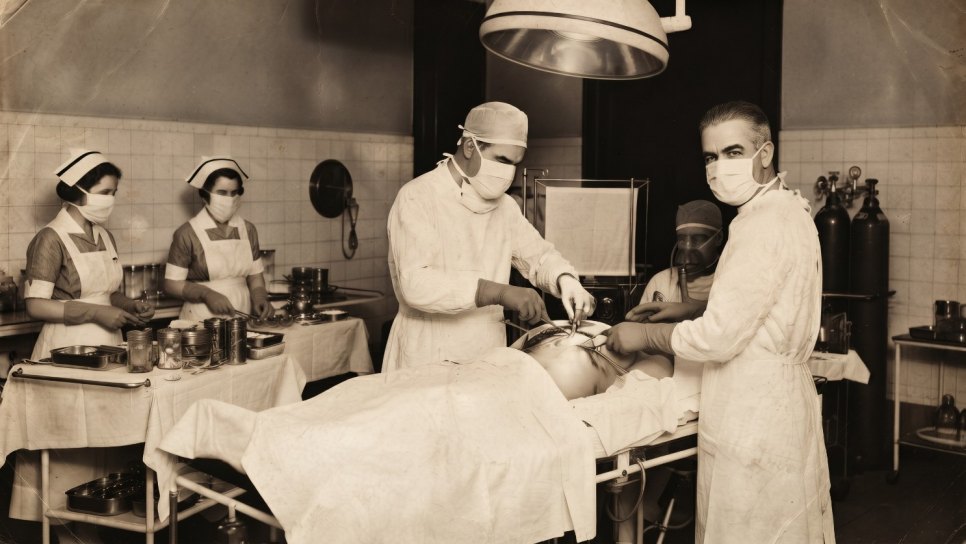
Hôpital des Cancers (1740)
When this first "Cancer Hospital" in world history opened its doors, it encountered not the healing environment expected but a major public protest. The residents of Reims were terrified that smoke from the hospital's chimneys and air escaping from its windows would be carried by the wind into their homes and that their children would be "poisoned."
Under public pressure and unending hysteria, the local authorities were forced to give in in 1779. This first cancer hospital in history was moved, together with its patients, outside the city walls to a deserted hill far from residential areas. In the history of oncology, "spatial exclusion" has its most concrete evidence in this event.
Specialized oncology centers born of fear
History's great irony lies here: "Specialized Oncology Centers," now considered among modern medicine's greatest achievements, first emerged not from a need for scientific development but from society's fear of contagion and desire to keep patients out of sight.
The public had exiled them outside the city, yet the patients lying in those isolated wards had unknowingly created a laboratory setting in which medicine could examine this mysterious disease in a "collective and focused" way for the first time. This process of isolation laid the groundwork for new theories that would prove cancer was not actually contagious but related to the body's internal systems (lymphatic highways).
In our Day 53 article, we will visit the world of François de le Boë Sylvius, who brought chemistry and medicine together with the claim that cancer was not "black bile" but "acidified lymph fluid."
Science and compassion must replace fear
Prof. Dr. Mustafa Özdoğan & Editorial Desk
These dusty pages of history whisper this to us: when scientific information (such as the fear of contagion) is misinterpreted, social stigma can be more destructive than cancer itself. If our oncology centers today stand in the most central parts of cities, at the very heart of life, this is the result of the quiet struggle begun by courageous minds such as Jean Godinot.
Precise guidance requires embracing our patients not only medically but also socially. To achieve biological restoration in its full sense, we must erase the traces of that dark past in which patients were isolated from society and build healing through transparent communication. Cancer is not a reason for exile but a call for solidarity.
Scientific References and Sources
- 1. Karamanou M, et al. "Cancer asylums and the social stigma of the disease in Europe (16th-19th century)." Journal of BUON, 2017;22(5):1367-1370.
- 2. Skuse A. "How the history of medicine influenced our perception of cancer." Cancer Research UK, 2022.
- 3. Mukherjee S. The Emperor of All Maladies: A Biography of Cancer. Scribner, 2010.
- 4. Pinell P. "The birth of oncology." The Birth of Cancer Control, 2002.
Was this article helpful?
Your feedback helps us improve our content.


Reader comments
Share your comment
Your name and comment are published only after administrator approval. Your email address is never shown to visitors.
Be the first to comment.