
Surgery for Early-Stage Cervical Cancer: Comparing Simple and Radical Hysterectomy

In this article
Cervical cancer, one of the most common cancers among women worldwide, can be successfully controlled with early diagnosis and treatment, which also play a critical role in improving survival rates.
The study discussed here examined patients with low-risk cervical cancer and compared simple hysterectomy and radical hysterectomy in terms of effectiveness. Low-risk cervical cancer refers to cancer diagnosed at an early stage with a low risk of spreading beyond the uterus.
The FIGO staging system is used to determine the extent of cervical cancer. In this system, stage IA means that the cancer is confined to the cervix. Stage IB means that the cancer has extended beyond the cervix but has not spread beyond the uterus.
This study is important because it questions the need for radical hysterectomy in patients with low-risk cervical cancer. Radical hysterectomy is a more extensive operation that removes the uterus along with the parametrium (the tissue beside the cervix) and lymph nodes. Simple hysterectomy involves removing only the uterus.
The study's findings indicate that simple hysterectomy is as effective as radical hysterectomy in patients with low-risk cervical cancer and has fewer side effects. These findings may play an important role in determining treatment options for these patients.
Study Comparing Simple and Radical Hysterectomy
Historical data show that parametrial infiltration (spread to the tissue beside the cervix) is rare in patients with early-stage, low-risk cervical cancer. This raises questions about whether these patients need radical hysterectomy (removal of the uterus and parametrium). However, large, comprehensive studies comparing the outcomes of radical and simple hysterectomy (removal of the uterus alone) remain insufficient. A study addressing this question was published on February 29, 2024, in NEJM .
Study Details
A study compared two surgical approaches in patients with low-risk cervical cancer (tumors ≤2 cm with limited stromal invasion).
In the study:
- Radical hysterectomy: The uterus and cervix are removed along with some surrounding tissue (the parametrium).
- Simple hysterectomy: Only the uterus and cervix are removed.
Lymph nodes are assessed with both approaches.
Study objective: The primary objective was to determine the rate of cancer recurrence in the pelvis within three years after treatment. To demonstrate that the difference in effectiveness between the treatments was unimportant, the maximum acceptable difference in pelvic recurrence rates was set at 4%.

Results
The study randomly assigned 700 patients to two groups, with 350 patients in each.
Most patients had stage IB1 cervical cancer according to the International Federation of Gynecology and Obstetrics (FIGO) 2009 criteria (91.7%); 61.7% had squamous cell cancer, and 59.3% had grade 1 or 2 tumors.

After a median follow-up of 4.5 years, patients undergoing radical hysterectomy had a pelvic recurrence rate (cancer returning in the pelvic region) of 2.17% , while the rate in the simple hysterectomy group was 2.52% . The difference between the groups was 0.35%, with a 90% confidence interval from -1.62 to 2.32 indicating that the difference was unimportant. The results were similar for both treatments.
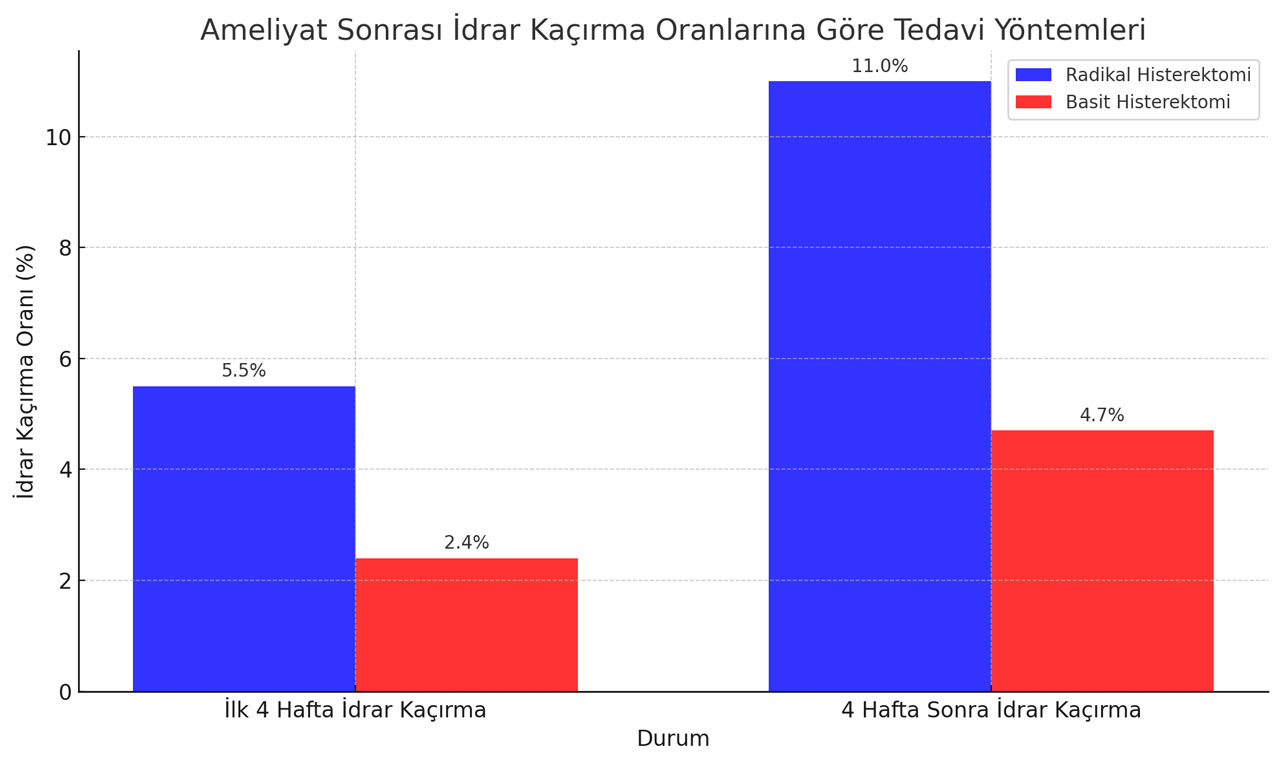
During the first 4 weeks after surgery, patients undergoing radical hysterectomy had a urinary incontinence rate higher than that of patients undergoing simple hysterectomy (5.5% versus 2.4%; P=0.048). This pattern continued after 4 weeks following surgery (11%versus 4.7%; P=0.003).
Patients undergoing simple hysterectomy had a lower rate of urinary retention during the first 4 weeks after surgery than those undergoing radical hysterectomy (0.6% versus 11%; P<0.001). Likewise, after 4 weeks, urinary retention rates remained significantly lower in the simple hysterectomy group than in the radical hysterectomy group (0.6% versus 9.9%; P<0.001). These findings suggest that simple hysterectomy may carry a lower risk of complications for patients in certain circumstances.
In conclusion, in patients with low-risk cervical cancer, simple hysterectomy was not inferior to radical hysterectomy in terms of 3-year pelvic recurrence rates and was associated with a lower risk of urinary incontinence or retention.
Sources
Was this article helpful?
Your feedback helps us improve our content.




Reader comments
Share your comment
Your name and comment are published only after administrator approval. Your email address is never shown to visitors.
Be the first to comment.