
The Crab's Secret Highway: Gaspare Aselli and the Discovery of the MILKY VESSELS

In this article
Day 50 (The History of Cancer in 365 Days Series)
The missing network that explains cancer's stealthy journey through the body comes to light in Milan in a moment of "Eureka!"
In our previous article, we saw how Wilhelm Fabry noticed a tumor "advancing" toward the armpit during breast cancer surgery and revolutionized surgical oncology by clearing the glands there. Yet an enormous question remained: how did cancer get from the breast to the armpit? According to the science of the time, the body contained only blood vessels; why, then, did cancer follow particular stops, the glands, rather than spread throughout the body at the speed of blood? The "lymphatic system," discovered entirely by chance by Gaspare Aselli in 1622, mapped the anatomy of cancer's capacity to spread (metastasize) and dealt the final blow to the thousand-year-old dogma of "black bile." Healing begins with understanding the cell's journey.
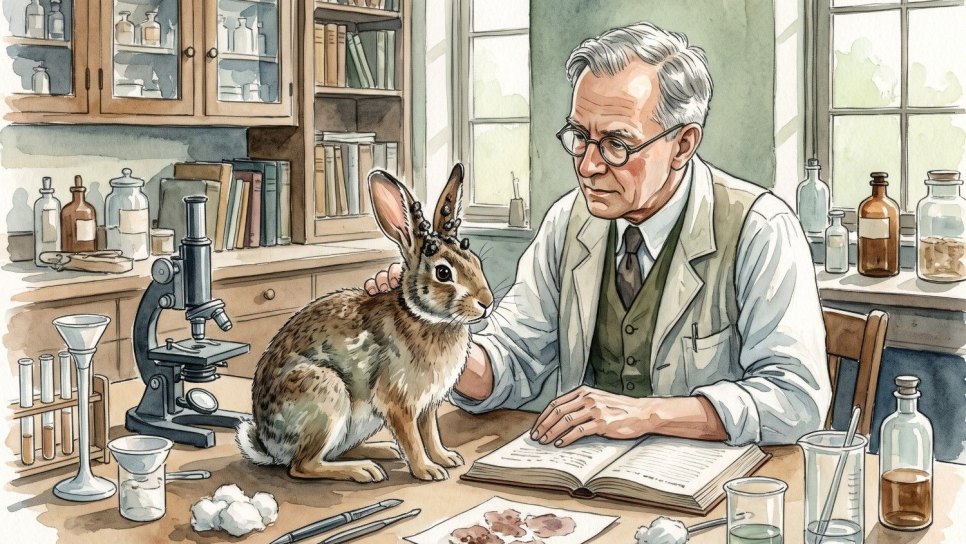
On a hot July day in 1622, a moment occurred in Milan that would change medical history forever. The professor of anatomy at the University of Pavia, Gaspare Aselli, was dissecting a well-fed live dog to examine the nerves in its abdomen.
When he opened the intestinal suspension, the mesentery, he saw remarkable cords, fine, white, and woven like a network, that had never been described in anatomy books. At first, he thought they were a network of nerves. But when he pierced one with his sharp scalpel, he saw a white, milky fluid gush out.
"Eureka!"
"I stood silently for a while... The debates among anatomists came to mind. Then I pierced one of these white cords. Suddenly, I saw a white, milky fluid gush out. Barely containing my joy, I cried out to those around me, like Archimedes: I have found it!"The "Milky Vessels" and Medical History's First Color Atlas
Aselli had found an entirely new vascular system that carried no blood but a milk-white fluid, what we now know as lymph. He named these vessels venae albae aut lacteae (White or Milky Vessels). Today, we call this the Lymphatic System .
De Lactibus Sive Lacteis Venis (1627)
This work describing Aselli's discovery holds the distinction of being medical history's first color anatomy atlas. By depicting vessels in black against blood-red backgrounds using woodcuts, it brought a visual revolution to anatomy teaching.
The Discovery That Changed Cancer Theory: The Route of Metastasis Found
Aselli's discovery of the lymphatic system ushered in an era of "enlightenment" for oncology. It shattered two major taboos about cancer:
It became clear that the hardened glands (lymph nodes) Fabry removed from the armpit were connected by the white vessels Aselli discovered. Cancer cells were found to travel through the body using this "secret highway."
Vesalius (Day 47) had demonstrated that no "black bile duct" existed. With Aselli's discovery of a real fluid, physicians began arguing that cancer was caused not by imaginary black bile, but by clotting or deterioration of lymphatic fluid.
A New Fear Begins: "Cancer Is Contagious!"
The body's secret highway had been found, and people began believing that cancer spread through the clotting of fluids. Yet this new knowledge triggered a terrible paranoia among the public and physicians. If cancer could travel within the body like a poison through this white fluid, might it also leap from one body to another?
The physician at the center of Rembrandt's famous "Anatomy Lesson" painting, Nicolaes Tulp, would turn this fear into a scientific horror. Tomorrow, we will witness the dark crisis of "contagion" that led cancer patients to be excluded from society like people with leprosy.
Healing Lies in the Body's Dialogue
Gaspare Aselli's recognition of those white cords in the dog's mesentery is modern oncology's most critical turning point. Today, when we track the "Sentinel Lymph Node" in breast cancer or plan lymphoma treatments, we are actually following the milk-colored fluid that Aselli saw gush out that day.
In our story of cancer, the lymphatic system is both a route of danger and a guide to healing. While cancer cells use this route to "escape," we use it to deliver our "precision treatments" and detect disease in time. Healing means discovering the body's hidden pathways and achieving "restoration" along them. Tomorrow, we will journey into the fear of contagion, one of medicine's darkest misconceptions.
Scientific Sources and Further Reading
- 1. Aselli G. De lactibus sive lacteis venis. Mediolani: Apud Jo. Baptistam Bidellium, 1627.
- 2. Park J, Riva MA. "Gaspare Aselli and Lacteis Venis: Four Centuries From the Discovery of Lymphatic System." The American Surgeon, 2023.
- 3. Faguet GB. A Brief History of Cancer: Milestones Underlying Our Knowledge. International Journal of Cancer, 2015.
Was this article helpful?
Your feedback helps us improve our content.


Reader comments
Share your comment
Your name and comment are published only after administrator approval. Your email address is never shown to visitors.
Be the first to comment.