
The Effect of Whole-Lung Irradiation in Newly Diagnosed Rhabdomyosarcoma with Lung Metastases

In this article
Rhabdomyosarcoma, one of the most common soft-tissue sarcoma subtypes, frequently occurs in children. Treatment is particularly complex and difficult when lung metastases are present. In recent years, whole-lung irradiation (WLI) has emerged as an option that may improve survival in these patients, although its efficacy and feasibility have long been debated.
On September 10, 2024, the Journal of Clinical Oncology (JCO) published a retrospective analysis by the Soft Tissue Sarcoma Committee of the Children’s Oncology Group (COG), showing a significant improvement in event-free survival (EFS) with whole-lung irradiation in this patient group.
Lung Metastases and Sarcomas
Sarcomas are rare tumors arising from tissues such as connective tissue, muscle, bone, and fat. Rhabdomyosarcoma is among the most common soft-tissue sarcomas in children. Sarcomas generally tend to metastasize, and the lungs are the most common metastatic site. Lung metastases develop when cancer cells from the primary tumor travel through the bloodstream and form tumors in the lungs. Metastasis rates generally depend on disease stage, and lung metastases can significantly affect survival. They are a critical factor that complicates treatment and marks a more complex disease stage.
Details of the Recent JCO Study
This retrospective study analyzed patients enrolled in four COG protocols between 1999-2013 and treated at multiple centers across the United States. All were scheduled to receive WLI in 10 fractions at 15 Gy per day, concurrently with treatment to the primary tumor site. Despite protocol requirements, some did not receive WLI. The analysis compared event-free and overall survival (OS) between those who did and did not receive it.
Main Findings
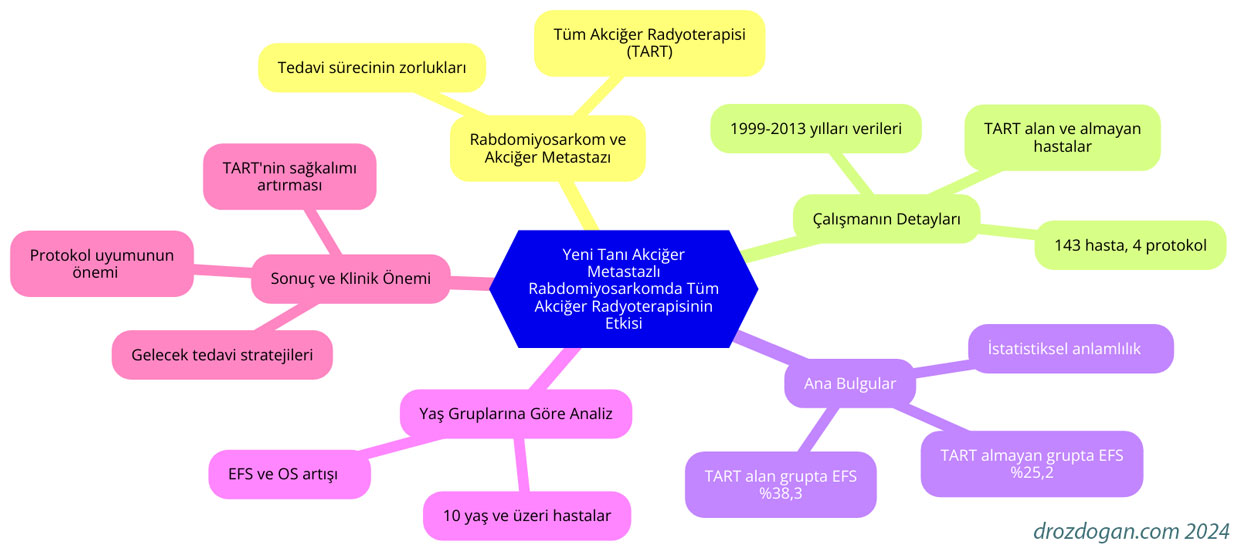
Among 143 patients, 65 (45.5%) received WLI and 78 (54.5%) did not, despite protocol requirements. There were no statistically significant differences in known prognostic factors between groups.
-
Event-Free Survival Rates: 5-year event-free survival was 38.3% (95% confidence interval [CI] = 24.8–51.8%) with WLI and 25.2% (95% CI = 13.8–36.6%) without WLI. This difference was statistically significant (P = 0.0496).
-
Overall Survival Rates: 5-year overall survival was 45.5% (95% CI = 31.8–59.3%) with WLI and 32.4% (95% CI = 20.4–44.4%) without WLI. This difference did not meet statistical significance (P = 0.08).
Subgroup Analyses by Age
Exploratory analyses found a more pronounced benefit of WLI in patients aged 10 and older (n = 83, 58.0%):
-
Event-Free Survival: Patients receiving WLI were approximately 1.9 times more likely to survive for 5 years without progression or recurrence than those not receiving it (HR = 1.9, 95% confidence interval: 1.14–3.16).
-
Overall Survival: Patients receiving WLI were approximately 2 times more likely to survive within 5 years than those not receiving it (HR = 2.06, 95% confidence interval: 1.21–3.52).
Conclusions and Clinical Significance
This analysis shows that WLI significantly improves event-free survival in newly diagnosed rhabdomyosarcoma with lung metastases. The findings emphasize its importance particularly for patients aged 10 and older and indicate that protocol adherence for WLI should be monitored more closely.
These results could support wider use of WLI in future rhabdomyosarcoma protocols and suggest that this approach deserves closer attention, particularly in metastatic disease. Its survival effects highlight the need to reassess treatment strategies and conduct further research.
Sources
DOI:10.1200/JCO.24.00928
Was this article helpful?
Your feedback helps us improve our content.




Reader comments
Share your comment
Your name and comment are published only after administrator approval. Your email address is never shown to visitors.
Be the first to comment.