
The Knife's Audacity: Leonides of Alexandria and Radical Mastectomy

In this article
Day 22 (Cancer History in 365 Days Series)
The late 2nd century AD, Alexandria, the Mediterranean's scientific capital: anatomical curiosity and practical skill remained alive, unlike Rome's theoretical dogma. Leonides was preparing to challenge the longstanding taboo that fatal cancer must remain untouched.
Galen, discussed yesterday, considered cancer an imbalance of bodily fluids, black bile, and opposed surgery. Leonides instead saw a physical invader to be removed.
1. A Clue at His Fingertips: Nipple Retraction
Leonides examined patients through touch rather than observing from afar. In women with breast cancer, he noticed the nipple sinking inward as the tumor grew.
This observation of retraction was among medical history's earliest clear clinical descriptions. Leonides recognized that tumors adhere to and pull surrounding tissue, including pectoral fascia. The disease had roots.
2. Fire and Steel: Leonides' Operating Table
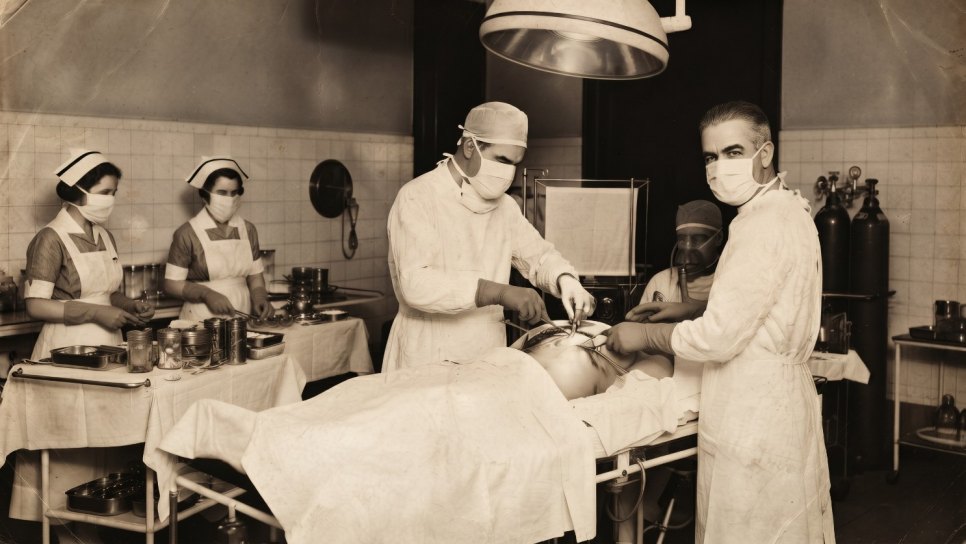
His technique was extraordinarily radical for its time. Without anesthesia or transfusion, speed and fire were the means of keeping a patient alive. It was history's first systematic mastectomy protocol.
Rather than sitting, the patient lies supine, reducing shock and improving access.
The blade must not touch the tumor. Incision begins in healthy breast tissue, the principle of negative surgical margins.
An incision is immediately followed by hot-iron cautery to stop bleeding.
After removing the breast, the wound bed is cauterized again to destroy remaining cancer seeds.
3. Two Giants: Theory Versus Practice
These contemporary or near-contemporary figures illustrate ancient oncology's divide: one in the library, the other at the operating table.
| GALEN OF PERGAMON (ROME) | LEONIDES OF ALEXANDRIA |
|---|---|
| Theory: Cancer is a systemic fluid imbalance (black bile). | Theory: Cancer is a local, physical tumor (invasion). |
| Approach: "Do not touch!" (Noli Me Tangere). Surgery aggravates disease. | Approach: "Cut and burn!" Early surgery is the only chance. |
| Treatment: Diet, laxatives and bloodletting to cleanse the system. | Treatment: Radical mastectomy and cauterization. |
| Legacy: Dominated universities and theoretical medicine. | Legacy: An ancestor of modern surgery and clear-margin principles. |
Sources
- Karamanou M, et al. "Ancient Greek and Greco-Roman Methods in Modern Surgical Treatment of Cancer." PMC - NIH.
- "Leonidas (physician)." Wikipedia.
- Hajdu SI. "A Note from History: Landmarks in History of Cancer." Cancer.
- Scarborough J. "Teaching Surgery in Late Byzantine Alexandria." ResearchGate.
Was this article helpful?
Your feedback helps us improve our content.
Reader comments
Share your comment
Your name and comment are published only after administrator approval. Your email address is never shown to visitors.
Be the first to comment.


The Forgotten Father of Modern Surgery
Breast surgeons still apply principles Leonides described 1800 years ago: "Cut the healthy tissue surrounding the tumor, not the tumor itself." Modern electrocautery descends technologically from his hot irons.
His story shows that progress sometimes requires challenging authority, then Galen, and taking bold risks to save patients. Such risks must be guided by anatomical knowledge and discipline, including operability criteria, rather than recklessness.
This bridges tomorrow's Day 23 story of Saint Agatha. In a world without anesthesia, Leonides' life-saving surgery could also mean terrible torture for patients and victims such as Agatha.