
The Philadelphia Chromosome: A 50-Year Road to Targeted Cancer Drugs

In this article
Lessons from History for the Future
Cancer development and treatment are the focus of a story and a crucial turning point that we share here.
This groundbreaking discovery was made under a microscope at Fox Chase Cancer Center in 1959, when Peter C. Nowell and David A. Hungerford carried out observations involving patients with chronic myeloid leukemia (CML), detecting a small abnormality in the chromosomes of blood cells obtained from two patients.
This chromosomal abnormality would later become known as the first consistent chromosome abnormality associated with cancer and be named the "Philadelphia Chromosome".
Hungerford was a young research fellow at Fox Chase at the time of the discovery and gained the opportunity to pursue a doctorate at the University of Pennsylvania in 1961. In collaboration with Peter C. Nowell, a pathologist at the university's medical school, Hungerford was studying leukemia cells for his doctoral dissertation on human chromosomes. At the time, techniques for preparing chromosomes for microscopic study were still primitive. Previous researchers had not found abnormal chromosomes in cells from CML patients, so Hungerford and Nowell cautiously presented their new evidence in the Journal of National Cancer Institute in 1960. Future studies confirmed this landmark observation.
The original paper on the discovery of the Philadelphia Chromosome has been cited 1682 times since its publication in 1960.
Part of chromosome 22, and therefore part of the genetic code it carried, appeared to be missing. With the emergence of chromosome-banding techniques in 1970, the abnormality was proven to be an exchange of material, or translocation, between chromosomes 22 and 9 (shown in the photograph below). The abnormally shortened chromosome was discovered by Hungerford of Fox Chase Cancer Center and Nowell of the University of Pennsylvania and was therefore named the Philadelphia Chromosome after the city where both institutions were located.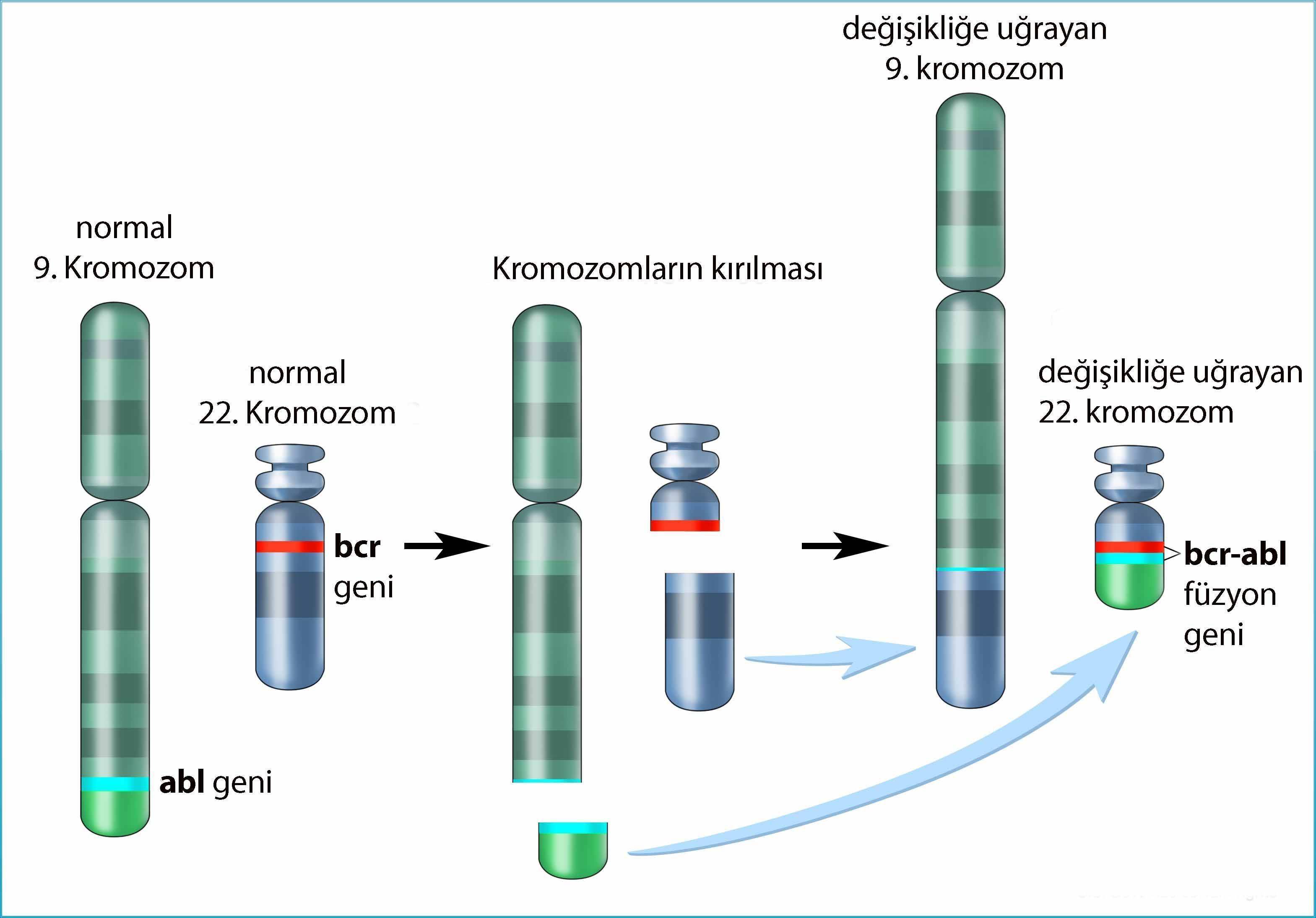
Future Implications of This Discovery
Janet D. Rowley made a series of discoveries about cytogenetic (or chromosomal) changes in human leukemia and lymphoma. In 1973, she discovered a translocation between chromosomes 9 and 22 in CML and subsequently identified a series of common translocations in other types of leukemia and lymphoma.
Translocation is the process in which two chromosomes exchange material when both break.
For their groundbreaking discoveries about the genetic basis of cancer, Drs. Rowley and Nowell would share the Lasker Award in 1998 with Dr. Alfred G. Knudson of Fox Chase.
Brian J. Druker, Nicholas B. Lydon, and Charles L. Sawyers carried out clinical trials of the genetically targeted cancer drug imatinib (Gleevec), which was found to be highly effective in CML patients, and this development paved the way for the eventual production of groundbreaking cancer drugs.
Druker, Lydon, and Sawyers captured the known molecular defect underlying CML, formulated the idea of addressing this root cause of the disease, created a specific kinase inhibitor, and designed a second-generation inhibitor when drug resistance developed. Their work provided a model extending far beyond CML. Now hundreds of drugs targeting specific molecules in cancer are in development, and dozens have been approved. Druker, Lydon, and Sawyers provided a remarkably successful treatment for CML and a new paradigm for cancer treatment. They received the Lasker Award in 2009 because the development of molecularly targeted treatments for CML transformed a fatal cancer into a manageable chronic condition.
Sources
Was this article helpful?
Your feedback helps us improve our content.




Reader comments
Share your comment
Your name and comment are published only after administrator approval. Your email address is never shown to visitors.
Be the first to comment.