
Top 10 Clinical Studies – 2021

In this article
In the simplest terms, clinical studies are medical experiments conducted in humans. Clinical studies begin in the first phase with a small number of participants (10-50 people), testing the safety of the method being studied. In the second and third phases, treatment effectiveness is assessed in groups ranging from 100 to 1000 participants. Treatments currently approved for use are products of clinical studies. Before clinical studies, researchers also spend many years testing the method or medicine in laboratories and animals.
NOTE: The terms clinical “research” or clinical “trial” are also sometimes used instead of clinical “study.”
Below, we summarize the top 10 clinical studies published in 2021 with the potential to change clinical practice:

Number 10: Borderline Personality Disorder
A study suggesting that omega-3 fatty acids could be a promising add-on therapy helped make borderline personality disorder one of the most popular clinical topics. A study published this summer (2022), evaluating 4 different randomized controlled trials involving a total of 137 patients, concluded that supplemental omega-3 polyunsaturated fatty acids helped reduce the core symptoms of borderline personality disorder. Omega-3 fatty acids were used as monotherapy in one trial and as add-on treatment to agents such as antidepressants, benzodiazepines and/or valproic acid in the other trials. None of the patients in the 4 trials were taking an antipsychotic medicine. The omega-3 fatty acids came from seafood rather than plants.

Number 9: Vitamin D
Research on colorectal cancer and all-cause mortality also featured among trending clinical topics. An observational study found that women with high vitamin D intake, particularly from food, had a lower risk of developing early-onset colorectal cancer. (The important distinction here is vitamin D obtained from food rather than supplements; see The latest position on vitamin D and Omega-3 supplementation!).
The study included 94205 women (aged 25-42) followed between 1991 and 2015. Women with the highest average total vitamin D intake (450 IU per day) showed a clearly reduced risk compared with women consuming 300 IU per day. The association between vitamin D and colorectal cancer has been documented for years and has also been the subject of 10 completed or ongoing clinical studies. However, only a few studies have focused on the association between vitamin D and early-onset colorectal cancer.
Severe vitamin D deficiency is associated with poor bone and muscle health, calcium absorption, immunity and heart function, as well as colon, blood and bladder cancers. This is consistent with a prospective study in men that found low vitamin D concentrations associated with increased all-cause mortality. The research concluded that assessing free 25-hydroxyvitamin D adds little value to the current standard of measuring total 25(OH)D, a major circulating form of vitamin D, because deficiencies in either were associated with a similar risk.
The men in the study were aged 40 to 79, and the average follow-up was 12.3 years. During this period, nearly a quarter (23.5%) of participants died. After adjustment for key confounders, including body mass index, smoking, alcohol consumption, kidney function, number of baseline comorbidities and other factors, men with total 25(OH)D below 20 ug/L had a significantly increased risk of death compared with those with normal vitamin D levels, defined as above 30 ug/L.
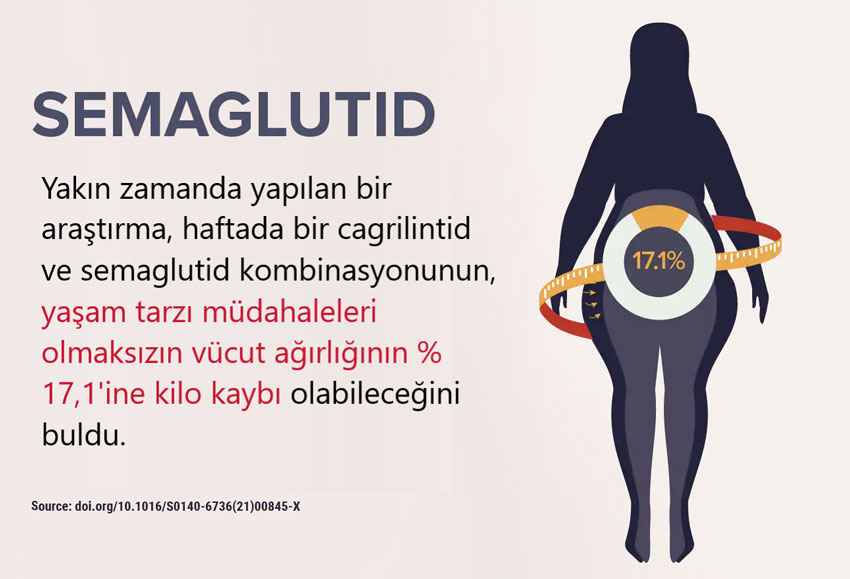
Number 8: Semaglutide
News about a medicine described as a game changer for the medical management of obesity also featured among trending clinical topics. In June, the United States Food and Drug Administration (FDA) approved the glucagon-like peptide-1 (GLP-1) receptor agonist semaglutide(Wegow) for weight loss at a subcutaneous dose of 2.4 mg weekly. Specifically, this formulation and dose were approved alongside lifestyle changes for adults with obesity (body mass index above 30) or overweight adults (≥ 27 kg/m²) with at least one weight-related comorbidity.
A phase-I study found that combining the investigational agent cagrilintide with semaglutide produced greater weight loss than semaglutide alone and was well tolerated. Lone Enebo presented the study at the 28th European Congress on Obesity (ECO 2021), and it was published simultaneously in The Lancet .
Sara Becerril and Gema Frühbeck commented on the subject as follows:
“Few pharmacological treatment options are approved for overweight and obesity, and they do not satisfactorily bridge the efficacy gap between lifestyle behavior changes and bariatric surgery in achieving sustainable long-term outcomes. Because the study was designed for safety, the weight-loss results need careful analysis. No lifestyle intervention was prescribed to achieve weight loss… Moreover, the protocol was amended to include the highest cagrilintide dose, which may have been data-driven.”
Not all findings for semaglutide were positive. One study found that tirzepatide, a new “twincretin” agent, was superior to 1-mg semaglutide treatment in patients with type 2 diabetes. In SURPASS-2, 3 different tirzepatide doses administered by subcutaneous injection once weekly were compared with subcutaneous semaglutide in 1879 patients. Patients receiving any of the 3 weekly tirzepatide doses—5 mg, 10 mg or 15 mg—showed dose-dependent reductions in HbA1c that were significantly superior to semaglutide. Weight loss was a key secondary endpoint; each of the three tirzepatide doses produced significant weight loss beyond that achieved with semaglutide. In summary, daily/weekly injections for obesity treatment appear set to play an important role in the future.

Number 7: STI Recommendations
For the first time since 2015, the United States Centers for Disease Control and Prevention (US-CDC) updated its guidelines for sexually transmitted infections (STIs). The updated guidelines cover screening, testing and treatment and include comprehensive recommendations and numerous changes.
In addition to current treatment approaches, the guidelines include information on rectal and oral tests for diagnosing chlamydia and gonorrhea, two-step tests for diagnosing genital herpes simplex virus, and expanded risk factors for syphilis testing during pregnancy. According to the World Health Organization, more than 1 million STIs are acquired worldwide every day. Annual cases in the United States increased for 6 consecutive years. A CDC report released in April reported 129813 syphilis cases, a 74% increase from 2015 to 2019, and approximately 2000 congenital syphilis cases, a 279% increase, with 128 infant deaths. The report also recorded 1.8 million chlamydia cases in 2019, a 19% jump over 4 years, and a total of 616392 gonorrhea cases, a 56% increase during this period. Experts hope the new guidelines will help reduce and stem this wave of STIs.

Number 6: Obesity and Covid
A study of approximately 150000 adults hospitalized with Covid-19 infection caused by SARS-CoV-2 showed that people with a high body mass index (BMI) had a significantly greater risk of severe disease. More than half of participants (50.8%) had obesity. The lowest risk of adverse outcomes was found in people with a healthy weight (BMI between 23.7 and 25.9 kg/m²). The risk of intensive care admission was 6% for people with a BMI of 40–44.9 and higher still for those at 45 or above (16%).
Experts say the data show a dose-response relationship with obesity. For example, the risk of hospitalization was 7% for adults with a BMI of 30–34.9, rising to 33% for those with a BMI of at least 45. Interestingly, being underweight also increased the risk of hospitalization. Covid-19 patients with a BMI below 18.5 had a 20% higher risk of hospitalization than Covid-19 patients in the healthy BMI range. Another concerning finding was that the risk of death rose from 8% in those with a BMI of 30–34.9 to 61% in people with a BMI of 45 or above.

Number 5: Coffee
A study of coffee consumption among people with cardiovascular disease also made coffee a trending research topic.
Using a large epidemiological database, researchers determined that coffee-drinking habits are largely driven by cardiovascular health. To provide evidence for a causal relationship, the study used a strategy that allows the use of genetic information, such as variants reflecting higher blood pressure and heart rate, called Mendelian randomization. According to the researchers, “Participants with cardiovascular symptoms were more likely to drink less caffeinated coffee and to be nonhabitual or decaffeinated coffee drinkers than those who did not report the relevant symptoms.”
The findings suggest that the human body regulates behavior in ways that may go unnoticed. The researchers say the study also shows how other observational studies may create a misleading impression about health benefits associated with coffee consumption. Because people with certain conditions appear to avoid caffeinated coffee naturally, studies of habitual coffee drinkers will include fewer people with those conditions, potentially producing a misleading health association. In summary, this study does not support the conclusion that “coffee drinkers are less likely to develop cardiovascular disease”; rather, it supports the conclusion that “people with cardiovascular disease tend to avoid coffee.”
Related topic: Effects of coffee on health: a comprehensive overview and summary

Number 4: Stress-Related Damage
Scientific confirmation of a long-standing theory and new research suggesting a link with Alzheimer's disease helped bring stress into focus.
Although gray hair is often jokingly attributed to “stress” , it has been difficult to prove the link between personal strain, pigment changes and stress. Researchers measured color loss in a single hair taken from volunteers who kept diaries documenting their weekly stress levels. Using high-resolution scanners, the team captured images of hair segments small enough to represent 1 hour of growth. When hair color changed, they saw differences in 300 proteins. This allowed them to develop a mathematical model to predict what might happen to hair over time and identify a point at which these changes were reversible.
A separate review of human and animal epidemiological studies found that long-term stress, together with genetic factors, might contribute to the development of Alzheimer's disease. Stress activates the hypothalamic-pituitary-adrenal (HPA) axis, which regulates the body's cortisol levels in response. The researchers said that increased cortisol levels are frequently observed in patients with Alzheimer's disease and “contribute substantially to the disease process”. The researchers plan further studies of the molecular mechanisms responsible for the role of stress in Alzheimer's disease and how genetic changes affect neurodegeneration.
Ultimately, understanding how stress contributes to disease development may identify molecular treatment targets. Stress leading to burnout was a problem for doctors long before the pandemic began. Experts continue to emphasize the need for doctors to incorporate self-care and well-being into their future routines. Protecting mental health among healthcare professionals is also more important than ever.
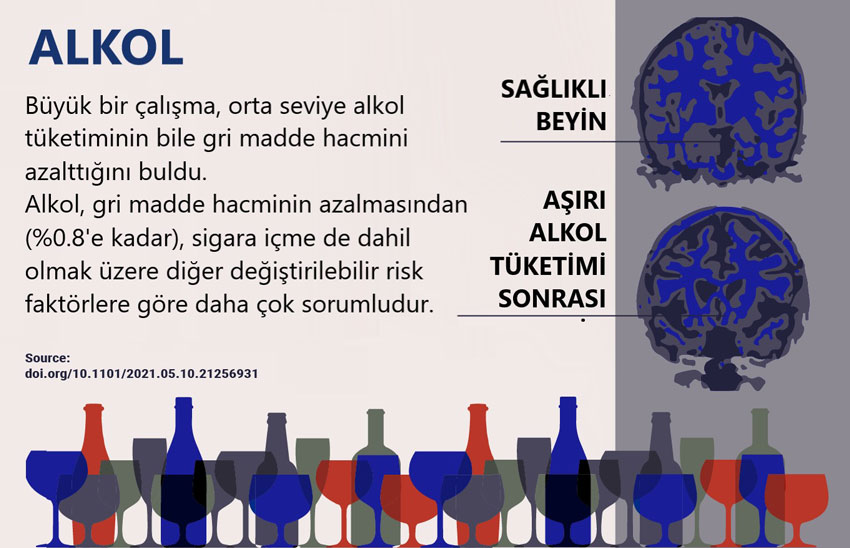
Number 3: Alcohol
With alcohol consumption increasing recently, new research on its health effects was also among the topics attracting the most interest.
One of the largest studies to date on alcohol and brain health found that consuming any amount of alcohol was associated with worse brain health. The study, which had not yet been peer-reviewed, included more than 25000 adults: 691 never-drinkers, 617 former drinkers and 24069 current drinkers. After adjustment for all known potential variables, higher weekly alcohol consumption was associated with less gray matter in almost every brain region. Widespread negative associations were also found between alcohol consumption and every measure of white matter structure assessed. Regarding interpretation, experts note that it remains unclear how harmful small reductions in brain volume are.
In heart-health news, even one alcoholic drink was found to increase the likelihood of an atrial fibrillation (AF) episode within a few hours; the more alcohol consumed, the higher the risk. The study showed that consuming any alcoholic drink was associated with more than double the likelihood of an AF event within the next 4 hours, and consuming two or more drinks was associated with a more than threefold risk. Although the highest risk occurred during the first 3-4 hours after drinking, the effects lasted approximately 9 hours.
Another study by the same researchers provides greater biological plausibility. It showed a significant reduction in the pulmonary vein atrial effective refractory period in patients with AF who drank alcohol, probably making their atria more susceptible to fibrillation. Studies have also shown that advising drinkers with AF to avoid alcohol resulted in fewer AF episodes.

Number 2: Single-Dose Vaccination
The second most popular clinical trend was the great interest in data submitted to the FDA on the effectiveness of a single Pfizer/BioNTech vaccine dose, together with earlier findings on a single Moderna dose, as global vaccination efforts accelerated from early March and interest in single-dose approaches increased. In The New England Journal of Medicine, an article about the Pfizer vaccine stated: “Giving a second dose within 1 month of the first, as recommended, provides very little extra benefit in the short term while leaving high-risk people who could receive a first dose from this limited vaccine supply completely unprotected.” In The Lancet, an article presenting data from Israel reported that a study analyzing more than 9000 healthcare workers found a single Pfizer dose associated with 85% protection against symptomatic Covid-19.
At a White House press conference on February 19, Dr. Anthony Fauci announced that the United States would indeed adhere to a two-dose strategy for both Pfizer and Moderna vaccines. “The reason is that although you can get a clear degree of protection after a single dose, it is certainly not durable. We know that its durability is not what you would get with a booster.” Fauci and other experts argue that more data are needed before departing from the regimen tested in clinical trials.
At present, at least in Turkey, there is no longer a vaccine supply problem, and 4 doses of mRNA vaccine are recommended for all adults.

Number 1: Colon Cancer
Findings presented at the 2021 European Society for Medical Oncology (ESMO) World Congress on Gastrointestinal Cancer suggested that antibiotic exposure might be associated with the development of colon cancer, but not rectal cancer. This made colon cancer the top trending topic of 2021.
The case-control study used primary care data from Scotland, including approximately 8000 colorectal cancer (CRC) cases and a control group of more than 30000 healthy people. Any antibiotic use was associated with an adjusted odds ratio for colon cancer of 1.49 (P=0.018) in patients younger than 50, compared with 1.09 (P=0.029) in those aged 50 or older.
Commenting on the study, Dr. Alberto Sobrero noted that it was too early to conclude that antibiotics were a causal factor and added: “We need to understand more about the possible role of the microbiome in bowel cancer before considering the adverse effects of antibiotics on the gut flora.” He continued by reiterating that the findings were a reminder: “Antibiotics should not be given unless truly necessary, and we must keep in mind the possibility that unnecessary antibiotic use may expose people to an increased risk of cancer.”
The importance of high red meat and low vegetable intake, a better-known risk factor for colon and rectal cancer, is now better understood. A new study potentially identified the mechanistic link associated with the increased risk. Researchers identified an alkylating mutational signature indicating DNA damage in normal and cancerous colon tissue. This signature was significantly associated with high red meat intake before a colorectal cancer diagnosis, but not with increased poultry or fish consumption or other lifestyle factors. In addition, patients whose tumors had the highest levels of alkylation damage had a 47% greater risk of colorectal cancer death than those with low levels.
Related topic: Is Early-Onset Cancer a Global Epidemic?
Sources
Was this article helpful?
Your feedback helps us improve our content.




Reader comments
Share your comment
Your name and comment are published only after administrator approval. Your email address is never shown to visitors.
Be the first to comment.