What Is Hibsago (Bepirovirsen)? The First Antisense Drug to Receive FDA Approval for the Treatment of Chronic Hepatitis B
In this article
Stopping Medication in Hepatitis B: What Does Bepirovirsen (Hibsago) Change, and Who Is It For?
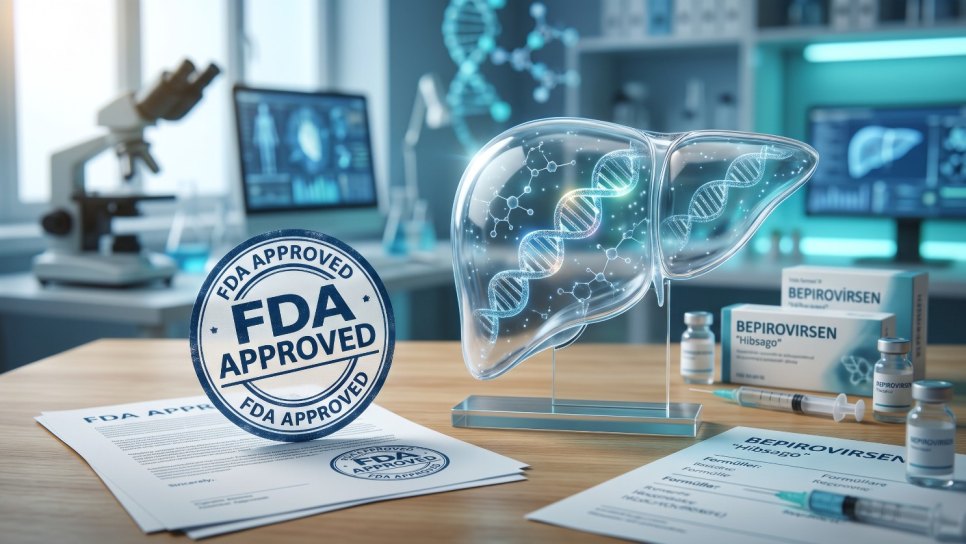
On October 20, 2026, the U.S. Food and Drug Administration (FDA) approved a new approach to treating chronic hepatitis B: bepirovirsen (brand name Hibsago). According to the FDA's announcement, this drug is the first "antisense oligonucleotide" approved for hepatitis B, and it aims to help some patients keep the virus under control even after they stop all hepatitis B medications. Because hepatitis B is the leading cause of liver cancer worldwide, this approval also matters for oncology. We have previously covered liver cancer, key facts about liver cancer and current treatments for advanced liver cancer.
- What was approved? Bepirovirsen is given as a once-weekly injection under the skin for up to 24 weeks, in addition to existing antiviral drugs (such as tenofovir or entecavir). It targets the genetic instructions (RNA) the virus needs to replicate and to produce its surface antigen (HBsAg).
- Who is it for? Adults without cirrhosis who have been taking an antiviral drug for at least 6 months, whose virus is suppressed in the blood, and whose HBsAg level is 3,000 IU/mL or lower. HBsAg must be measured with the Roche test that the FDA authorized as a companion diagnostic.
- Results: In two phase 3 trials (1,834 patients), 24% of those receiving bepirovirsen met the criteria for stopping their antiviral drug; in 19%, the virus and HBsAg were undetectable 24 weeks after all treatment was stopped ("functional cure"). The rate with placebo was 0%. Among those with an HBsAg level of 1,000 IU/mL or lower, the rate rose to 25–28%.
- Caution: There is a boxed warning for serious liver reactions and for low platelet counts that can increase the risk of bleeding; regular blood tests are required. Long-term durability and the effect on liver cancer risk are not yet known. It is not licensed in Turkey.
Why does this matter?
More than 250 million people worldwide live with chronic hepatitis B, and more than half of liver cancers are linked to hepatitis B. Turkey is among the countries where hepatitis B is moderately common. Over the years, chronic hepatitis B can lead to liver inflammation, cirrhosis and liver cancer (hepatocellular carcinoma) (elevated liver enzymes).
Today's oral antiviral drugs suppress viral replication very effectively and lower the risk of liver cancer, but they do not clear the virus from the body. With these drugs, HBsAg loss occurs in only about 1% of patients per year, and most patients have to take the drug for life. When the drug is stopped, the virus often becomes active again. That is why the goal in hepatitis B is a "functional cure," in which the virus stays suppressed and HBsAg disappears even after the drug is stopped. Bepirovirsen is the first treatment to reach this goal at the phase 3 level.
What is bepirovirsen (Hibsago)?
Bepirovirsen (Hibsago) is an antisense oligonucleotide used to treat chronic hepatitis B, injected under the skin once a week. By targeting the RNA the virus uses to replicate and to produce HBsAg, it lowers the amount of virus and HBsAg. It is given for up to 24 weeks in addition to existing antiviral drugs; its aim is to help some patients keep the virus under control even after they stop all hepatitis B medications.
Antisense oligonucleotides are short, laboratory-made genetic molecules that bind to a specific RNA sequence and block the production of protein from that RNA; unlike gene-editing methods that permanently change DNA (CRISPR), their effect is temporary. Bepirovirsen is thought to work not only by lowering the amount of HBsAg but also by stimulating the immune system; this may explain why it is more effective in patients whose HBsAg level is already low.
Figure 1 · How is treatment with Hibsago given?
Simplified diagram based on the FDA approval information
What did the trials show?
The approval is based on two identically designed phase 3 trials (B-Well 1 and B-Well 2) conducted in 29 countries. A total of 1,834 patients without cirrhosis, whose virus was suppressed with antiviral drugs and whose HBsAg level was 100–3,000 IU/mL, received bepirovirsen or placebo in a 2:1 ratio. Of the patients, 68% were Asian and 8% were HBeAg positive; the mean age was 49. The antiviral drug was continued until week 48 and stopped in those who met the criteria. The primary endpoint was undetectable HBsAg and HBV DNA at week 72 (24 weeks after all treatment was stopped), that is, functional cure.
B-Well 1 and B-Well 2: functional cure rate
Percent. Proportion of patients with undetectable HBsAg and HBV DNA at week 72, that is, 24 weeks after all hepatitis B treatment was stopped. Colored bar: bepirovirsen; gray bar: placebo.
p<0.001 in both trials. Placebo rates for the HBsAg ≤1,000 IU/mL subgroup were not reported. Two identical trials conducted with the same design.
In absolute terms, about 19–20 of every 100 patients receiving bepirovirsen reached treatment-free control, while none of those receiving placebo did. Those with low HBsAg levels at baseline benefited the most. Follow-up is so far limited to 24 weeks after treatment was stopped; the emphasis on a "cure" in congress presentations and press releases needs to be read with this limitation in mind (reading research correctly). This also explains why HBsAg measurement matters for patient selection and why the FDA requires a companion diagnostic.
Side effects and warnings
Bepirovirsen was generally tolerated, but it caused noticeably more side effects than placebo. Any side effect occurred in 91% versus 73%, and grade 3 or higher side effects in 16% versus 3%.
Side effects (pooled data from both trials, 72 weeks)
Percent. Red bar: bepirovirsen (1,223 patients); gray bar: placebo (611 patients).
ALT above 10 times the normal limit: 6% versus less than 1%. Drug-induced liver injury was not confirmed by the adjudication committee. Discontinuation due to side effects: 3% versus less than 1%. The FDA label carries a boxed warning for serious liver reactions and low platelet counts.
The key warnings on the FDA label are as follows:
- Boxed warning: serious liver reactions. Elevations in liver enzymes (ALT) are common during treatment. Some of these elevations may reflect the immune system's response to virus-infected cells; however, close monitoring is required because of the risk of serious liver injury. The drug is approved only for patients without cirrhosis.
- Boxed warning: low platelet count. A drop in platelets can lead to serious bleeding that may endanger life; blood counts should be monitored regularly. Extra caution is needed in people taking blood thinners.
- Other warnings: worsening kidney function, serious inflammatory reactions such as inflammation of the blood vessels (vasculitis), and risks related to improper administration of the drug.
- Most common side effects: injection-site reactions, fever, fatigue and headache.
Who is it suitable for, and who is it not?
| Situation | What it means for Hibsago |
|---|---|
| Adult without cirrhosis, on antiviral drugs for at least 6 months, HBV DNA suppressed, HBsAg ≤3,000 IU/mL | Approved use group; greatest benefit in those with HBsAg ≤1,000 IU/mL |
| HBsAg above 3,000 IU/mL | Outside the scope of the approval |
| Cirrhosis | Outside the scope of the approval; should not be used because of the risk of liver reactions |
| Patient not yet on antiviral treatment, or whose virus is not suppressed | The virus must first be suppressed with antiviral treatment |
| Low platelet count, bleeding tendency or kidney disease | Risk may be higher; a detailed evaluation with a physician is needed |
| History of liver cancer, receiving cancer treatment, or immunosuppressed | No data in these groups; should be considered outside the approved use group |
The table is compiled from the FDA approval announcement and the eligibility criteria of the phase 3 trials; exact conditions of use should be determined according to the drug's prescribing information.
What does it mean for cancer patients and oncology?
Preventing liver cancer: Hepatitis B is one of the most important causes of liver cancer. In observational studies, HBsAg loss has been associated with a lower risk of liver cancer, especially when it occurs before cirrhosis develops and at a younger age. However, it has not yet been shown that bepirovirsen lowers the risk of liver cancer; this requires long-term follow-up. Even in patients who achieve a functional cure, liver cancer screening may need to continue according to their risk level (immunotherapy in liver cancer). Controlling other risk factors, such as alcohol and fatty liver, is equally important (fatty liver and cancer, obesity, heavy alcohol use, metabolic and alcohol-related fatty liver disease, diseases caused by alcohol).
Hepatitis B during cancer treatment: Chemotherapy, lymphoma drugs such as rituximab (lymphoma), stem cell transplantation, some targeted drugs and immunotherapies can cause hidden or controlled hepatitis B to flare up again. For this reason, the standard approach is to test for HBsAg and anti-HBc before starting cancer treatment and, if needed, to give a preventive antiviral drug. Bepirovirsen does not replace this preventive treatment; there are no data on its use in patients receiving cancer treatment, and stopping the antiviral drug in these patients is not recommended because of the risk of a flare.
Bepirovirsen (Hibsago) is not licensed in Turkey and is not reimbursed; it is currently approved only in the United States. In Turkey, oral antiviral drugs such as tenofovir and entecavir for chronic hepatitis B are reimbursed under conditions set by the SGK (the Turkish Social Security Institution). The quantitative HBsAg test needed to select patients for Hibsago is available at some centers; however, whether the specific test system required by the approval is available varies by center. We have covered the drug approval process in a separate article and how new drugs reach our country in our Turkey access map. Suitable clinical trials may also be an option (what is a clinical trial).
Practical tips for people with hepatitis B and their families
- Do not stop your antiviral drug on your own. Stopping the drug can cause a sudden and serious flare of the virus; even with the new treatment, the decision to stop is made only when specific criteria are met and under a physician's supervision.
- Find out your HBsAg level. The quantitative HBsAg test is the key measure of whether you are eligible for new treatments.
- Keep up with liver cancer screening. If you are in a risk group, regular ultrasound and blood tests are important.
- Have your family members' testing and vaccination status checked. The hepatitis B vaccine is the most effective way to prevent transmission and, in turn, liver cancer (vaccines for cancer patients).
- If cancer treatment is planned, be sure to tell your oncologist about your hepatitis B status.
- When making a decision, do not hesitate to get a second opinion.
Frequently asked questions
- Does Hibsago (bepirovirsen) cure hepatitis B completely?
- Not completely, but it achieves a "functional cure" in some patients. In the phase 3 trials, the virus and HBsAg were undetectable in the blood of 19% of those receiving bepirovirsen 24 weeks after all hepatitis B treatment was stopped; the rate with placebo was 0%. Because the virus's genetic material can remain in liver cells, long-term follow-up is required.
- Who can receive Hibsago?
- Adults without cirrhosis who have been taking an antiviral drug for at least 6 months, whose virus is suppressed in the blood, and whose HBsAg level is 3,000 IU/mL or lower. The response rate is higher (25–28%) in those with an HBsAg level of 1,000 IU/mL or lower.
- What are the side effects of Hibsago?
- The most common are injection-site reactions, fever, fatigue and headache. Elevated liver enzymes were seen in about one in four patients. The FDA added a boxed warning for serious liver reactions and for low platelet counts that can increase the risk of bleeding; regular blood tests are required.
- Is Hibsago available in Turkey?
- No. As of October 2026, it is approved only in the United States; it is not licensed or reimbursed in Turkey. In Turkey, antiviral drugs such as tenofovir and entecavir continue to be used to treat hepatitis B.
Glossary
- HBsAg
- The surface protein of the hepatitis B virus; its presence in the blood indicates ongoing infection.
- Functional cure
- HBsAg and HBV DNA becoming undetectable in the blood after all treatment is stopped, and staying that way.
- Antisense oligonucleotide
- A short, synthetic genetic molecule that binds to a specific RNA and blocks the production of protein from it.
- Nucleos(t)ide analog
- Oral antiviral drugs, such as tenofovir and entecavir, that suppress viral replication.
- ALT
- A blood enzyme that indicates liver cell damage.
- Platelet
- Blood cells that enable the blood to clot.
- Companion diagnostic
- A test approved for selecting the patients who will benefit from a drug.
- Reactivation
- A flare-up of controlled hepatitis B, for example during cancer treatment.
DROZDOGAN Academy Commentary
Bepirovirsen is the first treatment to challenge, with phase 3 evidence, the "lifelong medication" approach in hepatitis B. For now, however, this gain is limited to about one in five patients in a selected group.
⚡ Why it matters
In one of the most important causes of liver cancer, virus control that persists after the drug is stopped has been achieved. A new drug class (antisense oligonucleotide) and personalized selection with a companion diagnostic have entered hepatitis B treatment.
✅ Strengths
Two large, placebo-controlled phase 3 trials that confirm each other; no functional cure at all with placebo; time-limited (24-week) treatment; and publication in NEJM.
⚠️ Limitations
The response rate is limited to 19–20% and largely confined to patients with low HBsAg levels. Follow-up after stopping treatment is only 24 weeks; durability, liver cancer risk and long-term safety are unknown. People with cirrhosis, people with high HBsAg levels and cancer patients were not included in the trials. The liver and platelet warnings require close monitoring.
🩺 In practice
In our patients with hepatitis B, we continue screening and preventive antiviral treatment before cancer treatment; bepirovirsen does not replace this approach. For patients who are not receiving cancer treatment and who meet the relevant criteria, we recommend an evaluation together with a hepatology specialist.
❓ Open questions
Will the functional cure last for years? Will it lower the risk of liver cancer? Will success improve in patients with high HBsAg levels when it is combined with other drugs? When, and under what conditions, will it reach Turkey?
Bottom line: Hibsago is an important but first step toward the goal of being able to stop treatment in hepatitis B. Its value will become clear with the right patient selection, close monitoring and long-term data.
- This article was prepared in October 2026.
- The information is compiled from the FDA approval announcement, news reports on the congress presentation and publication of the B-Well 1 and B-Well 2 phase 3 trials, and the phase 2b B-Clear trial. The 24% and 19% figures reported by the FDA are pooled data from the two trials; the 20% and 19% figures in the chart are the separate results of each trial. The full text of the NEJM article was not accessed.
- Information on hepatitis B screening during cancer treatment and on the relationship between functional cure and liver cancer risk reflects generally accepted clinical approaches.
- Licensing and reimbursement status in Turkey is given at a general level; the current status should be confirmed. This article is for general information only; it is not personal medical advice. The diagram is derived from the FDA announcement. The Academy commentary is our own.
References
- FDA approves first-of-its-kind chronic hepatitis B treatment. U.S. Food and Drug Administration, October 20, 2026. fda.gov
- Hou J et al. Phase 3 results of bepirovirsen treatment for chronic hepatitis B virus infection (B-Well 1 and B-Well 2). N Engl J Med 2026. NEJMoa2515131.
- Bepirovirsen achieves clinically meaningful functional cure rates in chronic hepatitis B. AJMC, May 28, 2026. ajmc.com
- B-Well 1 and B-Well 2: EASL Congress 2026 report. NATAP. natap.org
- Yuen MF, Lim SG, Plesniak R et al. Efficacy and safety of bepirovirsen in chronic hepatitis B infection (B-Clear). N Engl J Med 2022;387:1957-1968. doi:10.1056/NEJMoa2210027
Was this article helpful?
Your feedback helps us improve our content.