
What Is Provenge (Sipuleucel-T)? FDA Approval, Licensing in Turkey, and Reimbursement Status
Reading tools

In this article
- FDA Approved: Yes
- First Approval Date: April 29, 2010
- Brand Name: Provenge
- Active Ingredient: Sipuleucel-T (APC8015)
- Route of Administration: Intravenous (IV) infusion
- Class: Vaccine, immunotherapy, cellular therapy
- Category: Targeted immunotherapeutic agent
- Manufacturer: Dendreon
- Availability in Turkey: Not licensed in Turkey. It can be obtained through special importation following a patient-specific application and TİTCK approval.
- Approved Cancer Indications: Asymptomatic or minimally symptomatic metastatic castration-resistant (hormone-refractory) prostate cancer
What Is Provenge? How Does It Work?
Provenge (Sipuleucel-T) is a personalized immunotherapy agent used to treat metastatic castration-resistant prostate cancer. Its mechanism activates the patient's own immune system to target cancer cells.
Mechanism of Action
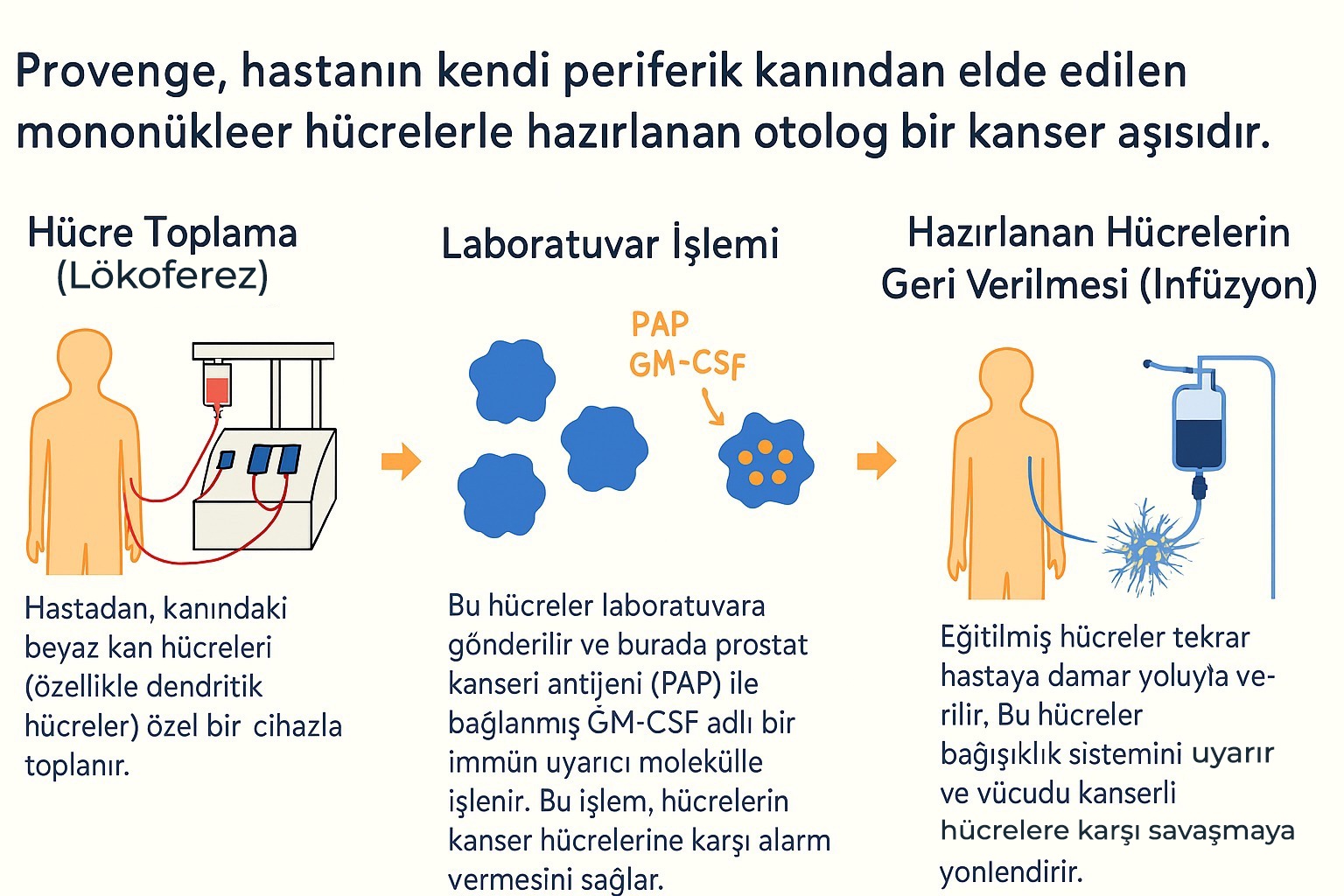
- Cell Collection (Leukapheresis): White blood cells, particularly dendritic cells, are collected from the patient's blood using a specialized device.
- Laboratory Processing: These cells are sent to a laboratory, where they are treated with an immune-stimulating molecule called GM-CSF linked to a prostate cancer antigen (PAP). This process enables the cells to raise an alarm against cancer cells.
- Returning the Prepared Cells (Infusion): The trained cells are returned to the patient intravenously. They stimulate the immune system and direct the body to fight cancer cells.
FDA (US Food and Drug Administration) Approval History
- April 29, 2010: Received FDA approval for the treatment of men with asymptomatic or minimally symptomatic metastatic castration-resistant prostate cancer.
- Sipuleucel-Tbecame the first cancer vaccine approved as a personalized cellular immunotherapy.
Licensing in Turkey
Provenge (Sipuleucel-T) has not yet been officially licensed in Turkey.
Is It Reimbursed?
No. Provenge has not been included on the SGK reimbursement list in Turkey.
Mechanism of Resistance
- Reduced PAP expression on the cell surface: Loss of the target antigen makes recognition by the immune system more difficult.
- Increased tumor burden: A greater tumor burden may reduce immune system effectiveness.
- Activation of the PD-1 checkpoint pathway: Increased PD-1 expression on activated T cells suppresses the immune response and may reduce treatment effectiveness.
Absorption
- Provenge is given by intravenous infusion (1 hour).
- The conventional concept of absorption does not apply because a cellular product is delivered directly into the circulation.
Distribution
- The administered active APCs (antigen-presenting cells) enter the circulation.
- These cells travel to the lymphatic system and secondary lymphoid organs.
- There, they interact with T cells to initiate an immune response.
Metabolism
- Provenge metabolism differs from conventional drug metabolism.
- The administered cells become integrated into the body's immune system and are processed or cleared through physiological mechanisms.
- They are not metabolized by liver enzymes such as cytochrome P450.
Elimination
- Elimination differs from that of conventional medicines.
- Over time, the cells are cleared naturally by the immune system (the phagocytic system).
- There is no conventional renal or hepatic elimination process.
- Because this is a cellular product, conventional elimination routes (kidneys, bile) do not apply.
- Over time, activated cells either exert their effects or undergo natural breakdown by the phagocytic system.
Dosing Schedule
- Provenge is an individually prepared, immune-based cancer treatment.
- Treatment consists of a total of 3 doses.
- Each dose is given at an average interval of 2 weeks (approximately 14 days).
- Before each dose, white blood cells (APCs) are collected from the patient by leukapheresis.
- The collected cells are treated with a specific tumor antigen (PAP) in the laboratory and activated.
- The processed cells are returned to the patient 3 days later by intravenous infusion.
- Each infusion takes approximately 60 minutes (1 hour).
- This process is repeated 3 times for each dose (completed over approximately 1 month in total).
- Before each infusion, the patient is advised to receive:
-
-
Acetaminophen (paracetamol) and
-
an antihistamine (such as diphenhydramine) to reduce infusion-related side effects.
-
Drug Interactions
- No clearly established drug interactions are known.
- However, chemotherapy and immunosuppressive medicines that may suppress the immune response are advised against.
Conditions Requiring Attention
- Individually Prepared: Treatment is prepared from the patient's own immune cells (dendritic cell-based). Cells are collected by leukapheresis, so advance planning is necessary. Appropriate cell collection and timely processing are essential before each infusion.
- Infusion Schedule: Treatment is usually given every 2 weeks for a total of 3 doses. Deviations of 2-3 days between administrations may render the treatment invalid. The schedule must be followed strictly.
- Preparing for Infusion Reactions: Side effects such as chills, fever, and headache are common, usually within the first 24 hours. An antihistamine or antipyretic (paracetamol, etc.) may be given beforehand. Patients should remain under observation for a period after infusion.
- Cardiovascular Risks: Serious events such as stroke and pulmonary embolism may occur rarely. Older patients and those with cardiovascular disease should be monitored more closely.
- Corticosteroids Should Be Avoided: Steroids (cortisone) should be avoided during treatment because they may suppress the immune response.
- Patient Counseling: Patients should be clearly informed that treatment aims to extend life rather than provide a cure. They should be counseled beforehand about adverse effects and possible reactions.
- Restrictions on Concurrent Treatment: Provenge must not be given at the same time as chemotherapy or potent immunosuppressive medicines. Other medicines must be reviewed before treatment.
Side Effects
- Chills 50%
- Fever 29%
- Headache 16%
- Fatigue 16%
- Back pain 13%
- Nausea 11%
- Joint pain 8%
- Muscle pain 8%
- Hypotension with chills 7%
- Dizziness 5%
- Shortness of breath 4%
- Allergic reaction 3%
- Thromboembolic events (deep vein thrombosis, pulmonary embolism) 1-2%
- Stroke less than 1%
- Pulmonary edema less than 1%
Was this article helpful?
Your feedback helps us improve our content.


Reader comments
Share your comment
Your name and comment are published only after administrator approval. Your email address is never shown to visitors.
Be the first to comment.