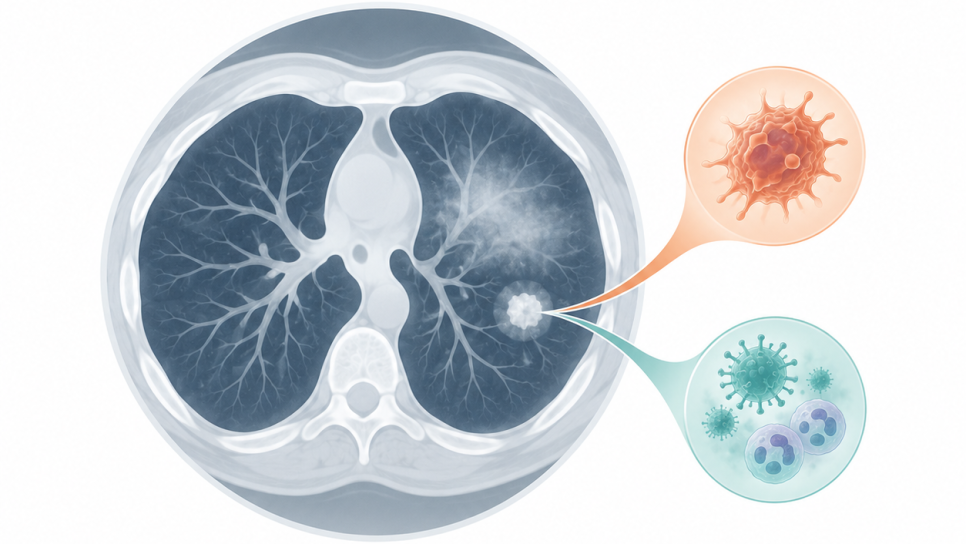
What the Robot Still Can't Do: AI Found the Diagnosis, the Doctor Healed the Patient. A Story from NEJM
In this article
AI Suggested the Diagnosis, but the Physician Healed the Patient: A Story from NEJM
In a Perspective article titled "What the Robot Still Can't Do", published in the New England Journal of Medicine on November 14, 2026, the American family physician Shantanu Nundy describes a patient who had lived with unexplained abdominal pain for ten years. Every test had come back normal, treatments had not worked, and the physician was at a loss. When he typed the patient's history into an AI chatbot, the tool suggested within seconds a diagnosis he had never made in 15 years of practice: functional dyspepsia. Three weeks after treatment began, the patient was clearly better. But the real message of the article is not the success of the AI; it is that AI alone would not have been enough for the patient to get better. In this post I tell the story, the scientific evidence behind it, and what medicine means in the age of AI, from my own point of view. I have covered the topic before in my posts on clinical expertise in the age of AI, how AI did not surpass the doctor and the effect of patient trust on treatment (all in Turkish).
- What is described? In a patient with ten years of unexplained abdominal pain, AI suggested a diagnosis of functional dyspepsia and treatment with amitriptyline; the physician combined that suggestion with his own assessment, started treatment, and the patient improved markedly within three weeks.
- The core message: AI "played the chess": it scanned the data and found the most likely diagnosis. The physician read the patient's face, judged how sick she was, shared the uncertainty honestly, and earned her trust.
- What does the evidence say? On prepared case texts, AI models can score higher than physicians; but real users reach the correct diagnosis far less often with the same models. Gathering and interpreting the right information still takes human skill.
- In practice: AI should be used as a powerful advisor alongside the physician, not in place of one; its output must be verified, and responsibility for the decision stays with the physician.
Why Does This Matter?
AI chatbots are now in the pockets of both patients and physicians. My patients ask them about lab results and symptoms, and many colleagues consult them on difficult cases (AI-assisted answers to patient questions, chatbots answering cancer questions; both in Turkish). The medical knowledge of these tools is genuinely impressive. That is why the question "Do we still need doctors?" is on everyone's mind, from medical students to patients (AI or doctors in 10 years?, in Turkish).
Nundy's article answers this question not in theory but through one concrete patient. The author is also no skeptic of AI: he studied engineering before medicine, took AI courses, and works as a family physician both at a community health center and at a health company. That is why the balance of the piece is valuable: it does not underestimate the power of AI, but it does not forget the essence of medicine either.
The Story: Ten Years of Pain
The patient is an Ethiopian woman in her mid-30s and a mother of two. For about ten years she has had a constant discomfort in her abdomen, interrupted from time to time by attacks of stomach pain, nausea, vomiting and diarrhea. At her first visit, the abdominal exam is normal. The physician repeats the Helicobacter pylori test, and the result is negative (the story of Helicobacter pylori, in Turkish). An endoscopy a year earlier was normal. A month of stomach-protecting medication did nothing.
When she returns, the physician is able to listen to her history more calmly this time and, through a video-linked Amharic interpreter, learns a new detail: her attacks begin when her baby son gets hurt, falls, or cries. The physician notices the pain that crosses her face as she describes the latest attack. But he has no other clue and does not know how to help her.
So he briefly types the patient's history into an AI app he has just downloaded to his phone, the way he would consult a colleague. The answer arrives in seconds: the most likely diagnosis is functional dyspepsia. The model lists other possibilities such as gallstones, chronic pancreatitis and pancreatic cancer, but says they do not fit the picture well and would require expensive, possibly unnecessary tests for an uninsured patient. The physician remembers this diagnosis from medical school but had never made it in 15 years of practice.
Figure 1 · Course of the Case
From Pain to Recovery
What Is Functional Dyspepsia?
Functional dyspepsia means stomach pain, burning, early fullness or fullness after meals that persists even though endoscopy and other tests find no structural cause. It is a condition in which communication between the gut and the brain is disturbed and the pain threshold is lowered. Stress can trigger the symptoms; in treatment, some antidepressants are used at low doses.
Functional dyspepsia is a common problem, affecting about 7% of adults worldwide and 10–12% in the US. Under the international Rome IV criteria, it is defined by stomach pain or burning, bothersome fullness after meals, or early satiety, present for at least six months and active in the last three, with no disease on endoscopy to explain them. Today the condition is classified as a "disorder of gut–brain interaction": the nerve communication between the stomach and the brain changes, and sensitivity to signals from the internal organs increases. So it is no coincidence that the patient's pain flares each time her son is hurt; it is an important part of the picture (stress and the body, in Turkish).
In treatment, the patient is first told that the condition is real but not dangerous. If Helicobacter pylori is present, it is treated, and drugs that reduce stomach acid are tried. If there is no response, low-dose tricyclic antidepressants (for example amitriptyline) can be used. Here these drugs are given not to treat depression but to dampen the pain signals traveling from the gut to the brain. In a randomized trial, amitriptyline gave adequate relief to more patients than placebo, particularly in pain-predominant functional dyspepsia. Psychological therapies and hypnotherapy are also options.
I must add a warning here: functional dyspepsia is a diagnosis of exclusion. If there are alarm features such as weight loss, difficulty swallowing, bleeding, iron-deficiency anemia, persistent vomiting, a palpable mass, or new symptoms at an older age, serious diseases must be investigated first. In countries where stomach cancer and Helicobacter pylori infection are common, this warning matters even more (stomach cancer symptoms, intestinal metaplasia; both in Turkish). In Nundy's patient the endoscopy was normal and the picture had been unchanged for ten years; that is why the diagnosis was reasonable.
Chess and the Beard: What Did the AI Do, What Did the Physician Do?
In his article, Nundy recounts a story he remembers from his AI classes. In the 1950s and 60s, AI's pioneers debated "what is intelligence?" and could not agree on a definition; but they knew what it looked like: a man sitting on a park bench, playing chess and stroking his beard. Years later his professor said that getting a computer to play chess had been the easy part, and that they still had not managed to get a robot to stroke its beard.
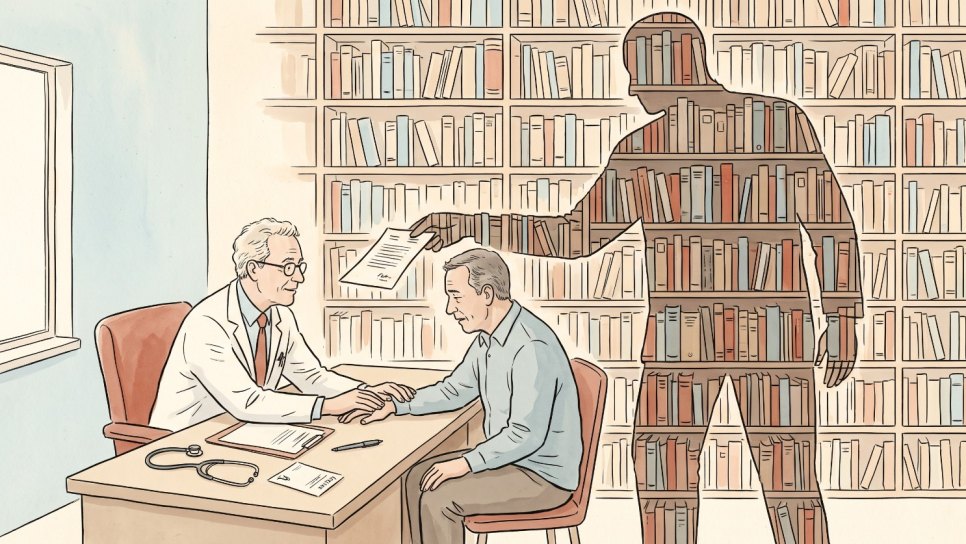
According to Nundy, in this case the AI played chess: it put together ten years of symptoms, the negative tests, the failed medication and the child-related trigger, and found the most likely move, functional dyspepsia. But the one stroking his beard, that is, thinking, weighing and deciding, was the physician. He was the one who saw what crossed the patient's face as she spoke of her son, who weighed the limits of communicating through an interpreter, who decided whether she was seriously ill, who honestly said the treatment might not work, and whom she trusted enough to come back. The author describes these as the "human essence" of medicine and stresses that none of them appears in any AI output window (doctor–patient communication, in Turkish).
Figure 2 · Division of Labor: Chess and Beard
The Roles of AI and the Physician
When the patient came back three weeks later, she felt better for the first time after ten years of pain: it had not gone away completely, but she could return to daily life. At the end of the visit, through the interpreter, she said to her physician what may be the most moving moment of the article: "You are my brother. God sent you." Nundy admits he owes this moment to AI; but he also believes that AI alone would not have been enough.
What Does the Scientific Evidence Say?
The story is an anecdote, but studies in recent years paint a similar picture. In a randomized study published in JAMA Network Open in 2024, 50 physicians tried to make diagnoses on prepared case texts, using either AI or conventional resources. The scores of physicians using AI did not rise significantly; interestingly, the model's score alone was higher than both physician groups. At first glance this might be read as "doctors aren't needed"; but the study used case texts in which the information had already been gathered and organized.
AI and Physicians: Diagnostic Reasoning
Randomized study with 50 physicians; median diagnostic reasoning score, %.
Using AI did not significantly raise physicians' scores; the model alone scored higher. But this study used prepared case texts; gathering information, examining, and managing treatment in a real patient were not measured.
In real life, the hard part is gathering the right information. In an Oxford study published in Nature Medicine in 2026, models found the correct condition in 95% of prepared cases, while ordinary people using the same models reached the correct condition at most 34.5% of the time. People gave the model incomplete or wrong information and misinterpreted its answers. In Nundy's case too, the information given to the model was what the physician had gathered at the visit, with an interpreter and by watching the patient's face. Without the detail "her pain begins when her child gets hurt," the model would most likely not have reached the same diagnosis so easily (why AI did not replace the physician, in Turkish).
Real Users and AI
1,298 people in the UK, 10 medical scenarios; rate of identifying the correct condition, %.
While the models did very well on prepared case texts, people using the same models reached the correct condition much less often. The problem is usually not knowledge but gathering and interpreting the right information. Nature Medicine, 2026.
The Risks of AI
Nundy writes that in the days after his decision he himself was surprised at how bold he had been, and even a little uneasy: he had made a diagnosis he had never made before, largely on the basis of a chatbot's output, and started treatment. This honest admission matters. AI tools give fluent, confident answers, but they can sometimes make up information, miss alarm features, and carry biases from their training data. That is why it is essential to verify the output against a reliable source, to protect the patient's personal information, and to keep responsibility for the decision with the physician. Nundy too verified the diagnosis in an online medical resource before deciding on the basis of his own clinical assessment.
Figure 3 · Using AI Safely in the Clinic
Six Rules for Physicians
What Does This Mean for Patients and Medical Education?
My advice to patients is this: there is nothing wrong with asking AI a health question; but share the answer with your physician, and do not diagnose yourself or start medication on your own. AI can help you ask your doctor questions that would not have occurred to you; but it cannot examine you, see the expression on your face, or decide whether you are seriously ill (cancer information with AI, getting a second opinion (Türkçe); both in Turkish).
There is also an important lesson for medical education: as AI makes access to knowledge easier, we need to put more weight, in training physicians, on listening, observation, communication, coping with uncertainty and building trust (medical education in the age of AI, the Pandora's box of medical education; both in Turkish). If applications such as tools that summarize visit notes give physicians more time for their patients, AI may strengthen the human side of medicine instead of weakening it (AI tools that summarize patient visits, in Turkish).
Questions You Can Ask Your Physician
- Does this information I got from AI fit my situation?
- Has a serious disease been ruled out for my symptoms; which signs should make me come back?
- What are the benefits and risks of the proposed treatment; how soon might I see an effect?
- Could stress and my emotional state be affecting my symptoms?
- May I share with you the questions I prepared with AI?
- "AI diagnoses better than doctors, so we no longer need doctors." It can score high on prepared case texts; but gathering the right information, examining, and making decisions in a real patient still requires a physician.
- "If the tests are normal, the pain isn't real." Wrong. Disorders of gut–brain interaction such as functional dyspepsia are real and treatable conditions.
- "If I was given an antidepressant, my doctor thinks I'm mentally ill." No. Low-dose amitriptyline is used here to dampen pain signals.
- "I can start the medication myself based on the diagnosis AI suggested." Never. The decision on diagnosis and treatment should be made together with a physician, after alarm features are ruled out.
- "A physician who uses AI is inadequate." No. Used properly, AI is a powerful advisor that extends a physician's knowledge; what matters is evaluating its output critically.
Frequently Asked Questions
- Can AI replace the doctor?
- Based on today's evidence, no. AI can quickly scan medical knowledge and rank possible diagnoses; but examining the patient, judging how sick she is, sharing uncertainty and building trust are the physician's work. The best result comes from using the two together.
- What is functional dyspepsia?
- Stomach pain, burning, early fullness or fullness after meals that persists even though tests find no structural cause. It is linked to disturbed communication between the gut and the brain; stress can trigger the symptoms.
- How is functional dyspepsia treated?
- Treatment starts with explaining the condition, treating Helicobacter pylori if present, and acid-reducing drugs. If there is no response, low-dose tricyclic antidepressants, psychological therapies or hypnotherapy can be used. If alarm features are present, serious diseases are investigated first.
- Should I ask AI my health questions?
- It can be useful for getting information and preparing questions for your physician. But you should share the answer with your physician, protect your personal information, and not diagnose yourself or start medication on your own based on AI's suggestion.
Glossary
- Large language model
- An AI model trained on very large amounts of text that can answer questions; the basis of chatbots.
- Functional dyspepsia
- Stomach pain, burning or fullness that persists without a structural cause.
- Disorder of gut–brain interaction
- Conditions in which communication between the gut and the brain changes and sensitivity of the internal organs increases.
- Rome IV criteria
- The international diagnostic criteria for functional gastrointestinal disorders.
- Endoscopy
- Looking at the esophagus, stomach and duodenum with a camera passed through the mouth.
- Helicobacter pylori
- A bacterium living in the stomach, linked to ulcers and the risk of stomach cancer.
- Tricyclic antidepressant
- A group of drugs also used at low doses to dampen pain signals; amitriptyline is one of them.
- Alarm feature
- A sign such as weight loss, bleeding or difficulty swallowing that suggests a serious disease.
- Clinical judgment
- A physician's ability to decide based on knowledge, experience and observation of the patient.
- Perspective article
- A type of article in medical journals that conveys opinion and experience rather than research results.
DROZDOGAN Academy Commentary
Nundy's article moves the AI debate out of the "machine or doctor?" dilemma and puts it in the right place: machine and physician are good at different things. The machine at knowledge, the physician at the human being.
⚡ Why It Matters
AI is quickly entering physicians' daily practice. This article honestly shows how useful these tools can be in a real patient, while reminding us that getting better is not only about the diagnosis.
✅ Strengths
A concrete and familiar case; an author at home in both technology and medicine; an honest account that openly shares his own unease; and it helps us grasp the gap between prepared-case studies and real life.
⚠️ Limits
One patient's story: an experience, not scientific evidence. In functional dyspepsia, placebo effect and spontaneous improvement are common; it is impossible to know how much of the improvement was due to the drug and how much to the physician–patient relationship. Cases where AI misled or gave incomplete guidance do not show up in pieces like this.
🩺 In Practice
I too use AI tools in difficult cases the way I would consult a colleague; I always verify the output against reliable sources and compare it with my own examination and experience. I gladly discuss the questions my patients prepare with AI. But I believe that for the success of treatment, the patient trusting me and coming back, and our being able to carry the uncertainty together, matter at least as much as the right diagnosis (the art of breaking bad news, communication in serious illness; both in Turkish).
❓ Open Questions
Do AI-assisted decisions improve outcomes in real patients? If physicians come to rely too much on AI, will their clinical skills weaken? Can barriers such as interpreters, cultural differences and health literacy be overcome with AI? Who will be responsible when guidance is wrong?
Bottom line: AI is getting better and better at chess, and we should benefit from it. But reading the patient's face, sharing uncertainty and building trust remain the physician's job. What the article reminded me is simple: a machine can suggest the diagnosis; it is the physician who accompanies the patient who heals her (principles of quality care, in Turkish).
- This article was prepared in November 2026.
- The case details are summarized from the Perspective article published in the New England Journal of Medicine on November 14, 2026; the author states that he changed some details to protect the patient's identity. Only a short quotation is taken from the article; the rest is summarized.
- Information on functional dyspepsia and the AI studies is based on the sources below. The AI studies were conducted with prepared cases or scenarios and do not measure real clinical outcomes.
- The diagrams are simplified. The Academy commentary is my own. This article is not medical advice; make your health decisions together with your physician.
Sources
- Nundy S. What the Robot Still Can't Do. N Engl J Med 2026;395:1977-1979. nejm.org
- Goh E, Gallo R, Hom J, et al. Large Language Model Influence on Diagnostic Reasoning: A Randomized Clinical Trial. JAMA Netw Open 2024;7:e2440969. doi
- Bean AM, Payne R, Mahdi A, et al. Reliability of LLMs as medical assistants for the general public: a randomized preregistered study. Nature Medicine 2026. scimex.org
- Talley NJ, Locke GR, Saito YA, et al. Effect of Amitriptyline and Escitalopram on Functional Dyspepsia: A Multicenter, Randomized Controlled Study. Gastroenterology 2015;149:340-349. niddk.nih.gov
- Stanghellini V, Chan FK, Hasler WL, et al. Gastroduodenal Disorders (Rome IV). Gastroenterology 2016;150:1380-1392. doi
- Sperber AD, Bangdiwala SI, Drossman DA, et al. Worldwide Prevalence and Burden of Functional Gastrointestinal Disorders: Rome Foundation Global Study. Gastroenterology 2021;160:99-114. doi
Was this article helpful?
Your feedback helps us improve our content.