
6 Ways to Turn Homes into Mini-Hospitals

In this article
In 2015, cardiologist Dr. Eric Topol, internationally recognized in medical informatics, wrote, “the hospital room of the future will be the bedroom” and envisioned a world in which monitoring vital signs and other physiological measurements would move from hospitals to homes for everyone except people with severe illnesses.
Five years later, this prediction is much more realistic—because, of course, of the novel-coronavirus-related COVID-19 pandemic!..
In the face of COVID-19, many health professionals turned, in order to minimize the risk of carrying the virus and reduce the burden on limited hospital resources, to telehealth (remote patient monitoring) and continued caring for vulnerable patients through virtual visits. With virtual consultations projected to grow by up to 64% in the United States alone this year, there is new and significant momentum to implement digital health solutions on a broad scale.
Sooner or later, the COVID-19 threat will pass. But we will need to rethink where and how health care is delivered.
What the pandemic has brought to the forefront is how to position our homes to play a central role in the future health system. Instead of patients going to the doctor, can we bring health care to patients’ doorsteps?
Bringing health care to the patient instead of going to the doctor
This is a change many people would welcome. Interest in remote and virtual health care is increasing in the wake of COVID-19, highlighting the need for greater access and convenience of treatment. With banking, retail and other industries already offering 7/24 digital access for years, health care will have to follow the most suitable conditions to meet today’s consumer expectations.
There is also an urgent economic need for change. As demand for health care continues to rise worldwide, today’s hospital-centered model of care is financially unsustainable. Keeping health care affordable will require moving it, where possible, to lower-cost settings such as the home.
But this does not simply mean keeping care outside the hospital. It is about accepting that our health is largely shaped by what happens before and after doctor or hospital visits. Remote digital health technology develops a more holistic, longitudinal and ultimately effective approach to addressing health and health problems.
I see 6 areas where this vision is already coming to fruition. Let us examine each in more detail.

1. Remotely screening and supporting patients before they come to the hospital
During the COVID-19 crisis, we have seen how preventing nonessential visits to family doctors and hospitals and remotely monitoring suspected coronavirus patients can help reduce the health care burden while preserving critical care capacity.
Here is how it works: patients first complete online questions at home. Based on the results, a health worker can classify patients by risk and take appropriate measures. If necessary, patients can be monitored automatically after the questionnaire. High-risk patients are put in touch with call centers for additional information before being referred to general practitioners who can provide the necessary care, or they are referred to hospitals.
Developed through collaboration among Dutch health professionals, this remote-monitoring solution was used by hospitals, with care organized at home to keep staff and patients safe. As a next step, patients could receive wearable health-monitoring devices to remotely monitor possible deterioration.
Similarly, forward-looking hospitals are exploring other types of remote patient engagement before medical interventions, contacting patients at home to prepare them for a medical procedure. For example, before planned surgery, preoperative health coaching can help get a patient into optimal condition to shorten the hospital stay and avoid readmission.
2. Looking after patients following hospital discharge
Remotely monitoring patients’ health at home after treatment in a hospital can be equally valuable. Contact with discharged patients is often lost following hospital supervision—a situation estimated to cost the United States alone annually 17 billion dollars.
We will increasingly see remote patient monitoring used, for example through wearable sensors that track patients after discharge. Already used today in low-acuity hospital settings, these sensors can collect and transmit critical data such as heart rate, respiratory rate, body temperature and body posture.
People will also be able to provide regular feedback about their health and quality of life by talking to a chatbot or completing online questionnaires, without leaving home. We have previously written about the use in cancer patients of electronic patient-reported outcomes and their contributions to life span and quality of life. In the wake of COVID-19, this is also proving useful for monitoring discharged coronavirus patients.
Combining various health measures with patient-reported outcomes enables health professionals to detect early signs of deterioration and call patients back to the hospital to monitor treatment when needed.

3. Empowering patients with chronic conditions to manage their illnesses
Another group that will benefit from medical technology at home is people with chronic conditions. Approximately 1 in 3 people worldwide suffers from various chronic conditions such as diabetes, hypertension, heart failure or COPD. These diseases not only seriously harm the quality of life of those affected but also place a heavy burden on our health systems. In the United States, chronic conditions are estimated to account for an astonishing 75% of total health care spending.
By monitoring health data and turning them into electronic health records, home-based medical technologies can help reduce costs and improve quality of life. This can enable care professionals to support patients in a more targeted way while encouraging patients to take an active role in managing their illnesses. For example, Eric Topol, working in collaboration with Philips, developed a cloud-based platform that remotely monitors patients with chronic sleep apnea and prioritizes the need for a treatment change or intervention.
Connected home devices and home treatment-management plans also address one of the most common problems undermining the effectiveness of chronic care: lack of treatment adherence.
According to the WHO, 50% of patients with chronic conditions do not adequately follow treatment recommendations. Smart medication dispensers may be part of the solution. A companion application supplied with these devices informs families and caregivers and allows them to contact patients when they have not taken their medication, supporting adherence to the treatment plan.
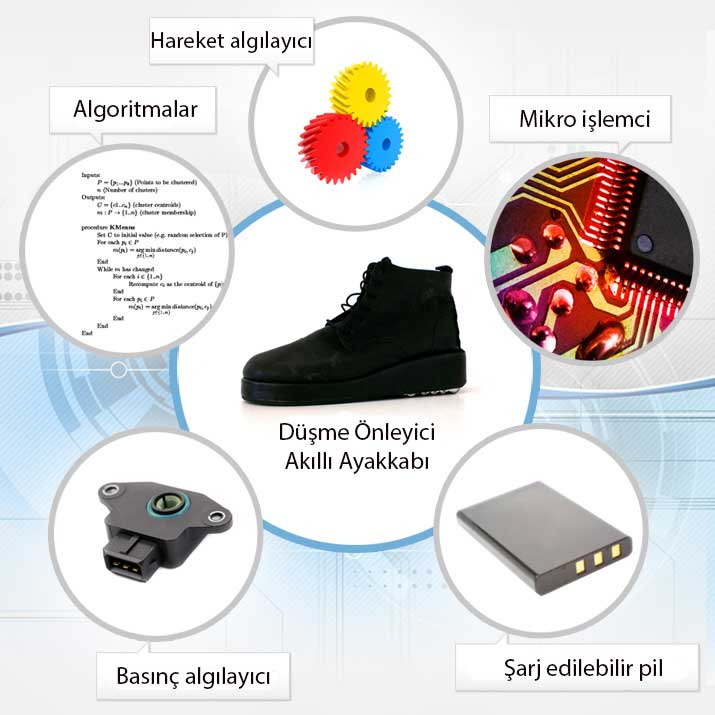
4. Enabling older people to live independently
Elderly care at home is developing rapidly thanks to remote technology. Falls are a leading cause of fatal and nonfatal injuries in people over 65. In the United States, every 11 seconds an older adult dies from the consequences of a fall. What if we could identify people at risk of falling before they actually suffer an injury?
Predictive analytics using data collected through connected health technology help care professionals do this. Data from multiple sources—including hospital-based electronic medical records, historical use of medical alert services and automated alerts indicating previous falls—can be combined to identify older people at risk of emergency transportation within the next 30 days. This allows health professionals to reach out to an older person before a fall, prevent unnecessary hospital treatment and reduce the cost of transportation, acute care and rehabilitation.
In the future, these services could eventually be complemented by other types of monitoring embedded in the home. Researchers are exploring the possibility of motion sensors or video monitoring in different locations in a smart home designed specifically to support independent living for frail older people.

5. Providing prenatal care remotely to pregnant people
Pregnant women with particular health needs or risks are another group that could benefit from remote monitoring by health care professionals.
For example, solutions developed through the partnership between Philips and Babyscripts allow maternity units and hospitals to remotely monitor pregnant women’s blood pressure, weight and other vital signs. By notifying pregnant women and health professionals of changes in the woman’s health, they can manage pregnancy-related risks between regular prenatal visits. Ultrasound, currently performed by specialist doctors, could be the next step in entering our homes.
COVID-19 also highlights the value of remote prenatal care. It is estimated that as many as half a million women infected with COVID-19 could give birth in 2020. In fact, 15% of women who gave birth in New York State between March 22 and April 4 carried COVID-19. Furthermore, pregnant women without a COVID-19 diagnosis are interested in ways to minimize time spent in hospital to limit their exposure to the disease.
To meet these needs, the introduction of a wireless, disposable electrode that can be placed on the mother’s abdomen was recently announced. This electrode enables continuous, noninvasive monitoring of the mother’s heart rate, the baby’s heart rate and uterine muscle activity for up to 48 hours. Placement is needed only once rather than every hour, limiting the necessary amount of physical contact between patient and nurse and helping them stay connected remotely.

6. Improving the convenience of and access to health care for everyone
Although smart connected technology supports groups with special medical needs, the ultimate goal should be to support everyone’s health and well-being.
Technology that monitors health and lifestyle data such as weight, blood pressure or oral hygiene could move further into our homes, for example through smart mirrors in bedrooms. Professional support is at people’s fingertips as virtual-consultation services enter digital health applications that can be accessed conveniently at home.
In oral care, for example, people can consult dentists remotely by sharing photos of their teeth taken with their smartphones, opening the door to remote screening, diagnosis, consultation, treatment planning and monitoring disease progression. This is particularly promising for people living in rural areas where the nearest dentist is kilometers away.
COVID-19, with many dentists in the United States switching to remote consultations to stay in touch with patients, has greatly accelerated adoption of teledentistry. Importantly, dental care professionals can now submit claims and receive reimbursement for patients consulting through live video or by telephone. This could prove to be a major turning point for teledentistry, and it is easy to see how the pandemic has also given a boost to other forms of remote health consultation.
Staying connected when it matters
Ultimately, in the future, the home as a personal health center will combine audio-video interfaces and artificial intelligence with IoT (internet of things) devices and sensors integrated seamlessly and unobtrusively to support people’s health and well-being.
It will help connect the dots in people’s health journeys by supporting value-based care focused on long-term health outcomes rather than episodes of acute care.
At many points along this journey, the traditional patient-physician relationship will remain necessary; we will continue visiting medical practices and hospitals. But at the end of the day, when we retreat into our small personal world, professional telehealth providers who protect and support us when needed, even in the comfort of our homes, will never be far away.
*
Sources
Six ways healthcare will move into our homes.
https://www.philips.com - 23 June 2020
Was this article helpful?
Your feedback helps us improve our content.




Reader comments
Share your comment
Your name and comment are published only after administrator approval. Your email address is never shown to visitors.
Be the first to comment.