
ESMO 2023: Important Studies That Could Change Ovarian, Cervical, and Uterine Cancer Treatment

In this article
The ESMO 2023 Congress featured important clinical findings for gynecological cancers from phase-3 trials that could change treatment immediately or in the near future.
INTERLACE results suggest that chemoradiotherapy (CRT) should be preceded by induction chemotherapy as a new standard approach for patients with locally advanced cervical cancer. This approach involves administering induction chemotherapy before proceeding to CRT.
Note: Induction chemotherapy is an intensive regimen used at the beginning of cancer treatment, usually to reduce disease burden and improve response to the main treatment, such as surgery, radiotherapy, or chemoradiotherapy.
KEYNOTE-A18 results suggest an alternative first-line standard for cervical cancer: pembrolizumab immunotherapy combined with CRT.
innovaTV 301 results suggest a new standard for recurrent or metastatic cervical cancer: tisotumab vedotin, which previously received accelerated FDA approval.
FLAMES showed an “unprecedented” improvement with senaparib maintenance in patients with advanced ovarian cancer responding to first-line chemotherapy, measured by progression-free survival (PFS).
Note: PFS (progression-free survival), described as disease-free or progression-free survival, is the time during treatment when disease does not progress or remains controlled. During this period, it does not grow, spread, or worsen.
AtTEnd found that adding atezolizumab to chemotherapy improved PFS in newly diagnosed or recurrent advanced endometrial (uterine) cancer.
DUO-E found that adding durvalumab to chemotherapy, followed by maintenance durvalumab alone or with olaparib, improved PFS in advanced or recurrent endometrial cancer.
Let us examine the studies individually:
INTERLACE: Induction Chemotherapy Plus CRT in Locally Advanced Cervical Cancer
The phase 3 INTERLACE trial enrolled 500 patients with newly diagnosed locally advanced cervical cancer that could not be surgically removed. They were randomly assigned to induction chemotherapy (6 weeks of carboplatin and paclitaxel) plus standard CRT (250 patients) or standard CRT alone (250 patients). Median follow-up was 64 months.
- Induction chemotherapy significantly reduced progression risk by 35% (hazard ratio [HR], 0.65; 95% confidence interval [CI], 0.46-0.91; P =0.013).
- Five-year PFS (the rate of keeping disease controlled with treatment) was 73% in the induction arm and 64% with CRT alone.
- Overall survival also improved significantly in the induction arm, with a 39% reduction in mortality risk (HR, 0.61; 95% CI, 0.40-0.91; P =0.04).
- Five-year overall survival was 80% in the induction arm and 72% with CRT alone.

This was the first randomized phase 3 trial in over 20 years to demonstrate a survival benefit in locally advanced cervical cancer.
Serious (grade 3-4) side effects occurred in 59% of the induction arm and 48% with CRT alone.
These findings suggest that induction chemotherapy before CRT should be considered a new standard for locally advanced cervical cancer.
KEYNOTE-A18: Pembrolizumab Plus CRT in Locally Advanced Cervical Cancer
The phase 3 KEYNOTE-A18 trial included 1060 previously untreated patients with high-risk, locally advanced cervical cancer. They were randomly assigned to pembrolizumab and CRT (529 patients) or placebo and CRT (531 patients). Median follow-up was 17.9 months.
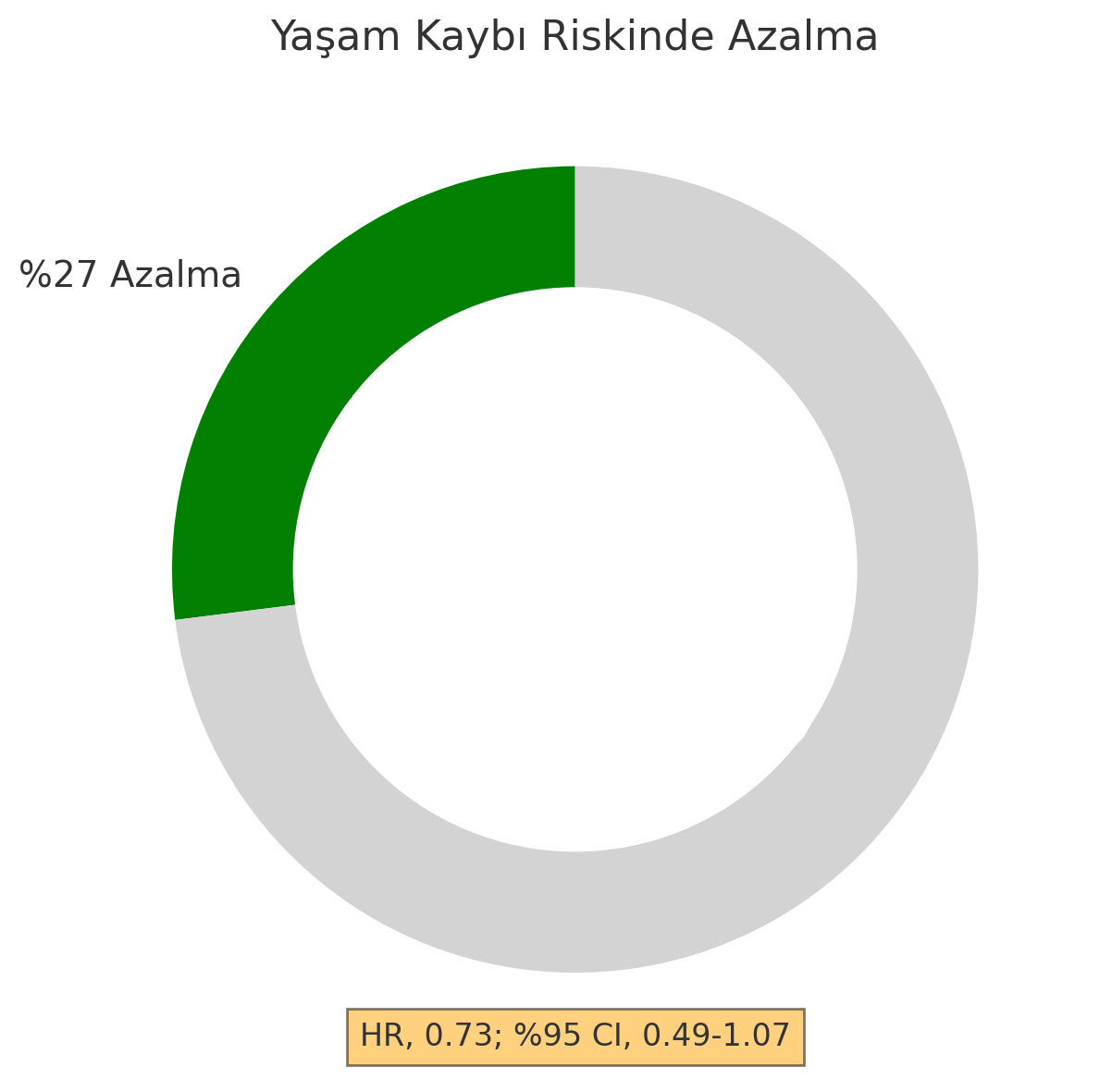
- Median PFS was not reached with either treatment, but pembrolizumab improved PFS by 30% (HR, 0.70; 95% CI, 0.55-0.89; P =0.0020). Overall survival also trended toward improvement, with a 27% reduction in mortality risk (HR, 0.73; 95% CI, 0.49-1.07).
Grade 3 or higher treatment-related side effects occurred in 67% of the pembrolizumab arm and 60.6% of the placebo arm.
The data support pembrolizumab plus chemoradiotherapy as a potential new standard of care for newly diagnosed, previously untreated, high-risk locally advanced cervical cancer.
innovaTV 301: Tisotumab Vedotin in Recurrent, Metastatic Cervical Cancer
The phase 3 innovaTV 301 trial included patients who had received up to two prior treatment lines, with 502 patients with recurrent or metastatic cervical cancer enrolled.
Patients were randomly assigned to tisotumab vedotin (253 patients) or investigator-choice chemotherapy (249 patients), which included gemcitabine, irinotecan, pemetrexed, topotecan, or vinorelbine. Median follow-up was 10.8 months.
- Median PFS was 4.2 months with tisotumab vedotin and 2.9 months with chemotherapy (HR, 0.67; 95% CI, 0.54-0.82; P <0.0001).
- Median overall survival was 11.5 months with tisotumab vedotin and 9.5 months with chemotherapy (HR, 0.70; 95% CI, 0.54-0.89; P =0.0038).

Grade 3 or higher treatment-related side effects occurred in 29.2% of the tisotumab vedotin arm and 45.2% of the chemotherapy arm.
These data suggest tisotumab vedotin as a potential new standard of care after progression on first-line systemic treatment.
The findings could convert tisotumab vedotin's accelerated FDA approval, granted on 20 September 2021, to full approval.
FLAMES: Senaparib Maintenance in Advanced Ovarian Cancer
The phase 3 FLAMES trial enrolled patients with stage III/IV high-grade serous or endometrioid ovarian, fallopian tube, or primary peritoneal cancer responding to first-line platinum chemotherapy.
Patients were randomly assigned to senaparib (271 patients) or placebo (133 patients) maintenance. Median follow-up was 22.3 months.
- Median PFS was not reached with senaparib and was 13.6 months with placebo. Senaparib maintenance after platinum chemotherapy reduced progression risk by 57% (HR, 0.43; 95% CI 0.32-0.58, P <0.0001).

BRCA mutation status did not affect the PFS benefit patients received with senaparib.
Grade 3 or higher treatment-related side effects occurred in 66.3% of the senaparib arm and 20.3% of the placebo arm.
These results support maintenance senaparib in this patient group. The PFS improvement seen with senaparib can be described, among results with PARP inhibitors, as the best reported to date.
AtTEnd: Atezolizumab Plus Chemotherapy in Advanced Endometrial Cancer
The phase 3 AtTEnd trial included 549 patients with stage III-IV endometrial cancer. They could have newly diagnosed or recurrent disease, but must not have received prior treatment for recurrent cancer.
Patients were randomly assigned to atezolizumab (360 patients) or placebo (189 patients), both combined with paclitaxel and carboplatin every 21 days for 6 to 8 cycles. This was followed by atezolizumab or placebo maintenance until progression.
- Median PFS was 10.1 months with atezolizumab and 8.9 months with placebo (HR, 0.74; 95% CI, 0.61-0.91; P =0.0219).
- Although overall survival data were immature, median overall survival was 38.7 months with atezolizumab and 30.2 months with placebo (HR, 0.82; 95% CI, 0.63-1.07; P =0.0483).

The PFS improvement was driven particularly by the benefit of atezolizumab in patients with deficient DNA mismatch repair (dMMR).
In the dMMR cohort, median PFS was not reached with atezolizumab and was 6.9 months with placebo (HR, 0.36; 95% CI, 0.23-0.57; P =0.0005). Median overall survival in this subgroup was not reached with atezolizumab and was 25.7 months with placebo (HR, 0.41; 95% CI, 0.22-0.76).
Across all patients, grade 3 or higher side effects related to atezolizumab or placebo occurred in 25.8% of the atezolizumab arm and 14.1% of the placebo arm.
AtTEnd confirms strong activity of immune checkpoint inhibitors combined with chemotherapy in advanced or recurrent endometrial carcinoma, particularly with dMMR.
The results confirm that immunotherapy plus chemotherapy “really works” for dMMR endometrial cancer, highlighting the importance of testing tumor dMMR status in all patients with advanced uterine cancer.
DUO-E: Adding Durvalumab and Olaparib to Chemotherapy in Endometrial Cancer
The phase 3 DUO-E trial included 718 patients with recurrent or newly diagnosed stage III/IV endometrial cancer who had not received PARP inhibitors, immunotherapy, or systemic treatment for advanced disease.
Patients were randomly assigned to
- placebo plus chemotherapy followed by placebo maintenance (241 patients),
- durvalumab plus chemotherapy followed by durvalumab maintenance (238 patients), or
- durvalumab plus chemotherapy followed by maintenance durvalumab and olaparib (239 patients).
Results
- Median PFS was 9.6 months with placebo-chemotherapy, 10.2 months with durvalumab-chemotherapy (HR, 0.71; 95% CI, 0.57-0.89; P =0.003), and 15.1 months with durvalumab-olaparib-chemotherapy (HR, 0.55; 95% CI, 0.43-0.69; P <0.0001).
- Median overall survival was 25.9 months with placebo-chemotherapy and was not yet reached with durvalumab-chemotherapy (HR, 0.77; 95% CI, 0.56-1.07; P =0.120) or durvalumab-olaparib-chemotherapy (HR, 0.59; 95% CI, 0.42-0.83; P =0.003).

In an exploratory comparison, PFS was significantly longer with durvalumab-olaparib than with durvalumab (HR, 0.78; 95% CI, 0.61-0.99), with a trend toward better overall survival (HR, 0.77; 95% CI, 0.53-1.10).
Grade 3 or higher side effects occurred in 56.4% of the placebo-chemotherapy arm, 54.9% of the durvalumab-chemotherapy arm, and 67.2% of the durvalumab-olaparib-chemotherapy arm. There were 8 fatal side effects with placebo, 4 with durvalumab, and 5 with durvalumab-olaparib.
These data confirm the clinical benefit of integrating immunotherapy into first-line chemotherapy for advanced endometrial cancer and suggest additional benefit from adding a PARP inhibitor. They are the first comprehensive clinical trial results in this setting.
*
Image Descriptions: The main article image and trial-data charts were created using ChatGPT 4.0.
Sources
2. Lorusso D, Xiang Y, Hasegawa K, et al. Pembrolizumab plus chemoradiotherapy for high-risk locally advanced cervical cancer: A randomized, double-blind, phase III ENGOT-cx11/GOG-3047/KEYNOTE-A18 study. Presented at ESMO Congress 2023. Oct. 20-24, 2023. Madrid, Spain. Abstract LBA38.
3. Vergote IB, Gonzalez Martin A, Fujiwara K, et al. innovaTV 301/ENGOT-cx12/GOG-3057: A global, randomized, open-label, phase III study of tisotumab vedotin vs investigator’s choice of chemotherapy in 2L or 3L recurrent or metastatic cervical cancer. Presented at ESMO Congress 2023. Oct 20-24, 2023. Madrid, Spain. Abstract LBA9.
4. Wu X, Liu J, Wang X, et al. Efficacy and safety of senaparib as maintenance treatment in patients with newly diagnosed advanced ovarian cancer (FLAMES study): A randomized, double-blind, placebo-controlled, phase III trial. Presented at ESMO Congress 2023. Oct. 20-24, 2023. Madrid, Spain. Abstract LBA36.
5. Colombo N, Harano K, Hudson E, et al. Phase III double-blind randomized placebo controlled trial of atezolizumab in combination with carboplatin and paclitaxel in women with advanced/recurrent endometrial carcinoma. Presented at ESMO Congress 2023. Oct. 20-24, 2023. Madrid, Spain. Abstract LBA40.
6. Westin SN, Moore KN, Chon HS, et al. Durvalumab (durva) plus carboplatin/paclitaxel (CP) followed by maintenance (mtx) durva ± olaparib (ola) as a first-line (1L) treatment for newly diagnosed advanced or recurrent endometrial cancer (EC): Results from the phase III DUO-E/GOG-3041/ENGOT-EN10 trial. Presented at ESMO Congress 2023. Oct. 20-24, 2023. Madrid, Spain. Abstract LBA41.
7. Westin SN, Moore KN, Chon HS, et al. Durvalumab plus carboplatin/paclitaxel followed by maintenance durvalumab with or without olaparib as first-line treatment for advanced endometrial cancer: The phase III DUO-E trial. J Clin Oncol. Published online October 21, 2023. doi:10.1200/JCO.23.02132
Was this article helpful?
Your feedback helps us improve our content.


Reader comments
Share your comment
Your name and comment are published only after administrator approval. Your email address is never shown to visitors.
Be the first to comment.