
First-in-Class Bispecific Antibody Mosunetuzumab-axgb Receives FDA Approval for Follicular Lymphoma

In this article
For adults with follicular lymphoma relapsing or resistant after two or more systemic treatments, mosunetuzumab-axgb (Lunsumio) received accelerated FDA (US Food and Drug Administration) approval on 22 December 2022.
Follicular lymphoma, which arises from B cells, is a usually slow-growing, low-grade non-Hodgkin lymphoma. It is called follicular because abnormal B cells often grow in clusters called follicles within lymph nodes. It is the most common lymphoma type and generally occurs more frequently in middle-aged and older men. Treatment options include chemotherapy, radiotherapy and medicines such as immunotherapies.
What Is Mosunetuzumab and How Does It Work?
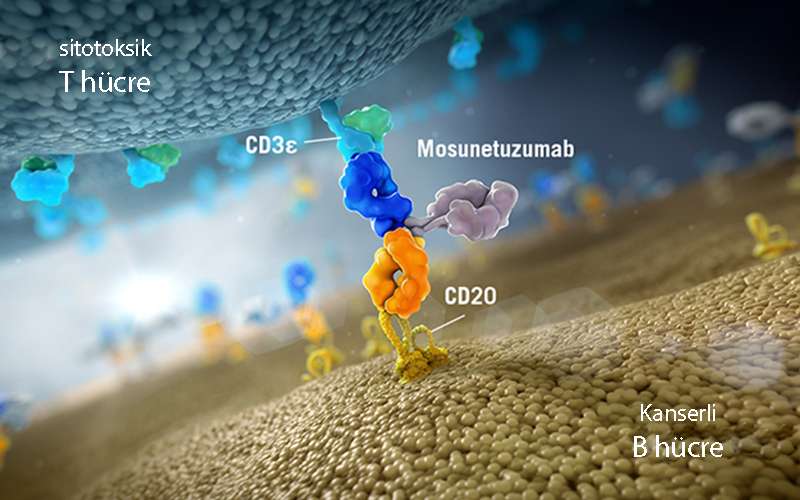
Mosunetuzumab binds CD20 on cancerous B-cell surfaces and CD3 on cytotoxic T cells, leading to cross-linking of the T-cell receptor and activation of an immunological T-cell response. In preclinical lymphoma models, it induced T-cell proliferation and B-cell death. Mosunetuzumab is an off-the-shelf product and does not require manufacturing time.

A First-in-Class Bispecific Antibody Immunotherapy
Mosunetuzumab-axgb is a bispecific antibody targeting CD20/CD3 T cells. It is first in its class and is a form of cancer immunotherapy. Continued approval for this use may depend on verification and description of clinical benefit in a confirmatory trial.
Lunsumio received accelerated approval based on response rates reported in the phase II GO29781 study. GO29781 is a multicentre, open-label, dose-escalation and dose-expansion study evaluating the safety, efficacy and pharmacokinetics of mosunetuzumab-axgb in people with relapsed or resistant B-cell non-Hodgkin lymphoma. Outcomes were independently assessed complete response rate (best response), the primary endpoint, and objective response rate, response duration and progression-free survival, the secondary endpoints.
Details of the GO29781 Study Leading to FDA Approval
The results showed high, sustained response rates.
- A targeted response occurred in 80% of patients treated with mosunetuzumab-axgb, and most of these patients (57%) maintained responses for at least 18 months.
- Median response duration among responders was 22.8 months.
- A complete response occurred in 60% of treated patients.
Among 218 lymphoma patients receiving mosunetuzumab-axgb at the recommended dose, the most common adverse effect was cytokine release syndrome, with an average duration of 3 days. Other common adverse effects (≥20%) were fatigue, itching, fever and headache.
Mosunetuzumab-axgb is given by intravenous infusion in a hospital setting. Hospital admission may be required to manage certain adverse effects.
Sources
Was this article helpful?
Your feedback helps us improve our content.




Reader comments
Share your comment
Your name and comment are published only after administrator approval. Your email address is never shown to visitors.
Be the first to comment.