
First-Line Bladder Cancer Treatment: Nivolumab, Cisplatin, and Gemcitabine Receive FDA Approval

In this article
Urothelial cancer arises from cells lining the inside of the urinary tract and is most often known as bladder cancer. According to Turkey's Cancer Statistics 2020, bladder cancer is the fourth most common cancer among men and the fourteenth among women. It accounts for approximately 7% of newly diagnosed cancers in men and 2% in women. Approximately one-third of bladder cancers are locally advanced or metastatic at diagnosis. This makes it necessary to develop new and effective approaches to treating the disease.
On 6 March 2024, the Food and Drug Administration (FDA) in the United States approved nivolumab (Opdivo, Bristol-Myers Squibb Company) combined with cisplatin and gemcitabine as first-line treatment for adults with unresectable or metastatic urothelial carcinoma.
FDA Approval Based on the CHECKMATE-901 Trial
In CHECKMATE-901, a phase 3, multinational, open-label trial, patients with previously untreated unresectable or metastatic urothelial cancer were randomly assigned to two groups.
The first group received nivolumab (360 mg) plus gemcitabine-cisplatin (the nivolumab combination) every 3 weeks for up to six cycles, followed by nivolumab (480 mg) every 4 weeks for a maximum of 2 years. The second group received gemcitabine-cisplatin alone every 3 weeks for up to six cycles. The primary endpoints were overall and progression-free survival.
Results
A total of 608 patients were randomized (304 in each group).
- At a median follow-up of 33.6 months, overall survival was longer with the nivolumab combination than with gemcitabine-cisplatin alone, with a 22% reduction in the risk of death (hazard ratio for death, 0.78; 95% confidence interval [CI], 0.63 to 0.96; P=0.02).
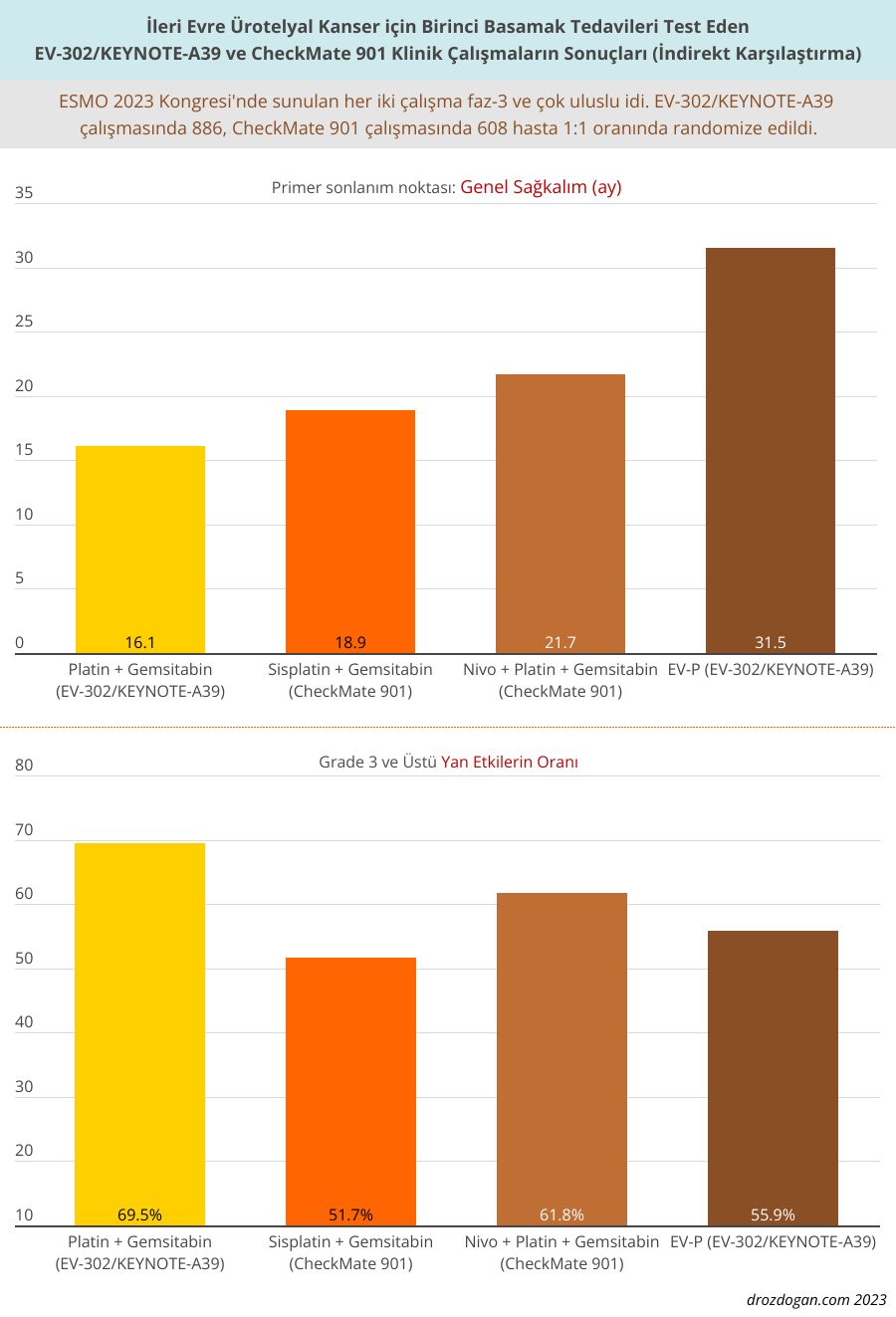
- Median survival was 21.7 months (95% CI, 18.6 to 26.4) and 18.9 months (95% CI, 14.7 to 22.4), respectively.
- Progression-free survival was also longer with the nivolumab combination than with gemcitabine-cisplatin alone (hazard ratio for progression or death, 0.72; 95% CI, 0.59 to 0.88; P=0.001).
- Median progression-free survival was 7.9 months and 7.6 months, respectively.
- At month 12, progression-free survival was 34.2% and 21.8%, respectively.
- The overall objective response rate was 57.6% (complete response, 21.7%) with the nivolumab combination and 43.1% (complete response, 11.8%) with gemcitabine-cisplatin alone.
- The median duration of complete response was 37.1 months with the nivolumab combination and 13.2 months with gemcitabine-cisplatin alone.
- Grade 3 or higher side effects occurred in 61.8% and 51.7% of patients, respectively.
The recommended nivolumab dose for this indication is 360 mg with cisplatin and gemcitabine every 3 weeks for up to six cycles, followed by nivolumab alone at 240 mg every 2 weeks or 480 mg every 4 weeks until disease progression, unacceptable toxicity, or a maximum of 2 years from the first dose.
Immunotherapy Is Now Standard in First-Line Treatment of Advanced Urothelial Cancer
For patients with locally advanced or metastatic urothelial cancer, the combination of enfortumab vedotin-ejfv (Padcev) and pembrolizumab (Keytruda) received FDA approval on 15 December 2023.
Enfortumab + pembrolizumab provided a chemotherapy-free treatment option. The new approval of nivolumab + cisplatin + gemcitabine offers an option that adds immunotherapy to chemotherapy. Immunotherapy has thus become standard in first-line treatment of advanced bladder cancer.
An indirect comparison of the clinical trial results underlying the new FDA approvals is shown below:
Conclusion
These recent FDA approvals are an important step in treating urothelial carcinoma and offer patients new hope. The combinations are important options that may extend patients' lives and delay disease progression.
Sources
Was this article helpful?
Your feedback helps us improve our content.




Reader comments
Share your comment
Your name and comment are published only after administrator approval. Your email address is never shown to visitors.
Be the first to comment.