
How Does Intermittent Fasting / the Fasting Diet Affect Metabolism?

In this article
Fasting generally refers to a prolonged period without food. Various forms of intermittent fasting differ in the duration of their fasting periods (see Table 1). Intermittent fasting regimens are claimed to benefit health and weight loss by regulating metabolism. These health benefits are assumed to result from effects on circadian biology, the gut microbiome and sleep quality and other modifiable lifestyle behaviors. Evidence also supports the idea that simply skipping or greatly reducing evening meals, thereby extending overnight fasting periods, could lead to sustained improvements in human health.
Although many intermittent fasting regimens have been tested in humans, most studies to date have involved rodents. Studies supporting intermittent fasting's effects on human health have generally included fewer than 50 participants and relatively short intervention periods. The statistical power of analyses of these findings is therefore limited.
This article provides an overview of intermittent fasting regimens, their health benefits, and the physiological mechanisms that may produce them.

Alternate-Day Fasting
This involves alternating fasting days without calorie consumption and feeding days when food and drink may be consumed freely (ad libitum). Studies of alternate-day fasting in rodents concluded that obesity was reduced and that the regimen was as effective as simple calorie restriction in reducing fasting insulin and glucose levels. In obese rodent models, alternate-day fasting has also been shown to reduce total plasma cholesterol and triglyceride (TG) levels, fatty liver and inflammation, with beneficial effects on cancer risk factors such as cell proliferation.
The limited data on alternate-day fasting suggest that it may produce modest weight loss and improvements in some metabolic parameters. However, reports of extreme hunger on fasting days make this approach difficult to follow.
Modified Fasting Regimens
Modified fasting regimens include eating days when total daily energy intake is limited to 20-25% of requirements (a 75% reduction) on planned fasting days. Here, fasting refers to periods of severely restricted energy intake rather than complete abstinence from food. This regimen is therefore also called “intermittent energy restriction” and involves energy restriction on 2 nonconsecutive days each week and eating without considering calories on the other 5 days. This pattern forms the basis of the 5:2 diet, a popular approach.
Trials of modified fasting regimens are limited in number. Studies show that these eating patterns produce weight loss, with modest and mixed effects on glucose, lipids and inflammatory markers. Participants generally showed less tension, anger and fatigue, alongside greater confidence and a more positive mood, indicating an overall improvement in mood according to the observations.
However, reviews and meta-analyses show that the overall metabolic benefits of intermittent energy restriction are not superior to continuous energy restriction. Restricting energy intake on 2 or more days a week will also adversely affect the health of older people and those with diabetes or other chronic illnesses.
Time-Restricted Feeding
Numerous fasting models with daily fasting intervals ranging from 12 to 21 hours have been tested in rodents. Time-restricted feeding has generally been observed to reduce insulin resistance, total cholesterol, triglycerides, glucose, insulin, interleukin 6 (IL-6) and TNF-a levels.
Interestingly, although positive health effects have been observed, the effects of intermittent fasting on weight loss have varied.
Time-restricted feeding and circadian rhythms are important for healthy metabolic functioning. Rodents fed a high-fat diet (YYD) ad libitum, without calorie or timing restrictions, eat during both day and night, disrupting their normal nighttime feeding cycle. Mice fed this way become obese and may develop type 2 diabetes following metabolic disruption. It is unclear whether the metabolic disorder associated with YYD results from the diet's composition, greater net calorie intake, disrupted circadian rhythms, or a combination of these factors. Interestingly, mice whose YYD feeding was restricted to 8 hours during their normal nighttime feeding period consumed equivalent energy yet were protected against obesity, hyperinsulinemia, fatty liver and inflammation compared with mice fed ad libitum. Time-restricted feeding was observed to be an effective intervention for diet-induced obesity and related metabolic dysfunction.
In the few human studies examining time-restricted feeding interventions that extend overnight fasting, eating one meal a day has also been associated with lower fasting glucose and improvements in LDL and HDL cholesterol.
Many people are interested in the long-term health effects of eating or skipping breakfast, thereby extending the overnight period until lunch. Focusing on skipping breakfast, equivalent to 13 hours of fasting, seems relatively easy compared with other fasting regimens.
One study in people with obesity assessed the effects of omitting breakfast. Participants were hungry at lunch on the day they skipped breakfast, and their plasma ghrelin, the hunger hormone, was higher than on the day they ate breakfast. Participants also consumed more calories at lunch on the breakfast-free day, and their postprandial glucose and insulin levels after lunch were observed to be higher than on the breakfast-free day.
Hormones regulating satiety and appetite were observed to be affected without prolonged fasting in the morning.
Religious Fasting
Published research on fasting regimens based on religious practices is almost entirely observational.
Ramadan Fasting: During Ramadan, healthy adult Muslims fast from sunrise to sunset. In addition to food, drinking fluids, smoking and taking medication are prohibited during fasting hours. Depending on geographic location, daily fasting may last from 11 to 22 hours. Islamic fasting during Ramadan does not require energy restriction, although changes in body weight may occur when food and fluid intake are restricted.
Ramadan is the most widespread form of time-restricted feeding and produces temporary weight loss, with mixed evidence of improvements in metabolic markers. However, Ramadan fasting is not biologically aligned with human circadian rhythms, so the desired weight loss should not be expected from it.
Other Religious Fasts: Members of the Church of Jesus Christ of Latter-day Saints who reported regular fasting (29%) were observed to have significantly lower weight, lower fasting glucose, less diabetes and less vascular occlusion. Seventh-day Adventists live approximately 7.3 years longer than other white adults. Most live in California's Blue Zone, and this increased life expectancy is thought to be mainly due to healthy lifestyle habits. They do not smoke, follow a plant-based diet and exercise regularly. Seventh-day Adventists generally eat the last of their two daily meals in the afternoon and do not eat in the evening, so their overnight fasting periods are long.
Most data on various forms of religious fasting are observational. These regimens, practiced for religious reasons, have been observed to produce temporary weight loss and inconsistent effects on other metabolic markers.
Epidemiological Studies
- Studies show that nighttime eating among shift workers is associated with increased risks of obesity, diabetes, cardiovascular disease and cancer, particularly breast cancer.
- Similarly, consuming most daily energy early in the day and little or no food in the evening and afterward has been associated with lower weight and improved health.
- Data from the National Health and Nutrition Examination Surveys showed that every 3-hour increase in overnight fasting significantly reduced rates of elevated HbA1c.
- Women who consumed less than 30% of their daily calories after 17: 00 were observed to have significantly lower CRP values.
- An important study followed overnight fasting periods in 2,337 breast cancer survivors. Over 7 years, women whose overnight fasting lasted <13 hours were shown to have a greater risk of breast cancer recurrence. The study also observed higher HbA1c and shorter sleep duration among people who snacked frequently and therefore had shorter fasting periods.
- Although findings from observational studies are limited, these data generally support the hypothesis that consuming energy earlier in the day and extending overnight fasting may reduce the risk of several common chronic diseases.
Possible Mechanisms Behind the Health Benefits of Fasting

Figure 1. The relationships between intermittent fasting and factors affecting health are shown above. This model assumes that circadian biology, the gut microbiome and modifiable lifestyle behaviors may influence how intermittent fasting regimens affect metabolic regulation. Positive effects on biological and physiological systems may create a favorable metabolic environment that delays the development of obesity, type-2 diabetes, cardiovascular disease and cancer.
Circadian Biology
Organisms have developed an internal circadian / biological clock to ensure that physiological activities occur at the most appropriate time. Circadian biology has evolved to restrict activities to either night or day.
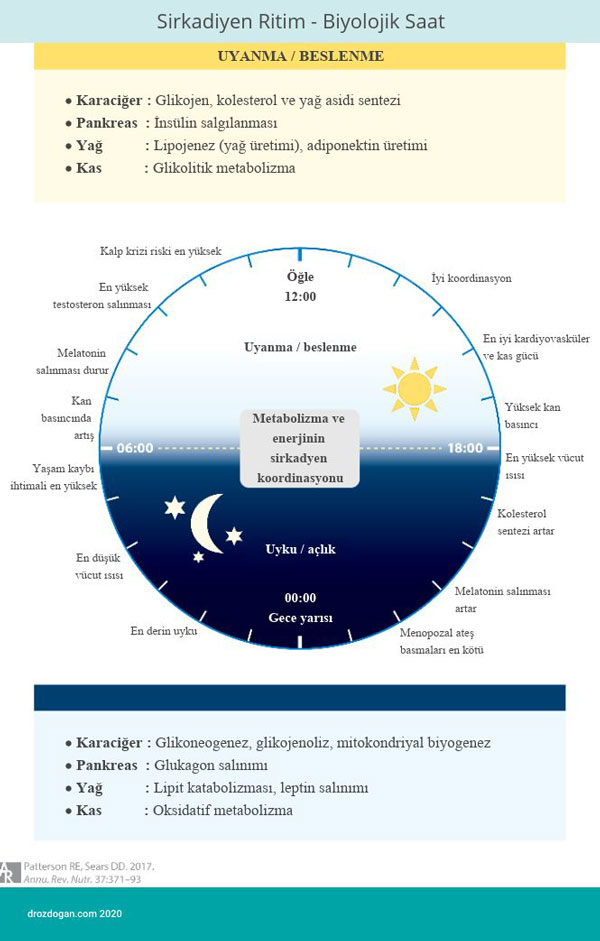
Figure 2. Circadian rhythms occur in 24-hour day-and-night, or light-dark, cycles and affect our cellular and psychological behavior. Lack of synchronization between the main clock in the brain's suprachiasmatic nucleus and peripheral clocks in cells of the liver, fat and skeletal muscle may increase chronic disease risk. However, evidence that circadian synchronizers influence signals of nutritional need and meal timing is based mainly on animal research. There is also evidence that shift work disrupts human circadian rhythms and, as noted above, is associated with increased cardiometabolic disease and cancer risks.
Circadian rhythms affect human metabolism throughout the day. Insulin sensitivity decreases throughout the day and night, partly because of the circadian rhythm of insulin secretion and the insulin-inhibiting effect of growth hormone, which rises at night. Post-meal insulin and glucose responses increase throughout the day and night. Meals eaten at night are therefore associated with greater postprandial glucose and insulin exposure even when their composition is identical to meals eaten during the day. Over time, this leads to increased HbA1c and a risk of type 2 diabetes.
Short-term interventions designed to disrupt circadian rhythms in human participants have metabolic consequences. For example, extending the day from a 24-hour to a 28-hour cycle increased insulin resistance after only 3 cycles. When no food or little energy was consumed in the evening, in regimens without overnight energy intake, circadian rhythms were observed to synchronize the timing of postprandial hormonal responses.
Gastrointestinal Microbiota: Gut Flora and Beneficial Bacteria
Many functions of the gastrointestinal tract interact strongly with sleep-wake, or circadian, rhythms. For example, gastric emptying and blood flow are greater during the day, while metabolic responses to glucose intake are faster in the morning. Prolonged changes affecting circadian rhythms should therefore be considered capable of affecting gastrointestinal function and disrupting metabolism and health.
The composition of the gut microbiome affects metabolic health. Gut microbiota are shaped by diet and have a circadian rhythm regulated by food signals. Intermittent fasting can directly affect the gut microbiota. A prolonged fasting period, or intestinal rest, reduces intestinal permeability and consequently reduces the increased postprandial endotoxemia and activation of systemic inflammation seen in people with obesity.
Recent reports indicate that an active brain-gut pathway during fasting supports energy balance by improving intestinal epithelial integrity.
Fasting regimens appear to benefit the gut microbiota. Future studies characterizing the effects of fasting on human microbiota and health will make important contributions to this field.
Modifiable Lifestyle Behaviors
Fasting regimens can affect modifiable health behaviors. A study in overweight young adults found that overnight fasting for more than 14 hours produced statistically significant reductions in energy intake and weight, alongside improvements in reported sleep satisfaction, fullness before bedtime and energy levels.
Energy Intake. Studies of alternate-day fasting and modified alternate-day fasting show reduced energy consumption after both forms of fasting. Alternate-day fasting studies showed that even 1 day of fasting or 75% calorie restriction reduced calorie intake by approximately 30% over the next 3 days.
Statistically significant weight loss was observed in 73% of intermittent fasting studies. Most fasting regimens reduce the total time available for eating and may thereby reduce overall energy intake and obesity risk. The timing of food intake relative to the 24-hour light-dark cycle significantly affects energy efficiency and ultimately weight control. Research in night-shift workers, who consume most of their daily calories at night and have a high risk of obesity, shows changes in appetite-regulating hormones such as leptin, ghrelin and xenin.
Energy Expenditure. Rodent studies show that time-restricted feeding regimens increase movement and improve circadian activity rhythms. Human data, however, suggest that intermittent fasting regimens do not produce a marked difference in physical activity.
Sleep. Studies directly examining intermittent fasting and sleep in adults are very limited. Regularly skipping breakfast, thereby extending overnight fasting, has been shown to have no effect on waking time, bedtime or sleep duration compared with controls. However, many observational studies suggest that nighttime eating may have adverse effects such as shorter sleep and poorer sleep quality. They also report that eating at night may lead mainly to insulin resistance and increased risks of obesity, diabetes, cardiovascular disease and cancer. In particular, eating late at night at an inappropriate circadian time is assumed to lead to circadian synchronization and subsequent disruption of normal sleep patterns.
Few studies directly examine the relationship between intermittent fasting and sleep in adults. Alongside reducing daily energy intake, prolonged overnight fasting may strengthen the combined potential effects on sleep, physical activity and circadian activity rhythms. A reduction in cardiometabolic disease and cancer risks may therefore be expected.
Conclusion
Extending fasting periods may have many positive effects on human health. Even prolonged fasting from evening to morning on just 1 day each week may reduce metabolic markers associated with chronic disease, such as insulin and glucose, to normal levels. This is why fasting for 8-12 hours before blood is drawn for tests is recommended. People without any health problems can follow intermittent fasting regimens.
Intermittent fasting can be described as a promising nonpharmacological, or nondrug, approach to weight loss and improved metabolic health. However, fasting may harm the health of older people, people taking medication, those with chronic disease and people who fast more than two days each week.
It is scientifically important and necessary to ask whether a regular intermittent fasting regimen is a feasible, sustainable strategy for promoting metabolic health at a population level. More controlled clinical trials are therefore needed to observe its long-term effects on metabolic improvements and body weight.
Sources
Was this article helpful?
Your feedback helps us improve our content.




Reader comments
Share your comment
Your name and comment are published only after administrator approval. Your email address is never shown to visitors.
Be the first to comment.