
Mustafa Behçet Efendi and the Birth Certificate of Modern Turkish Medicine

In this article
March 14, 1827 On a Wednesday morning in Istanbul's Şehzadebaşı district, an apparently ordinary but historically crucial ceremony took place in the mansion of the firefighting unit left vacant after the previous year's abolition of the Janissary Corps (the Auspicious Incident, June 15, 1826), at the Tulumbacıbaşı Mansion . Sultan Mahmut IIhad issued the decree, and the chief physician, Mustafa Behçet Efendi, led the establishment of the Ottoman Empire's first modern medical school — Tıbhâne-i Âmire and Cerrahhâne-i Âmire — which opened its doors. Coming 15 years after Frances Burney's mastectomy in Europe, 25 years after Bichat's death, 11 years after Laennec invented the stethoscope, and after Morgagni's De Sedibusby 66 years, this opening marked the beginning of the Ottoman transition from a six-century madrasa tradition to European-style scientific medical education. The man who conceived and founded it was a 53-year-old court physician who had served as chief physician three times, experienced exile, and learned Latin and Italian: Mustafa Behçet Efendi. Today's article is the opening chapter both of his life and of the founding story of modern Turkish medicine, and therefore of today's Turkish oncology. March 14 is now celebrated in Türkiye as Medicine Day; knowing the man who signed that celebration's birth certificate means touching the historical roots of every tumor board report written at Memorial Göztepe Cancer Center in 2026, every pediatric oncologist trained at Hacettepe, and Aziz Sancar's photolyase experiments in his UNC laboratory.
April 24, 1774: A Poet-Physician Born into a Medical Family
Mustafa Behçet Efendi was born on April 24, 1774, in Istanbul's Eyüp Sultan district. His father, Mehmed Emin Şükûhî Efendi, was a clerk of the Imperial Council and a well-known poet of the period. His mother, Nefîse Hanım , was the daughter of an important figure in medical history, a chief physician during Mustafa III's reign: Büyük Hayrullah Efendi. Two great traditions therefore ran in Mustafa Behçet's veins: literature from his father and medicine from his mother. Both remained with him throughout his life; even in old age, he wrote poetry as well as medical treatises.
This family was a typical example of what could be called a “medical dynasty” within the Ottoman bureaucracy. His younger brother, Abdülhak Molla , would later also become a chief physician of Mahmut II and hold an important place in medical history. The famous poet of a later generation, Abdülhak Hâmid Tarhan, was Mustafa Behçet's great-nephew: Turkish literary and medical history thus proceeded as two branches growing from the same family tree.
Young Mustafa grew up within the standard Ottoman education system of the period: madrasa education, followed by medical training at the Süleymâniye Medical Madrasa. Founded in 1556 by Sultan Süleyman the Magnificent, it was the Ottoman Empire's central institution for medical education. Teaching centered on the traditional Islamic-Arabic medical corpus: Ibn Sina's Al-Qanun fi al-Tibb, the works of al-Razi, and Akşemseddin's Maddetü'l-Hayât. But during Mustafa Behçet's studies, the Süleymâniye curriculum had not yet caught up with the modern anatomical revolution begun three centuries earlier by Vesalius (1543), Harvey's discovery of blood circulation (1628), or Morgagni's pathological anatomy (1761).
This was precisely what made Mustafa Behçet exceptional: despite being a physician trained in a madrasa, he recognized the madrasa's shortcomings. In his twenties, he learned from the Imperial Council interpreter Yahya Naci EfendiLatin and Italian. This determined the direction of his life: he gained access to the original sources of European medicine. Through Latin, he could first read the channels leading to Ibn Sina's original Greek sources; through Italian, he could then directly read contemporary works from the medical schools of Padua, Bologna, and Florence.
From 1803 to 1827: The Chief Physician's Turbulent Twenty-Five Years
Mustafa Behçet's official career began in 1791 with teaching at the Sinan Ağa Madrasa (an assistant position). In 1796, at just 22, he joined the court physicians. In 1803, aged 29, Sultan Selim III appointed him to his first term as chief physician . It was a highly prestigious position in the Ottoman bureaucracy: the chief doctor responsible for the sultan's health also headed the organization of healthcare throughout the empire.
In 1805, Mustafa Behçet first proposed establishing a modern medical school: Kuruçeşmewas to be its location. The initiative matched the reformist atmosphere of Selim III's reign but could not be implemented because of opposition from the ulema, the religious scholars. At the heart of the obstacle was the ban on dissection : in Islamic law, cutting and examining the human body after death was considered contrary to the body's dignity, and the ulema did not permit it. Since anatomy teaching, the cornerstone of modern medical education, could not be conducted without dissection, creating a European-style medical school still appeared impossible.
In 1808, the Janissary uprising, Selim III's dethronement, and his subsequent killing changed the political climate. Mustafa Behçet was removed from office during this process. In 1815, Mahmut II appointed him chief physician for a second time . These were his most productive years: In 1817, Tertib-i Ecza was published as a health guide for Muslims traveling on pilgrimage. It is among the first medical books printed in Turkish; some medical historians consider it “the first medical book printed in Turkish”. In the same years, he translated Buffon's Histoire Naturelleinto Turkish under the title Tarih-i Tabîî . This was one of the first major introductions of natural science into Ottoman intellectual life from a European source.
But in 1821 came the most disruptive break in his career: allegedly speaking against Halet Efendi , a member of Mahmut II's inner circle, he was dismissed as chief physician and, together with his brother Abdülhak Molla, exiled to Keşan. He spent 11 months in exile. Pardoned in 1822, he returned to Istanbul and, in 1823, was appointed chief physician for a third time — a position he would hold until his death.
1826: THE AUSPICIOUS INCIDENT, A NEW ARMY, AND THE NEED FOR NEW MEDICINE
There is another date whose ink was barely dry on the birth certificate of modern Turkish medicine: June 15, 1826, the Auspicious Incident — Mahmut II's liquidation of the Janissary Corps. Founded in 1396 during Sultan Murad I's reign and the foundation of Ottoman military power for five hundred and thirty years, the corps had become exhausted, unreformable, and even hostile to innovation by the 19. century. Mahmut II forcibly abolished it in 1826 and established a modern army in its place, the Asâkir-i Mansûre-i Muhammediyye (“Victorious Soldiers of Muhammad”). It followed the European model, with different uniforms, a different training system, and different weaponry.
The new army had a problem: a lack of physicians and surgeons. Traditional physicians of the Janissary era were ill-suited to the new army; imported European doctors were expensive and too few, and the country lacked its own modern training institutions. It was precisely into this gap that Mustafa Behçet Efendi presented his proposal to Mahmut II: “We need to establish a new medical school for the new army.”
On December 22, 1826, Mustafa Behçet submitted his official memorandum, a written proposal, to the sultan. Mahmut II promptly approved it. Within three months, the vacant Tulumbacıbaşı Mansion in Şehzadebaşı was allocated. March 14, 1827 was a Wednesday, and its doors opened that morning.
The First Curriculum, the First Teachers, and the First Barrier to Dissection
Tıbhâne-i Âmire (“Imperial Medical School”) and Cerrahhâne-i Âmire (“Imperial Surgical School”) were established as two separate disciplines in the same building, following the European model. The medical school taught internal medicine and theoretical sciences, while the surgical school taught surgical practice. The course was set at four years , the same as the standard duration in Europe. Mustafa Behçet Efendi became the school's first nâzır (director/dean).
THE 1827 CURRICULUM — THE EARLY YEARS OF TRANSFER FROM EUROPE
The subjects taught in the first years were: anatomy, physiology, clinical medicine, pharmacy, botany, chemistry, and natural history. This was a typical European medical school curriculum for its time, paralleling courses taught at Paris's École de Santé, Vienna, and Pavia. The curriculum was gradually expanded until 1839.
The teachers were largely brought from Europe: Hungarian, Italian, and Austrian physicians were invited to Istanbul. The language of instruction was initially a mixture of Turkish and Arabic; when the school moved to Galatasaray in 1839, it switched to French — the school's new name became L'École Adlière Impériale de Médecine , and diplomas were written in French. This was a natural extension of the Tanzimat reforms.
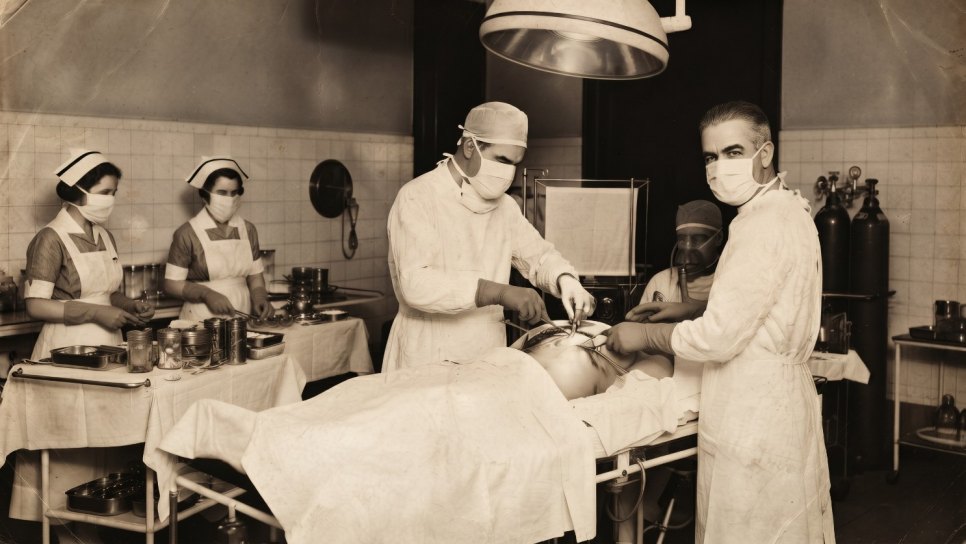
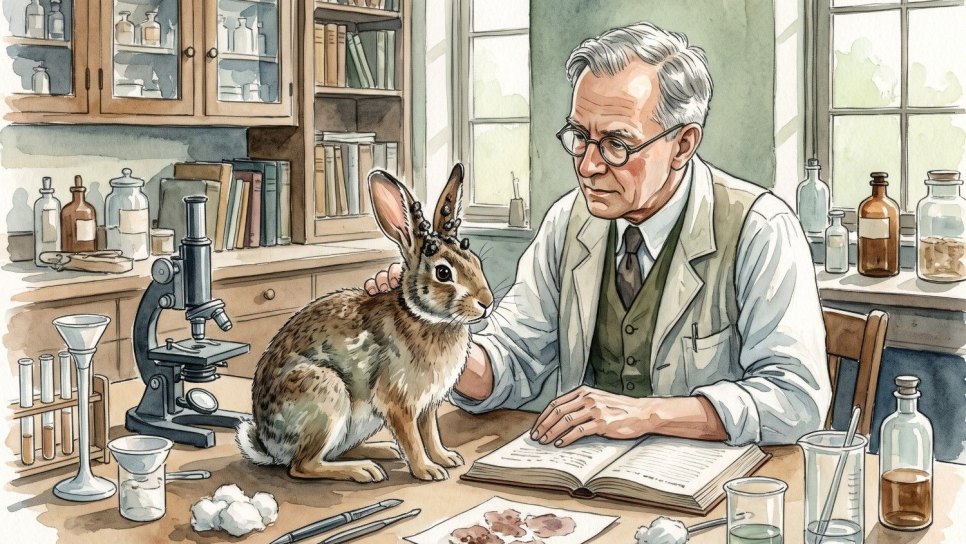
An important limitation: In 1827, dissection was still prohibited. Anatomy was taught through anatomical atlases, drawings, and animal cadavers rather than human cadavers. This was a serious shortfall compared with European medical standards. Mustafa Behçet knew this but also knew he could not go further in 1827. The first dissection of a human cadaver would only take place in 1843 — 16 years after the medical school's foundation — performed by the European physician Charles Ambroise Bernard at the Mekteb-i Tıbbiye-i Adliye-i Şâhâne.
This limitation has considerable significance for oncology's history. In 1827, Europe had already completed the pathological anatomy revolution extending from Morgagni to Bichat: the foundations had been laid for locating disease in organs, tissues as the building blocks of organs, and cells as those of tissues. At the medical school, however, medicine was taught without fully corresponding concepts, because without dissection there could be no pathological anatomy. Modern pathology's establishment in Türkiye would require 1843 (Bernard's first dissection) and later Hamdi Suat (Aknar) in the early 20. centuryreturning from Germany and founding a modern pathology chair at Istanbul Darülfünun.
Still, the opening of the medical school in 1827 was a starting point. Even without pathology, European physical examination methods (including Laennec's auscultation), clinical diagnostic concepts, pharmacy standards, the organization of pharmacies and hospitals, and epidemic control practices slowly entered Ottoman medicine. The torch Mustafa Behçet lit created a field that would be illuminated in increasingly fine detail over the following century.
An Architect Not Only of Education but Also of Modern Public Health
Mustafa Behçet's contribution to modern Turkish medicine was not limited to founding the school. He also helped establish the Ottoman modern quarantine system. During the great cholera epidemic of the 1830s, to prevent plague and cholera cases arriving from Europe from spreading to Istanbul, he persuaded the sultan to adopt quarantine procedures (keeping people and goods under observation for specified periods). This step was a critical stage in bringing 19. century Ottoman healthcare organization up to European standards.
His work written in the same years, Hezâr Esrâr (“A Thousand Secrets”), sought to systematically record Ottoman traditional folk medicine, herbal remedies, old treatments, and popular medical practices. Mustafa Behçet died before the work was completed, but the material he collected became a source for later generations of Ottoman physicians. This is another important paradox in modern Turkish medical history: The same man brought European medicine to the Ottomans while also ensuring that Ottoman folk medicine was recorded. Both modernist and traditional: a typical portrait of an intellectual from a transitional generation.
Tertib-i Ecza — Istanbul, 1817
Considered one of the first medical books printed in Turkish, Tertib-i Eczawas prepared as a health guide for Muslims traveling on pilgrimage. It covers the most common illnesses during travel (malaria, dysentery, various infections), their symptoms, available herbal and chemical medicines, and general hygiene recommendations. Its important feature was moving beyond the language of madrasa medicine to address the understanding of ordinary people— meaning that, as early as 1817, Mustafa Behçet applied the principle that “public health education should be delivered through Turkish-language texts”. Two hundred years later, in 2026, this tradition is a distant ancestor of the content on drozdogan.comthat seeks to reach Turkish-speaking people with cancer. Both reflect the same philosophy: translating medical knowledge into the language of the public.
Where and How Was Cancer Encountered in Türkiye in 1827?
When the medical school opened in 1827, there was no separate specialty called “oncology”, not even in Europe, and certainly not in Türkiye. Cancer was one of many diseases physicians encountered; it had neither a systematic definition, treatment regimens, nor statistical infrastructure. Yet Ottoman medical knowledge of cancer was not nonexistent.
In the principal source of classical Islamic-Arabic medicine, Ibn Sina's Al-Qanun fi al-Tibb(“The Canon of Medicine,” around 1025), cancer (“saratan”, Arabic for crab) was described in detail. Ibn Sina said cancer arose from the accumulation of melancholic humor(black bile) in certain parts of the body, following the Hippocratic-Galenic tradition. He recommended diet, bloodletting, purgatives, and mixed medicinal-surgical approaches. This doctrine was a cornerstone of the Süleymâniye Medical Madrasa curriculum, and Mustafa Behçet was trained in it.
The cancer cases encountered in Ottoman court and folk medicine were usually advanced-stage tumors: scirrhous breast tumors (like those seen by the surgeons who operated on Frances Burney in Paris in 1811, or the type that killed Anne of Austria at 67), fungating masses of the face and mouth, stomach cancer (pyloric obstruction similar to Napoleon's), and cervical cancer. Surgery was rarely used because there was neither anesthesia nor a low risk of surgical infection. Instead, palliative approaches predominated: opium for pain control, herbal laxatives for purgation, and porridges and sherbets for nutritional support.
Opening the medical school did not directly change this situation, but in the long term it initiated the following chain:
FROM MUSTAFA BEHÇET TO MEMORIAL GÖZTEPE — THE INSTITUTIONAL CHAIN OF TURKISH ONCOLOGY
The Medical School's Architect, Just Seven Years After Its Opening
Mustafa Behçet Efendi served as the medical school's director for seven years after it opened. He continually expanded the curriculum, brought additional teachers from Europe, and increased student numbers. He also worked on organizing the quarantine system and continued Hezâr Esrâr during the same period.
He died in Istanbul on April 17, 1834. One week before turning 60. The cause of death is not clearly documented historically; sources of the period describe it as “a prolonged illness”. The medical school's directorship passed to others, but it continued growing from the seed he had planted.
In his final years, Mustafa Behçet also worked on translating a European work on physiology . The translation remained unfinished, but later generations worked with the material he collected. The modern medical historian E. Kâhya, in her dissertation published in 1995, studied Mustafa Behçet's “Physiology Translation” in detail and showed its direct connection to contemporary European physiology, particularly Bichat's Recherches physiologiques sur la vie et la mort. In other words, Bichat's work in Paris in 1800 reached Istanbul in the 1820-1830s through Mustafa Behçet's translation. This quiet route of transmission in medical history provides concrete evidence of how closely modern Turkish medicine developed alongside Europe.
An Important Note: Two Behçets, Two Different Stories
The name “Behçet” belongs to two important, distinct figures in Turkish medical history, who are often confused. The subject of this article is Mustafa Behçet Efendi (1774-1834), chief physician and founder of the medical school. He should not be confused with the figure to be covered on Day 133. of the series: Hulusi Behçet (1889-1948), who described the globally known Behçet's disease(a vascular-immunological syndrome), Türkiye's first eponymous scientist in medical history. Between them lie 115 years, two different centuries, and two entirely different scientific contributions. They did not share a surname, only a given name: Behçet means “joy, happiness” and is of Arabic-Persian origin, a common Ottoman name. Mustafa Behçet belongs to this series' Day 75., Hulusi Behçet to Day 133.. Both have separate importance in the backbone of Turkish oncology's history.
A BRIEF FACT-CHECK NOTE
- Mustafa Behçet Efendi, birth and death: April 24, 1774, Istanbul Eyüp Sultan — April 17, 1834, Istanbul; aged 59
- Father: Mehmed Emin Şükûhî Efendi, Imperial Council clerk and poet
- Mother: Nefîse Hanım, daughter of Büyük Hayrullah Efendi, a chief physician during Mustafa III's reign
- Brother: Abdülhak Molla, a chief physician of Mahmut II's reign; shared the same exile in 1821
- Great-nephew: Poet Abdülhak Hâmid Tarhan
- Education: Süleymâniye Medical Madrasa; Latin and Italian learned from Yahya Naci Efendi
- Terms as chief physician: 1803-1808 (Selim III), 1815-1821 (Mahmut II), 1823-1834 (Mahmut II, until his death)
- Exile in Keşan: 1821-1822, 11 months; alleged reason: speaking against Halet Efendi
- Publication of Tertib-i Ecza: 1817 — one of the first medical books printed in Turkish; a health guide for Muslims on pilgrimage
- Translation of Buffon's Histoire Naturelle: Under the title Tarih-i Tabîî; introduction of natural science to the Ottoman world
- Translation of al-Jabarti's Mazharü't-takdis: Under the title Tarih-i Mısır, 1282 (Hijri)
- Foundation of Tıbhâne-i Âmire and Cerrahhâne-i Âmire: Wednesday, March 14, 1827, Tulumbacıbaşı Mansion, Şehzadebaşı
- Second turning point: 1839, move to the Galatasaray Enderun School building; named Mekteb-i Tıbbiye-i Adliye-i Şâhâne; teaching in French
- First human cadaver dissection in Türkiye: 1843, Charles Ambroise Bernard
- First qualified Turkish physician: 1843, Salih Efendi, with the first graduating class of 67
- Current status of March 14: Medicine Day in Türkiye (anniversary of the medical school's foundation in 1827)
Astley Cooper and the Classification of Breast Cancer — 1829, London
From Istanbul to London, we turn to an English-language work published two years after Mustafa Behçet's medical school. Sir Astley Cooper, one of Britain's most famous surgeons at the time, published in 1829 the Illustrations of the Diseases of the Breast, dividing breast cancer into two principal morphological types: “schirrhus” and “encephaloid.” This was one of the first major steps toward distinguishing biological subtypes of cancer, a distant ancestor of the subtyping tradition that continues 197 years later in breast cancer board reports at Memorial Göztepe as “luminal A, luminal B, HER2+, triple-negative.”
Author's note: The Mustafa Behçet quotation in this article is an abridged adaptation of his memorandum dated December 22, 1826, compiled from the TDV Encyclopedia of Islam and modern medical history sources (Yıldırım N., Şehsuvaroğlu BN.). It is not a literal translation but a conceptual restatement. The original Ottoman text is held in the Prime Ministry Ottoman Archives. The title “first medical book printed in Turkish” is often applied to Tertib-i Ecza , but medical historians do not have a definite consensus on this point; some sources also describe earlier works from the late 18. century as the “first.” Regarding the claim of being the first medical book printed in Turkish, Tertib-i Eczais the predominant view, but not the only possible candidate. The school's name is also commonly transliterated in English as “Tıphâne-i Âmire”; we used “Tıbhâne,” closer to the Ottoman original.
References and Further Reading
- Şehsuvaroğlu BN. Chief Physician Mustafa Behçet. Tıb Fakültesi Mecmuası 1955;18:746-789. (The most comprehensive classic study of Mustafa Behçet in modern Turkish medical history.)
- Yıldırım N. Chief Physician Mustafa Behçet Efendi and the Innovative Movement in Ottoman Medical Education in the 19. Century. Türkiye Klinikleri Tıp Etiği-Hukuku-Tarihi Dergisi 2016;24(2):60-67.
- Kâhya E. Mustafa Behçet Efendi's Book “Physiology Translation,” and Physiology Studies in Europe and Our Country in His Era. Ankara: Atatürk Cultural Center Publications, 1995. (A dissertation-based monograph on the physiology translation.)
- Türkiye Diyanet Vakfı Encyclopedia of Islam. “Behcet Mustafa Efendi” entry. Volume 5, pp. 350-351. (The principal historical reference.)
- Adıvar AA. Science among the Ottoman Turks. Istanbul: Remzi Kitabevi, 4. edition, 1982. (A classic reference for Turkish scientific history; critical source on the medical school's foundation.)
- Ünver S. Turkish Medical History. Istanbul: Istanbul University Publications, 1943. (A foundational work of Turkish medical history.)
- Doğan H. From Tıbhâne-i Âmire to Mekteb-i Tıbbiye-i Şâhâne: The Birth of Modern Medical Education in Türkiye. Osmanlı Bilimi Araştırmaları 2010;11(1-2):17-39.
- Mustafa Behçet Efendi. Tertib-i Ecza. Istanbul: Matbaa-i Âmire, 1817. (The original work; one of the first medical books printed in Turkish.)
- Mustafa Behçet Efendi (translator). Tarih-i Tabîî. Translation of Buffon's Histoire Naturelle. Istanbul: Matbaa-i Âmire, 1865 (publication date). (A foundational work in the introduction of natural science to the Ottoman world.)
- Terzioğlu A. The first modern medical school in the Ottoman Empire: Tıbhâne-i Âmire (1827) and its place in the history of Turkish medical education. Vesalius 2002;8(1):16-21.
- Erdemir AD. The establishment of modern medical education in Türkiye and the role of Mustafa Behçet Efendi. Sendrom Aylık Aktüel Tıp Dergisi 2003;15(3):91-95.
- Istanbul Faculty of Medicine History Commission. March 14 Medicine Day: Its Roots and Meaning. Istanbul: Istanbul University Istanbul Faculty of Medicine, 2022. (A current reference for the historical background of Medicine Day.)
This article is Day 75. of the Cancer History in 365 Days Series and its first Türkiye file. The institutional evolution of Turkish medicine and oncology will be explored in depth in upcoming installments: Cemil Topuzlu (Day 92.), the Second Constitutional Era and Haydarpaşa Medical School (Day 113.), Hulusi Behçet (Day 133.), the Turkish Association for Cancer Research and Control (Day 135.), Hacettepe and the Ankara oncology generation (Day 146.), Ayhan Çavdar (Day 173.), modern oncology units in 1972 (Day 174.), Cengiz Yakıcıer (Day 208.), Türkan Saylan (Day 209.), and Memorial Göztepe (Days 271-279.). This series tells the story of two hundred years of physicians who passed through the door Mustafa Behçet opened on March 14, 1827. The article was prepared from a popular historical perspective and provides no medical treatment guidance.
Was this article helpful?
Your feedback helps us improve our content.


Reader comments
Share your comment
Your name and comment are published only after administrator approval. Your email address is never shown to visitors.
Be the first to comment.