
Pembrolizumab with Chemoradiotherapy Receives FDA Approval for Stage 3 and 4A Cervical Cancer

In this article
On 12 January 2024, pembrolizumab immunotherapy (Keytruda, Merck) received FDA approval in combination with chemoradiotherapy for patients with stage III-IVA cervical cancer.
Cervical cancer is an important cancer affecting women worldwide. Although it is treatable when detected early, there remains a major need to develop effective treatments for advanced disease. New strategies may prolong patients' lives and improve their quality of life. The KEYNOTE-A18 study has the potential to fill this gap and reveal promising new approaches to cervical cancer treatment.
FDA Approval Based on the KEYNOTE-A18 Study
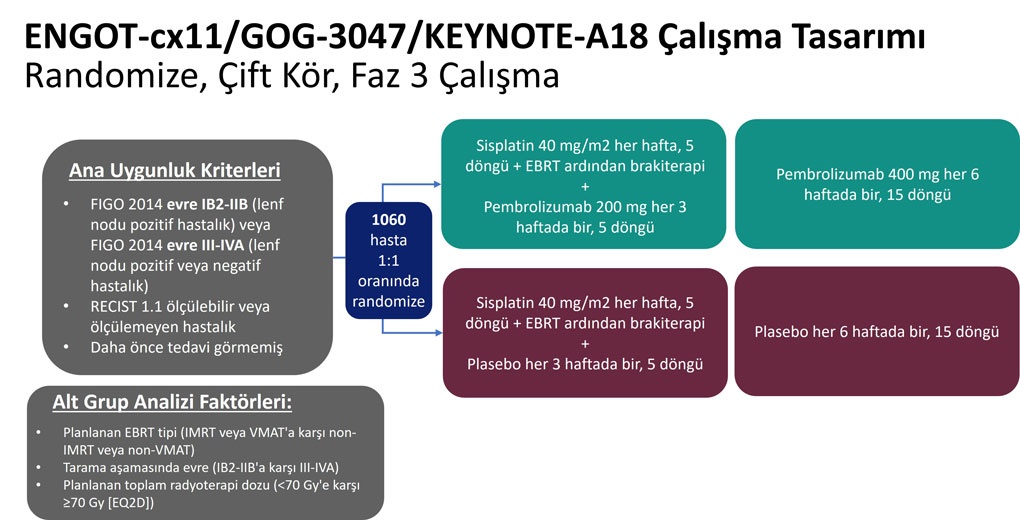
Efficacy in KEYNOTE-A18 was evaluated in 1060 patients with cervical cancer who had not previously undergone surgery or received radiation or systemic therapy. The study included 596 people with FIGO 2014 stage III-IVA disease and 462 with FIGO 2014 stage IB2-IIB, node-positive disease.
These study data show for the first time that immune checkpoint inhibitor immunotherapies may improve outcomes in high-risk, locally advanced cervical cancer.
Results
In the KEYNOTE-A18 trial, considering all patients, those receiving pembrolizumab plus concurrent chemoradiotherapy (CRT) had a risk of cancer progression that, compared with patients receiving placebo and CRT, was 30% lower (HR 0.70; 95% CI 0.55–0.89; p=0.0020).
Patients with Stage III-IVA Disease Benefited from Adding Pembrolizumab to CRT
KEYNOTE-A18 showed improved progression-free outcomes in the overall group receiving pembrolizumab. A closer analysis of 596 patients with stage III-IVA disease revealed fewer progression events among those receiving pembrolizumab. Their risk of progression, compared with those not receiving pembrolizumab, was 41% lower (hazard ratio 0.59). Disease progressed in only 21% of those receiving pembrolizumab, compared with 31% receiving placebo.
However, this difference was not observed in stage IB2-IIB disease, so it is unclear whether pembrolizumab provides a marked benefit at this stage (hazard ratio 0.91).
Overall survival data, showing how long patients lived, were not yet fully mature, so no firm conclusion could be drawn from them.
The most common adverse reactions, occurring in 10% or more of patients receiving pembrolizumab with chemoradiotherapy, were nausea, diarrhoea, vomiting, urinary tract infection, fatigue, hypothyroidism, constipation, reduced appetite, weight loss, abdominal pain, fever, hyperthyroidism, dysuria, rash and pelvic pain.
The recommended pembrolizumab regimen is 200 mg IV every 3 weeks or 400 mg IV every 6 weeks until disease progression, unacceptable toxicity or a maximum of 24 months. When pembrolizumab and chemoradiotherapy are given on the same day, pembrolizumab should be administered first.
Sources
Was this article helpful?
Your feedback helps us improve our content.




Reader comments
Share your comment
Your name and comment are published only after administrator approval. Your email address is never shown to visitors.
Be the first to comment.