
Removing It by the Roots: Jean-Louis Petit, Axillary Nodes, and the Originator of RADICAL SURGERY

In this article
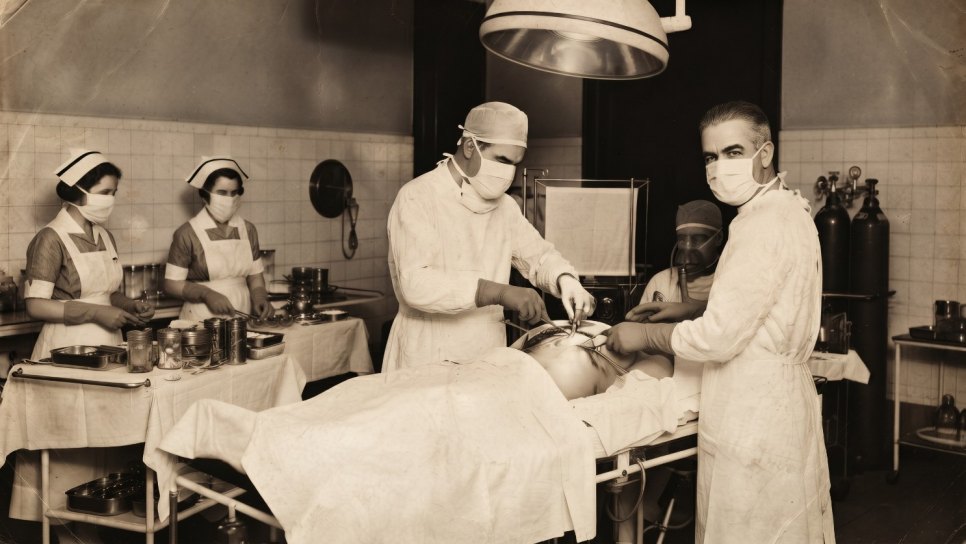
In the early 18th century, France was witnessing an exceptional era in which surgery, for the first time in history, was emerging as a science in its own right, independent of the faculty. The surgeon was no longer an artisan working in the shadow of the barber or physician, but a scientist who saw the body with his own eyes and cut according to his own judgment. Appointed in 1731 as the first director general of the French Royal Academy of Surgery (Académie Royale de Chirurgie), established by order of King Louis XV, Jean-Louis Petitwas the star of this era: both the most innovative anatomist of his time and an excellent clinician. Throughout his life, Petit developed innovative approaches to many diseases, but left his most enduring mark on breast cancer surgery — and the foundation he laid would shape Halsted's radical mastectomy almost two centuries later, and even today's concept of the sentinel lymph node.
What Petit observed in those years was a nightmare his contemporaries had ignored for years. Until then, most surgeons simply cut away the externally visible part of the cancerous mass in the breast, finishing the procedure by applying acidic pastes or red-hot irons to the wound. The outcome was always the same: soon afterward, the cancer reappeared more aggressively than before in the same place — or this time in the armpit. Patients were dying, and surgeons did not know what they were doing wrong. Petit approached this recurring failure with the method of the Enlightenment: observation, documentation, and dissection. He examined hundreds of patients and hundreds of cadavers. And from this patient work emerged an observation that would change the course of medical history.
"The Roots of Cancer Extend into the Lymph Nodes"
Petit's conclusion was startling for the oncology of his time. Cancer was not simply a stone growing where it lay; it sent out "roots" around itself, especially toward the lymphatic pathways. The mass in the breast looked like a summit, but the real danger was hidden beneath that summit, in an invisible root system extending into the armpit. This observation quietly set aside Galen's two-thousand-year-old theory of "black bile." Cancer was not a systemic imbalance distributed throughout the body. It began at a specific point and spread along specific routes; local in origin and anatomically traceable — that was the disease.
The clinical implication of this insight was clear: if a surgeon removed only the mass in the breast and left those swollen "roots" in the armpit — the enlarged lymph nodes — inside, the operation was doomed to fail from the outset. To truly treat the disease, Petit planned an operation of unprecedented extent.
Removing It "in One Piece"
In relation to what is now considered the holy grail of modern oncologic surgery, the principle of "en bloc" (in one piece) resection , the approach Petit developed was its first conceptual precursor in history. In his operations, Petit excised the cancerous breast, all palpable lymph nodes in the armpit, and, if the tumor adhered to the chest muscle, the underlying pectoral muscle and fascia, all as one intact piece, without separating them. The reasoning was elegant and strikingly modern: breaking up tissue during surgery could spill cancer cells into the surrounding area and leave diseased tissue behind. Removing the tumor together with all the suspicious areas around it as a single package — that was the birth cry of modern oncologic surgery.
One Concept, Two Different Histories
The term "en bloc" was systematically named in the middle of the 19th century by Charles H. Moore of Middlesex Hospital in London, but Petit was the surgeon who first put the concept into practice. Historian Kirby Bland's 1981 review and Sakorafas and Safioleas's two-part historical account from 2009 explicitly emphasize that Petit's practice was the "precursor of modern radical mastectomy." In other words, Petit did not invent the term, but he invented its idea and its hand.
Preserving the Skin: A Surgeon's Compassion
Petit's extensive operation, in comparison with the merciless "Halsted radical mastectomy" that in 1894 the American surgeon William Halstedwould perform, leaving enormous open wounds on women's chests, differed in one critical respect: compassion and speed of healing. Petit completely removed the tumor and the muscles beneath it, but if the cancer had not adhered directly to the skin, he took great care to preserve the healthy skin over the breast and, if possible, the nipple. At the end of the operation, he used the healthy skin he had preserved to cover that enormous defect and sutured it.
This was no simple technical preference. In an era when anesthesia had not yet been invented, antisepsis was unfamiliar, and blood transfusion was unknown, a patient living for months with an enormous open wound had almost no chance of survival. Petit's approach to skin preservation was not merely an aesthetic concern, but a calculation to keep his patient alive. His surgery was extensive, but it was not at war with the patient's body — it valued it.
Petit's student and colleague René-Jacques Croissant de Garengeot defended his teacher's approach as follows: suturing the edges of the wound together immediately after the operation was the safest way to stop bleeding, the fastest route to healing, and the wisest way to prevent recurrence. Petit refused to abandon a patient who had undergone major trauma to days of decay with those enormous open wounds. The comparison is brutally clear: almost two centuries later, Halsted's radical mastectomy would turn women's chests into a landscape of exposed layers, leaving permanent disfigurement, lymphedema, and restricted movement as an enduring legacy. In a far more primitive medical world, Petit had struck a far more humane balance.
The Book That Waited 24 Years
Petit personally taught these revolutionary ideas and techniques to his students. In the lectures he gave in the amphitheaters of the Académie Royale de Chirurgie, the rules of surgery were being rewritten. Yet the masterpiece in which this accumulated knowledge was set down — Traité des maladies chirurgicales et des opérations qui leur conviennent (A Treatise on Surgical Diseases and the Operations Appropriate to Them) — after 20 April 1750, the date of Petit's death, exactly 24 years later, in 1774, it could finally be published through the meticulous work of his colleague F. D. Lesne. Petit had devoted more than twelve years of work to his book, but his life was not long enough to finish it.
There was one consolation: during his lifetime, Petit had already joined Europe's most respected scientific societies. In 1715, he was elected to the French Academy of Sciences (Académie des Sciences), and in 1729, he became an honorary member of England's Royal Society. In other words, his work had entered the bloodstream of European surgical thought even before it appeared as a book.
A BRIEF FACT-CHECK NOTE
- Birth and death: 13 March 1674, Paris — 20 April 1750, Paris
- Master surgeon (Maître-Chirurgien): 1700
- Membership of the Académie des Sciences: 1715
- Honorary membership of the Royal Society (FRS): 1729
- Foundation of the Académie Royale de Chirurgie: 18 December 1731 — Petit its first Director
- Scholarships/inventions: Screw tourniquet, drainage of extradural hematoma, incision of brain abscess, description of calcaneal fracture
- Traité masterpiece, publication: 1774, posthumous (completed by F. D. Lesne)
The Surgeon Who Mapped the Geography of Cancer in the Body
With his anatomical intelligence and surgical courage, Petit wrote the rules for removing cancer from the body. That cancer first begins in one region of the body and then spreads through the lymph nodes was something he proved with his knife. This was a quiet but profound revolution in medical thought: Galen's two-thousand-year-old system shifted from its place like an ice floe slipping away unnoticed. Cancer was no longer an imbalance of fluids; it was a material disease with an anatomy, a geography, and routes of spread that the knife could follow.
But one question still hung in the air. This spread that surgeons saw for themselves on the operating table — into a philosophical and theoretical doctrine who would transform it? Petit was an anatomist; what we needed was a theorist. And that theorist would be one of Petit's colleagues at the Académie.
Henri-François Le Dran — The Man Who Named the Concept of Metastasis
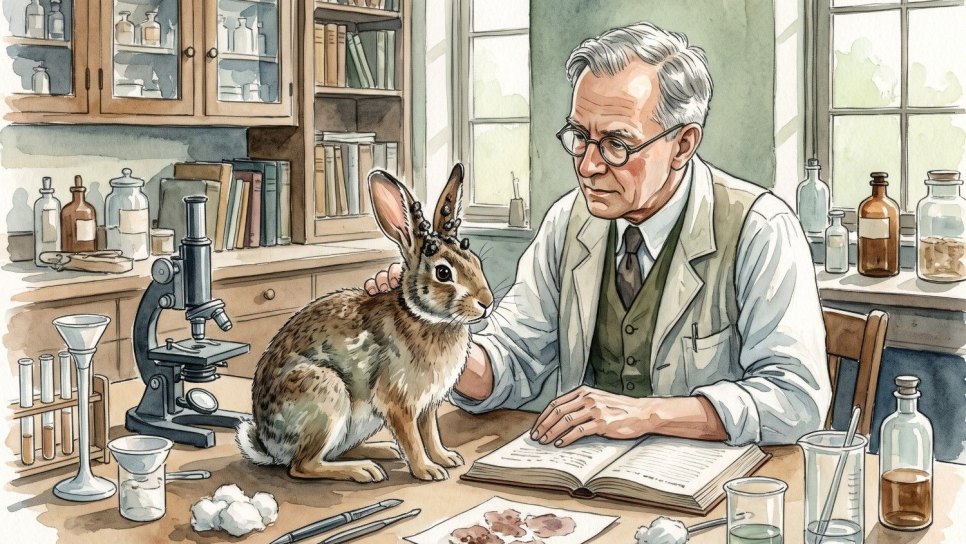
Another legendary French surgeon who was a contemporary of Petit, Henri-François Le Dran (1685-1770), would, through his work in 1757, completely discard 1500 years of fluid-based (humoral) theories of bile and formulate the most fundamental dogma of modern oncology: "Cancer is initially only a local disease; only later does it spread through the lymphatics and become systemic." Get ready to meet the originator of the idea underlying modern "staging" and to discover the birth record of the concept of metastasis.
Author's note: The famous formulation attributed to Petit in this article, "the roots of cancer are the lymphatic glands," is presented in modern historical sources as a summary of Petit's conceptual approach ; it is not a verbatim historical quotation. For Petit's original wording, Traité des maladies chirurgicales et des opérations qui leur conviennentshould be consulted in its Paris editions (1774, 1790). Similarly, Garengeot's position on prompt wound closure is a summary of the general surgical philosophy of Petit's school.
Sources and Further Reading
- Bland KI. The history of breast cancer. The American Journal of Surgery 1981;141(3):317-333. (The foundational article describing Petit's resection of the pectoral muscle and axillary lymph nodes and his principle of skin preservation.)
- Sakorafas GH, Safioleas M. Breast cancer surgery: an historical narrative. Part I. From prehistoric times to Renaissance. European Journal of Cancer Care 2009;18(6):530-544.
- Sakorafas GH, Safioleas M. Breast cancer surgery: an historical narrative. Part II. 18th and 19th centuries. European Journal of Cancer Care 2010;19(1):6-29.
- Cotlar AM, Dubose JJ, Rose DM. History of surgery for breast cancer: radical to the sublime. Current Surgery 2003;60(3):329-337.
- Mukherjee S. The Emperor of All Maladies: A Biography of Cancer. New York: Scribner, 2010.
- Cody HS III. Sentinel Node Biopsy and Axillary Dissection. (The place of the 18th-century French surgical school in the history of axillary surgery.)
- Louis A. Eloge de M. Petit: prononcé à la séance publique de l'Académie Royale de Chirurgie, le mardi 26 mai 1750. (The official eulogy delivered following Petit's death.)
- Petit JL. Traité des maladies chirurgicales et des opérations qui leur conviennent. Paris: Méquignon, 1790. [3 volumes; first edition 1774, posthumous.]
This article is day 66 of the History of Cancer in 365 Days Series. In the coming days of the series, the influence of Enlightenment surgery on oncology will be explored further through Le Dran (Day 67), John Hunter, Bernardino Ramazzini, and Percivall Pott. The article was prepared from a popular historical perspective; it does not provide medical treatment guidance.
Was this article helpful?
Your feedback helps us improve our content.


Reader comments
Share your comment
Your name and comment are published only after administrator approval. Your email address is never shown to visitors.
Be the first to comment.